Key takeaways
- Canopy color and light temperature: Dark green and charcoal fabrics absorb rather than scatter, giving you a cool, low-glare interior that stays restful past sunrise. Bright or light-toned canopies transmit noticeably more daylight, which reads cheerful at 7am and merciless at 5:30am. Pick based on whether you want to sleep in or wake with the sun.
- Mesh weave density: Fine no-see-um netting acts as a diffusion scrim, softening a hung lantern into an even glow instead of a hot spot. Coarser mesh is more breathable but produces harder shadow lines and lets more light escape, which matters if you’re camping near neighbors or trying not to advertise your position.
- Rainfly coverage and pitch angle: A wide, steeply pitched fly creates deep shade with a soft edge, useful for daytime naps and for keeping direct sun off the mesh. A minimal fly sits closer and traps light, warming the interior tone but reducing headroom and airflow. Consider how much of the day you’ll spend under it.
- Flat-lay geometry: Flat-lay designs hold the canopy further from your face, which changes how light falls across the interior and reduces that claustrophobic close-mesh feeling. Traditional gathered-end hammocks curve the fabric inward, concentrating shadow near your head and shoulders.
- Ridgeline and hang points: Look for an internal ridgeline or gear loops. Without them you have nowhere to mount a lantern, and a light resting on the floor throws everything upward in an unflattering, sleep-disrupting way.
What's inside
Anyone who has hung a hammock at dusk knows the real problem isn’t comfort, it’s light. The mesh throws shadows you didn’t ask for, a headlamp turns the whole canopy into a glowing paper lantern that every moth in the county can find, and the rainfly either traps warm amber light in a pleasant way or bounces it back at your face like a cheap studio reflector. Most buyers shop hammock tents on weight and capacity, then spend three nights fighting the ambience because nobody mentioned that fabric color, mesh density, and fly geometry all behave like lighting equipment.
This guide reviews hammock tents through that lens. I look at how each canopy handles morning sun, how the mesh diffuses a lantern hung from the ridgeline, whether the fly creates usable shade or a dim cave, and how the whole assembly reads visually when you string it across a patio or a backyard tree line. Specs still matter, and they’re covered, but the ranking below weighs the quality of the light you’ll actually live in.
As an Amazon Associate we earn from qualifying purchases.




How to Choose a/an Hammock Tent Best (2026)
- Canopy color and light temperature: Dark green and charcoal fabrics absorb rather than scatter, giving you a cool, low-glare interior that stays restful past sunrise. Bright or light-toned canopies transmit noticeably more daylight, which reads cheerful at 7am and merciless at 5:30am. Pick based on whether you want to sleep in or wake with the sun.
- Mesh weave density: Fine no-see-um netting acts as a diffusion scrim, softening a hung lantern into an even glow instead of a hot spot. Coarser mesh is more breathable but produces harder shadow lines and lets more light escape, which matters if you’re camping near neighbors or trying not to advertise your position.
- Rainfly coverage and pitch angle: A wide, steeply pitched fly creates deep shade with a soft edge, useful for daytime naps and for keeping direct sun off the mesh. A minimal fly sits closer and traps light, warming the interior tone but reducing headroom and airflow. Consider how much of the day you’ll spend under it.
- Flat-lay geometry: Flat-lay designs hold the canopy further from your face, which changes how light falls across the interior and reduces that claustrophobic close-mesh feeling. Traditional gathered-end hammocks curve the fabric inward, concentrating shadow near your head and shoulders.
- Ridgeline and hang points: Look for an internal ridgeline or gear loops. Without them you have nowhere to mount a lantern, and a light resting on the floor throws everything upward in an unflattering, sleep-disrupting way.
The Best Hammock Tent Best (2026)s Reviewed
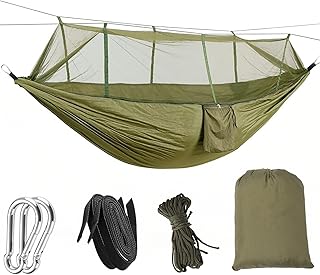
3-in-1 Camping Hammock Tent with Mosquito Net & RainFly (Dark Green)
The dark green canopy is the quiet standout here, muting harsh midday glare into something closer to forest shade and keeping the interior visually calm. The three-piece system lets you run mesh only for star-watching, then add the fly when you want a dimmer, more enclosed feel.
Flat Lay Camping Hammock Tent with Mosquito Net & RainFly
The flat-lay build keeps the mesh well clear of your face, so a clipped-in lantern diffuses across the whole canopy rather than glaring down at you. Included tree straps and a full rainfly make this the most versatile pick for anyone who reads or works inside the hammock after dark.
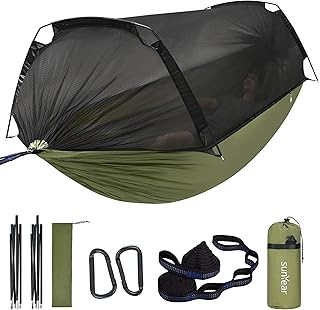
Sunyear Camping Hammock Tent
The spacious anti-rollover design creates real interior volume, which matters more for light than people expect: more air space means softer falloff and fewer hard shadows across the sleeping surface. At 500 lbs capacity it also handles a double occupancy without the fabric sagging into your line of sight.
Night Cat Flat Lay Hammock Tent
Night Cat’s tight flat-lay dimensions and waterproof fly produce a snug, low-light interior that suits solo backpackers who want darkness over airiness. The compact footprint is the tradeoff, so tall sleepers should check the 87-inch length carefully.
Camping Hammock with Mosquito Net (Black & Grey)
The black-and-grey colorway is the best light-control option in this roundup, swallowing stray glow from nearby campsites and holding a genuinely dark interior. The 2-in-1 double/single configuration and tree straps make it an easy patio-to-trail crossover.
Frequently Asked Questions
Can I hang a lantern inside a hammock tent safely?
Yes, provided you use a low-heat LED and clip it to a ridgeline or gear loop rather than resting it on the fabric. Avoid anything with an exposed element; hammock canopies are thin synthetics and melt readily.
Does canopy color really affect sleep quality?
Meaningfully, yes. Darker fabrics block more of the pre-dawn blue light that suppresses melatonin, so a dark green or charcoal canopy typically buys you an extra hour of sleep compared with a light-toned one.
Is a rainfly necessary if the forecast is clear?
It’s still worth packing. Beyond rain, the fly functions as a shade panel and blocks dew, and it gives you the option to darken the interior when you want to nap through bright afternoon light.
Are these usable indoors or on a patio?
Most of these models work well on a covered patio or in a room with adequate anchor points. Indoors the mesh becomes a decorative diffuser, so a warm bulb nearby produces a soft, appealing glow rather than a functional camp light.
Final Thoughts
For the best balance of light control and flexibility, the Flat Lay Camping Hammock Tent with Mosquito Net & RainFly is the pick, giving you room to mount a lantern and a fly that shapes shade properly. Choose the Dark Green 3-in-1 Camping Hammock Tent if you want a calm, forest-toned interior at a lower weight, or the Black & Grey Camping Hammock with Mosquito Net when maximum darkness and a 500 lb capacity are the priority.