Key takeaways
- Variable speed with soft start: Large-diameter bits need slower RPM or the rim speed burns the wood. Burn marks read as permanent grey shadows under warm light and often survive sanding. Soft start also prevents the initial jolt that leaves a divot at the entry point of a cut.
- Base configuration: Fixed bases excel at edge profiles and table mounting. Plunge bases handle stopped grooves, inlay recesses, and the shadow-gap details that give a cabinet its floating look. A combination kit covers both without a second motor.
- Collet capacity: A 1/2″ collet grips heavier shank bits with far less deflection, which is what keeps a long profile visually straight. Compact routers use 1/4″ shanks, fine for trimming and small profiles, but they will flex on deep passes.
- Sightlines and dust extraction: You cannot steer accurately along a line you cannot see. Look for cutaway bases, LED work lights, and a dust port that actually clears chips rather than packing them against the cutter.
- Balance for edge work: On a narrow table edge, half the base hangs over air. A router that is top-heavy or awkward to grip will tip, and a tipped base means a wavering highlight line. Weight distribution beats raw horsepower here.
What's inside
Most router buying guides read like spec sheets: amps, RPM, collet diameter. But if you build furniture that lives in a room, the number that actually matters is how the finished edge behaves at seven o’clock in the evening, when a table lamp is the only thing on. A profile cut with a dull bit or an unsteady base leaves faint chatter marks and scorch shadows that disappear under bright shop fluorescents and then announce themselves under warm, low-angle light. Raking light is an unforgiving inspector. It finds every ripple in a roundover and every burn on the inside of a curve.
This guide looks at routers through that lens. I care about the machines that let you cut a chamfer clean enough to hold a single crisp highlight, plunge a shadow gap with consistent depth, and template-trim a curve without the scallops that break a reflection into pieces. Below are the routers worth owning in 2026, plus the specs that genuinely affect how your work reads once the overheads go off.
As an Amazon Associate we earn from qualifying purchases.




How to Choose a Wood Router (2026)
- Variable speed with soft start: Large-diameter bits need slower RPM or the rim speed burns the wood. Burn marks read as permanent grey shadows under warm light and often survive sanding. Soft start also prevents the initial jolt that leaves a divot at the entry point of a cut.
- Base configuration: Fixed bases excel at edge profiles and table mounting. Plunge bases handle stopped grooves, inlay recesses, and the shadow-gap details that give a cabinet its floating look. A combination kit covers both without a second motor.
- Collet capacity: A 1/2″ collet grips heavier shank bits with far less deflection, which is what keeps a long profile visually straight. Compact routers use 1/4″ shanks, fine for trimming and small profiles, but they will flex on deep passes.
- Sightlines and dust extraction: You cannot steer accurately along a line you cannot see. Look for cutaway bases, LED work lights, and a dust port that actually clears chips rather than packing them against the cutter.
- Balance for edge work: On a narrow table edge, half the base hangs over air. A router that is top-heavy or awkward to grip will tip, and a tipped base means a wavering highlight line. Weight distribution beats raw horsepower here.
The Best Wood Routers (2026) Reviewed
Bosch 1617EVSPK Combination Plunge and Fixed-Base Router
This is the most versatile single purchase in the category: one 2.25 HP motor, two bases, and enough torque to run a 1/2″ shank panel-raising bit without bogging. The plunge base has smooth, repeatable depth control, which is exactly what you need for evenly deep reveals across a run of cabinet doors.
Bosch 1617EVS Fixed-Base Router
The same well-mannered motor in fixed-base form, and my first choice for a dedicated router table where it will spend its life cutting profiles and joinery. Above-table height adjustment and steady electronic feedback keep RPM constant through the cut, so the surface finish stays uniform from board to board.
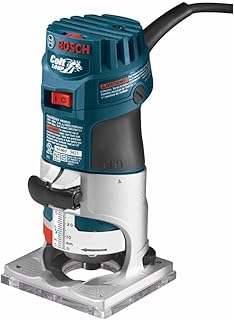
Bosch PR20EVS Colt Palm Router
The Colt is the fine-detail tool: one-handed control, a rugged aluminum base, and a quick-clamp system for fast depth changes during flush trimming and small roundovers. Its low profile lets you follow tight curves without the base fighting you, which is how you get scallop-free edges on shaped aprons and seat rails.
AVID POWER 1.25 HP Compact Router
A genuinely useful mid-price compact with six speeds, a dust hood, and both edge and roller guides included, so you can start cutting consistent profiles the day it arrives. Not a heavy production machine, but for hobbyists profiling shelves and trimming laminate it delivers cleaner results than the price suggests.
TwoWin 800W Compact Router with 15-Piece Bit Set
The most affordable way into edge routing, bundled with enough tungsten carbide bits to learn which profiles suit your work before you invest in premium cutters. Treat the included bits as a sampler, take light passes, and it will handle roundovers and chamfers on softwoods and sheet goods without complaint.
Frequently Asked Questions
Is a 1/2″ collet worth it over 1/4″?
For furniture, yes. Thicker shanks resist deflection, which means straighter profiles, less chatter, and a cleaner surface on long edges. Keep a 1/4″ compact router alongside it for detail work.
Do I really need a plunge base?
Only if you cut stopped grooves, mortises, inlay pockets, or shadow gaps that start and finish mid-panel. If your work is entirely edge profiles and through cuts, a fixed base is simpler and more stable.
How do I stop my router from burning the wood?
Three causes, in order of frequency: too slow a feed rate, too high an RPM for the bit diameter, and a dull or resin-coated cutter. Keep moving, dial the speed down for large bits, and clean your bits regularly.
Can a palm router handle real furniture work?
Absolutely, within limits. Palm routers are ideal for flush trimming, small roundovers, chamfers, and hinge mortises. They are not the tool for raised panels, deep grooves in hardwood, or router table duty.
Final Thoughts
If you buy one router, make it the Bosch 1617EVSPK: two bases, ample power, and the depth precision that clean reveals demand. Pair it with the Bosch PR20EVS Colt for detail and curve work, and you have a setup that produces edges which look intentional under any lighting. On a tighter budget, the AVID POWER compact is the sensible starting point.