Key takeaways
- Wall clearance: True wall huggers recline within 3 to 6 inches of the wall instead of the 12 to 18 a standard mechanism needs. That reclaimed strip is often the difference between keeping a floor lamp behind the sofa or losing it, so measure the gap before you measure the sofa.
- Upholstery and light behavior: Chenille and textured woven fabrics diffuse light softly and hide the shadow lines that form along seams. Faux leather bounces light and picks up specular hot spots from overhead fixtures, which reads sharper but can look glaring under a single ceiling source. Match the finish to how you actually light the room.
- Seatback height versus sightlines: A tall extended headrest is a comfort win and a light-blocking risk. If the loveseat backs onto a window or a wall sconce, a lower back keeps that light source in play; if it floats mid-room, height costs you nothing.
- Console and storage tradeoffs: A center console adds practical drop-space for remotes and glasses, but it also eats 10 to 14 inches of seating width. In rooms under about 130 square feet, side pockets usually serve you better than a console.
- Power and cable routing: Power recline with USB ports means one more cord crossing your floor. Plan its path before delivery day so it runs behind the sofa rather than under a lamp base or across a walkway.
What's inside
Small rooms are lit differently than large ones. A single lamp in a 12-by-14 living room does the work of three in an open plan, which means every surface in that room becomes a reflector, a shadow-catcher, or a light trap. A reclining loveseat is usually the biggest soft object in the space, so its fabric, its depth, and the way it sits against the wall quietly determine whether your evenings read warm and settled or flat and cave-like. Buyers tend to shop these on footprint alone, then wonder why the room feels smaller after the couch arrives.
This guide looks at compact reclining loveseats through that lens: how far they pull off the wall, whether the seatback blocks a window or a sconce, how the upholstery handles a 2700K bulb versus daylight, and whether built-in USB ports and cup holders earn their space. Below are six models sized for apartments, RVs, bonus rooms, and narrow living rooms, with notes on the ones worth your attention.
As an Amazon Associate we earn from qualifying purchases.


How to Choose a Reclining Loveseat For Small Spaces (2026)
- Wall clearance: True wall huggers recline within 3 to 6 inches of the wall instead of the 12 to 18 a standard mechanism needs. That reclaimed strip is often the difference between keeping a floor lamp behind the sofa or losing it, so measure the gap before you measure the sofa.
- Upholstery and light behavior: Chenille and textured woven fabrics diffuse light softly and hide the shadow lines that form along seams. Faux leather bounces light and picks up specular hot spots from overhead fixtures, which reads sharper but can look glaring under a single ceiling source. Match the finish to how you actually light the room.
- Seatback height versus sightlines: A tall extended headrest is a comfort win and a light-blocking risk. If the loveseat backs onto a window or a wall sconce, a lower back keeps that light source in play; if it floats mid-room, height costs you nothing.
- Console and storage tradeoffs: A center console adds practical drop-space for remotes and glasses, but it also eats 10 to 14 inches of seating width. In rooms under about 130 square feet, side pockets usually serve you better than a console.
- Power and cable routing: Power recline with USB ports means one more cord crossing your floor. Plan its path before delivery day so it runs behind the sofa rather than under a lamp base or across a walkway.
The Best Reclining Loveseat For Small Spaces (2026)s Reviewed
MCombo 64.6″ Wall Hugger Power Loveseat Recliner
The strongest all-around pick here: power recline in a genuine wall-hugger frame, with USB ports that eliminate the charging cable draped over the armrest. The beige fabric is the most forgiving option in this group under warm bulbs, holding its tone without going yellow or muddy after dark.
Fabric Manual Reclining Sofa with Metal Base
A pared-back manual recliner on a robust metal base, and the visible leg clearance underneath matters more than it sounds. Light passing beneath the frame keeps the floor plane readable, which is the single easiest way to make a small room look deeper than it is.
56″ RV Wall Hugger Loveseat Recliner
At 56 inches this is the narrowest serious two-seater on the list, built for RV walls and genuinely tight alcoves. The lumbar pillows and cup holders are welcome, though the gray fabric leans cool and benefits from a warmer lamp nearby to keep the seating area from reading gray-on-gray.
GUEAPY 55″ Chenille Loveseat Reclining Sofa
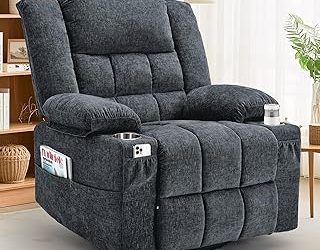
The chenille is the reason to choose this one. It scatters light rather than reflecting it, so seams and cushion creases stay soft instead of hardening into shadow lines under a downlight. Wide armrests and side storage handle the clutter a console would otherwise absorb.
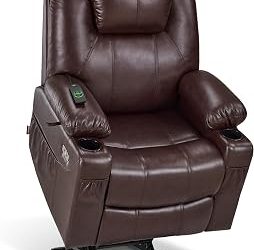
Faux Leather Loveseat Recliner with Center Console
The best fit for a dedicated media corner, where the console’s hidden storage and cup holders do real work and the brown faux leather’s sheen is an asset rather than a distraction. Skip it if the room relies on one bright ceiling fixture, since that setup will find every reflective patch on the surface.
Frequently Asked Questions
How much space does a wall-hugger recliner actually need?
Most need 3 to 6 inches behind the frame, versus 12 to 18 for a conventional mechanism. Check the listing for the manufacturer’s stated clearance and add an inch for baseboard depth.
Is power recline worth it in a small room?
Usually yes, because power mechanisms stop at any position, so you can recline partially and avoid pushing the footrest into a coffee table or traffic path. The tradeoff is cord management.
Will a dark loveseat make a small room feel smaller?
It can, though the bigger factor is contrast. A dark sofa against a light wall creates a hard visual edge that shrinks the room; a mid-tone fabric closer to your wall color softens that boundary.
Can these hold up in an RV?
The RV-specific models are built for the narrower footprint and shallower wall clearance. Confirm weight and mounting requirements against your rig’s specs before ordering.
Final Thoughts
For most small living rooms, the MCombo 64.6″ power wall hugger is the pick worth stretching for, combining tight wall clearance with fabric that stays warm under lamplight. The GUEAPY 55″ chenille model is the better choice if you’re working with a single overhead light and want soft, diffused surfaces, while the 56″ RV wall hugger remains the answer for the tightest footprints.