Key takeaways
- Measure before you shop: RV short queen is 60×75 inches, not the 60×80 of a residential queen, and bunks vary wildly. Tape-measure the platform, then check clearance for slide-outs and overhead cabinets.
- Prioritize heat shedding: Aluminum-skinned rigs bake and then dump heat. Look for open-cell or gel-infused foam, a hybrid coil layer, or an ice-silk cover — anything that moves warmth away instead of storing it.
- Verify the certifications: CertiPUR-US covers foam emissions and content, Oeko-Tex covers textiles, and fiberglass-free claims matter in a sealed space you breathe in for days. Skip listings that won’t name theirs.
- Match firmness to your sleep position and back: Side sleepers generally want medium; back and stomach sleepers and anyone managing lower-back pain usually do better with medium-firm to firm. Flippable dual-sided builds let you test both without a return.
- Weigh the weight: Every pound counts against your cargo capacity, and you’ll be wrestling this thing through a narrow door. Roll-packed foam is far easier to install than a rigid innerspring.
What's inside
I spend my working life tuning rooms with light: where the warm pools land, how much dusk leaks past a shade, what a space feels like at 10 p.m. versus 6 a.m. That work taught me something most RV owners learn the hard way — a bed is not just a slab of foam, it’s the anchor of a sleeping environment. In a rig, that environment fights you. Thin walls radiate the day’s heat back at you after dark. Windows sit inches from your face, so every campground floodlight and passing headlight becomes part of your night. The factory mattress, usually a four-inch block of unlabeled foam, adds heat retention and pressure points to an already fragile setup. You wake at three in the morning not because you’re a bad sleeper, but because the whole scene is working against your circadian rhythm.
This guide approaches RV mattresses the way I’d approach a lighting plan: as one layer in a system meant to hold darkness, steadiness, and comfortable temperature for seven hours. I’ve focused on short queen replacements, bunk-depth foam, and rollable travel pads — the three sizes that actually solve real rig problems — and weighed each on heat behavior, edge stability in a moving vehicle, certification transparency, and how well it plays with the small-space realities of a camper. Below are the picks, then a short framework for choosing, so you can match a mattress to your rig rather than guessing at thickness numbers.
As an Amazon Associate we earn from qualifying purchases.



How to Choose a Consumer Reports Best Rv Mattress (2026)
- Measure before you shop: RV short queen is 60×75 inches, not the 60×80 of a residential queen, and bunks vary wildly. Tape-measure the platform, then check clearance for slide-outs and overhead cabinets.
- Prioritize heat shedding: Aluminum-skinned rigs bake and then dump heat. Look for open-cell or gel-infused foam, a hybrid coil layer, or an ice-silk cover — anything that moves warmth away instead of storing it.
- Verify the certifications: CertiPUR-US covers foam emissions and content, Oeko-Tex covers textiles, and fiberglass-free claims matter in a sealed space you breathe in for days. Skip listings that won’t name theirs.
- Match firmness to your sleep position and back: Side sleepers generally want medium; back and stomach sleepers and anyone managing lower-back pain usually do better with medium-firm to firm. Flippable dual-sided builds let you test both without a return.
- Weigh the weight: Every pound counts against your cargo capacity, and you’ll be wrestling this thing through a narrow door. Roll-packed foam is far easier to install than a rigid innerspring.
The Best Consumer Reports Best Rv Mattress (2026)s Reviewed
Celestial Sleep 10 Inch RV Short Queen
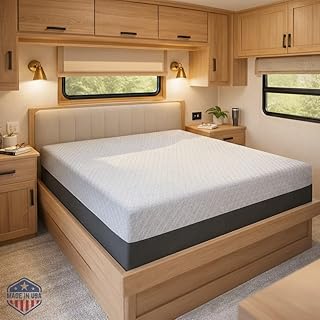
The certification stack here is the most complete of the group — CertiPUR-US, Oeko-Tex, and fiberglass-free, all made stateside — which matters when your bedroom shares air with a propane furnace and a closed cabin. Its medium feel and cooling foam suit couples who trade sides, and ten inches gives real contour without swallowing your bunk clearance.
Firm RV Mattress 10 Inch Flippable
Two feels in one build: medium-firm on one face, firm on the other, so you can dial in support after a few nights rather than committing blind. The removable gel ice-silk cover is the standout for hot climates, and the firmer side is a genuine option for anyone whose lower back complains after a long driving day.
Short Queen RV Hybrid Mattress
The coil layer does two useful things a pure foam slab can’t: it vents heat vertically and it absorbs road shock, so you feel less of the chassis when someone shifts. Medium feel with decent pressure relief makes it the most residential-sleeping option here, at a slight weight penalty.
FoamRush 3-Inch Bunk RV Mattress
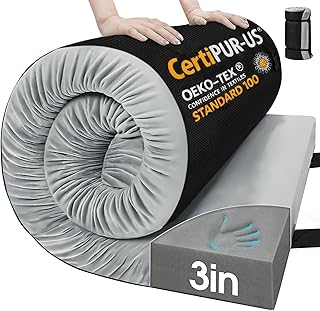
Bunks are where factory foam is worst and replacements are hardest to find, and FoamRush solves it with cut-to-need sizing plus a choice of gel memory or high-density foam and medium-firm or firm. Three inches keeps headroom intact for kids and guests while still fixing the pressure points.
Memory Foam Camping Mattress Pad with Non-Slip Bottom
A rollable pad that stays put is worth more than a thicker one that slides, and the gripped underside handles cot slats, truck beds, and van floors without creeping overnight. Best treated as flexible overflow sleeping rather than a primary bed.
Frequently Asked Questions
Is a short queen really different from a queen?
Yes — five inches shorter. A standard queen will not fit most RV platforms without overhanging a wall or blocking a slide-out.
How long does off-gassing take in a camper?
Give roll-packed foam 24 to 72 hours with windows cracked and a fan running. CertiPUR-US foams clear faster and smell milder.
Will a ten-inch mattress fit under my window shade?
Usually, but check. Taller builds can block lower window tracks or crowd overhead cabinets, which affects both airflow and how well your shades seal out light.
Can I use a topper instead of replacing?
A topper fixes surface comfort but not a sagging or heat-trapping base. If your factory foam is under five inches, replace it.
Final Thoughts
For most rigs, the Celestial Sleep 10 Inch short queen is the safest all-around choice on certification transparency and cooling, while the flippable Firm RV Mattress earns its place for anyone unsure how much support their back wants. Add the FoamRush 3-Inch bunk foam if you’re traveling with kids, and you’ve addressed every sleeping surface in the camper.