Key takeaways
- IP and Wet Rating: An IP65 designation means genuine protection against water jets — essential for uncovered patios. Anything below IP44 is strictly indoor-only, regardless of what the listing implies.
- Light Temperature and Output: Look for tunable CCT between 2700K and 6000K. Warmer tones (2700–3000K) create an intimate dining atmosphere; cooler tones suit task-heavy garage or workshop installations.
- Motor Type and Noise: Brushless DC motors run under 35 decibels, consume up to 70% less energy than AC equivalents, and almost always offer a reversible direction switch for winter downdraft recirculation.
- Blade Span and Airflow: Compact 20-inch fans excel in tight gazebo corners, while 42–52-inch models move meaningfully more air across open patios. Match the diameter to your seating area, not your ceiling footprint.
- Mounting and Power: Plug-in hook-hang designs suit renters and temporary setups; hardwired flush- or down-rod mounts deliver a cleaner architectural line for permanent installations.
What's inside
Most outdoor ceiling fans on the market promise comfort under a pergola or gazebo, then fall apart the moment weather moves in or the integrated light throws a cold, hospital-grade glow across what should be a relaxed evening setting. Buyers get tangled in conflicting IP ratings, confusing motor specs, and fixtures that clash with their outdoor design palette — all before they even plug the thing in.
As a lighting and ambience designer, I evaluate outdoor fans through two lenses: how reliably they survive the elements and how the light they produce shapes the mood of a space. This guide breaks down six standout models across compact plug-in and full-size flush-mount categories, then distills exactly what matters when you’re choosing an outdoor ceiling fan with an integrated light for 2026.
As an Amazon Associate we earn from qualifying purchases.


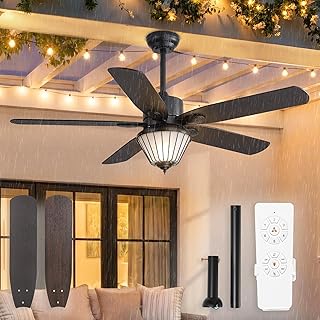
How to Choose an Outdoor Ceiling Fan With Light (2026)
- IP and Wet Rating: An IP65 designation means genuine protection against water jets — essential for uncovered patios. Anything below IP44 is strictly indoor-only, regardless of what the listing implies.
- Light Temperature and Output: Look for tunable CCT between 2700K and 6000K. Warmer tones (2700–3000K) create an intimate dining atmosphere; cooler tones suit task-heavy garage or workshop installations.
- Motor Type and Noise: Brushless DC motors run under 35 decibels, consume up to 70% less energy than AC equivalents, and almost always offer a reversible direction switch for winter downdraft recirculation.
- Blade Span and Airflow: Compact 20-inch fans excel in tight gazebo corners, while 42–52-inch models move meaningfully more air across open patios. Match the diameter to your seating area, not your ceiling footprint.
- Mounting and Power: Plug-in hook-hang designs suit renters and temporary setups; hardwired flush- or down-rod mounts deliver a cleaner architectural line for permanent installations.
The Best Outdoor Ceiling Fans With Light (2026) Reviewed
Addlon 20″ Outdoor Ceiling Fan
The Addlon 20-inch makes a strong first impression with its IP65 caged design that channels industrial pendant aesthetics into a genuinely weather-sealed package. Its six-speed DC motor stays whisper-quiet even at maximum output, and the integrated LED delivers a warm, evenly diffused wash that avoids the harsh hotspot common in caged fixtures. For covered gazebos and porches where footprint matters, this is a smart anchor piece.
LEDIARY 20″ Outdoor Gazebo Fan
LEDIARY’s 20-inch model earns its place through thoughtful light distribution — the frosted diffuser spreads illumination in a soft radius rather than drilling a cone downward. At IP65, it handles lateral rain without hesitation, and the reversible motor means you can push warm air down in summer or pull it back up to prevent cold pockets in cooler months. A solid pick for anyone prioritizing atmospheric lighting over sheer airflow volume.
Harbor Breeze Merrimack II 52″
The Merrimack II stands apart as a full-size 52-inch fan in a matte bronze finish that reads warm and grounded rather than utilitarian. Its five-blade assembly generates noticeably more CFM than the compact alternatives, making it the right choice for larger covered patios where air circulation is the primary goal. The included light kit sits flush and clean, casting a broad, gentle glow that flishes outdoor dining settings beautifully.
Westinghouse Oasis 48″
Westinghouse built the Oasis for permanent outdoor duty: its weather-resistant bronze housing resists pitting and oxidation far longer than powder-coated competitors at this price tier. The 48-inch span hits a practical middle ground, and the integrated lighting produces a balanced, neutral tone that works across both ambient and task scenarios. This is the no-drama, install-and-forget option for covered outdoor rooms.
Amico 42″ Outdoor Gazebo Fan
What separates the Amico is its tunable 3000–6000K range, letting you shift from warm candlelight-adjacent tones to bright daylight for cleanup — all from the remote. The IP65 rating holds up under direct rain exposure, and the six-speed motor maintains composure at every setting. For patios that double as workspaces or garages during the week, this adaptability is hard to beat.
Frequently Asked Questions
Can I use an indoor ceiling fan on a covered patio?
A standard indoor fan lacks the corrosion-resistant motor housing and sealed electronics needed to survive even partial moisture exposure. Over time, humidity accelerates bearing wear and creates electrical hazards. Always verify an IP44+ rating or UL damp/wet listing before installing any fan outdoors.
What CCT color temperature is best for outdoor dining?
2700K to 3000K replicates the warm cast of incandescent or candlelight, which flishes skin tones and creates a relaxed dining mood. If your fan offers tunable CCT, start at 3000K and adjust from there based on your furniture and landscaping palette.
Do DC motors justify the price premium over AC motors?
Yes, for outdoor use especially. DC motors consume roughly 70% less electricity, operate almost silently, and support more speed settings — typically six versus three. The lower heat output also extends the motor’s lifespan in enclosed or semi-enclosed housings.
How far below the ceiling should an outdoor fan hang?
For safety and optimal airflow, mount the blade tips at least seven feet above the floor. On ceilings higher than eight feet, use the included downrod to bring the fan closer to the occupied zone rather than letting it disappear into the overhead void.
Final Thoughts
For compact covered spaces, the Addlon 20″ delivers the best balance of build quality, quiet operation, and ambient light. If tunable color temperature across dual-use patios matters most, the Amico 42″ offers unmatched versatility. And for larger permanent installations where airflow and refined aesthetics must coexist, the Harbor Breeze Merrimack II 52″ remains the benchmark in this class.