Key takeaways
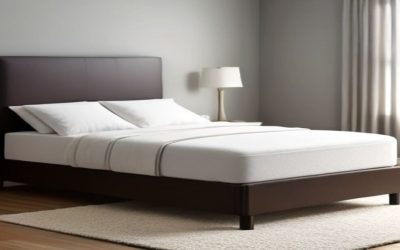
- Profile height and sightlines: In a small or dim room, mattress height sets the visual horizon. A 5 to 8 inch profile keeps a bunk or daybed feeling open and lets wall sconces clear the sleeping surface; 10 to 12 inches gives a standalone bed presence but can crowd a low window or a reading lamp mounted close to the headboard.
- Heat behavior in enclosed spaces: Top bunks, lofts, and rooms with strong afternoon exposure run several degrees warmer than the rest of the house. Gel-infused or open-cell foam matters more in those spots than in a north-facing basement guest room.
- Firmness matched to the sleeper: Medium plush suits side sleepers and lighter bodies; medium firm holds up better for back sleepers, teens, and adults who will use a twin nightly. Children under roughly 60 pounds sink less, so firmer foam usually feels better to them, not worse.
- Certification and off-gassing: CertiPUR-US and OEKO-TEX marks indicate the foam has been tested for emissions and restricted substances. Plan on two to three days of airing in a ventilated room before the bed goes into service.
- Cover and cleanability: A removable, washable cover earns its keep in kids’ rooms and guest spaces. Check whether the cover zips fully or only partially, since partial zips make reassembly awkward.
What's inside
A twin mattress rarely lives in a neutral setting. It sits in a kid’s room with a paper lantern overhead, in a guest nook lit by one warm bulb, in a dorm with hard overhead fluorescents, or under a bunk where light never really reaches. Buyers usually shop on specs alone, then discover the mattress reads bulky under a low pendant, or that a bargain foam slab sleeps hot in a room that already traps afternoon sun through west-facing glass. Thickness, firmness, and cooling behavior all change how a small room feels once the lights come down.
This guide looks at memory foam twin mattresses through that lens: how a given profile height sits in a room, how it pairs with the frames and low platforms people actually use, and how the foam performs in warm, enclosed spaces. Below are six current options, from a 5-inch bunk-friendly slab to a 12-inch bed that anchors a room on its own, with notes on who each one genuinely suits.
As an Amazon Associate we earn from qualifying purchases.




How to Choose a Memory Foam Twin Mattress (2026)
- Profile height and sightlines: In a small or dim room, mattress height sets the visual horizon. A 5 to 8 inch profile keeps a bunk or daybed feeling open and lets wall sconces clear the sleeping surface; 10 to 12 inches gives a standalone bed presence but can crowd a low window or a reading lamp mounted close to the headboard.
- Heat behavior in enclosed spaces: Top bunks, lofts, and rooms with strong afternoon exposure run several degrees warmer than the rest of the house. Gel-infused or open-cell foam matters more in those spots than in a north-facing basement guest room.
- Firmness matched to the sleeper: Medium plush suits side sleepers and lighter bodies; medium firm holds up better for back sleepers, teens, and adults who will use a twin nightly. Children under roughly 60 pounds sink less, so firmer foam usually feels better to them, not worse.
- Certification and off-gassing: CertiPUR-US and OEKO-TEX marks indicate the foam has been tested for emissions and restricted substances. Plan on two to three days of airing in a ventilated room before the bed goes into service.
- Cover and cleanability: A removable, washable cover earns its keep in kids’ rooms and guest spaces. Check whether the cover zips fully or only partially, since partial zips make reassembly awkward.
The Best Memory Foam Twin Mattresses Reviewed
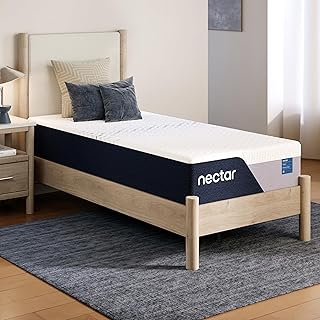
Nectar 12″ Twin Memory Foam Mattress
At 12 inches with a medium firm feel, this is the closest thing here to a full adult bed in a twin footprint, and it holds its shape well under nightly use rather than compressing into a trench. The height gives a twin real visual weight in a room, so pair it with a low platform frame if you want to keep the headboard and any wall lighting in proportion.
Novilla Bliss 10 Inch Gel Memory Foam Twin
The zoned construction firms up under the lumbar region while staying softer at the shoulders, which is a meaningful difference for side sleepers with back complaints. Its medium plush surface suits teens and adults who want cushioning without the sink of a thicker all-soft foam build.
Novilla 10 Inch Twin with Gel Memory Foam
A straightforward gel foam build that handles pressure relief and warm-room sleeping competently at a lower price than the Bliss. Good pick for a guest room that sees intermittent use and doesn’t need zoned support.
MLILY 8 Inch Twin for Kids
Built at 75″ x 38″ for daybeds, bunks, and single frames, with green tea infused foam that keeps odor down in rooms that stay closed up. The medium firm feel is well judged for children, who need less give than adults, and the 8-inch profile keeps a top bunk’s guardrail doing its job.
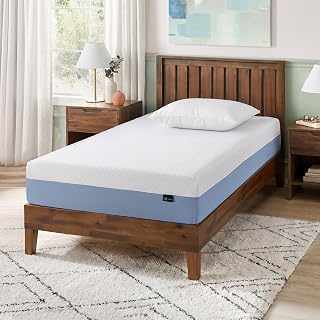
Zinus 8 Inch Twin Cooling Essential
Dual certification, a genuine medium feel, and a slim profile make this a reliable choice for dorms, trundles, and rooms where the bed shouldn’t dominate. Cooling performance is modest rather than dramatic, so treat it as adequate for a temperate room and not a fix for a hot attic.
Frequently Asked Questions
How thick should a twin mattress be for a bunk bed?
Stay at 8 inches or under for most bunks. Guardrails are engineered around a specific mattress height, and exceeding it reduces the effective barrier. The FDW 5-inch option is worth considering for shallow trundles and low-clearance frames.
Do gel memory foam mattresses actually sleep cooler?
Gel infusion and open-cell structures slow heat buildup but don’t actively cool. Room conditions matter as much as the foam, so consider breathable sheets and airflow around the bed frame alongside the mattress spec.
How long does off-gassing take?
Most compressed foam mattresses release their strongest odor in the first 24 hours and fade over two to three days. Unbox in a ventilated room and leave the mattress uncovered while it expands.
Can a memory foam twin go directly on the floor?
It can, but moisture gets trapped underneath without airflow. A slatted platform or low frame extends the mattress’s life and keeps the underside dry.
Final Thoughts
For a twin that will be slept in every night by a teen or adult, the Nectar 12″ is the most substantial pick here and handles long-term use best. The Novilla Bliss 10 Inch is the better value for zoned support and back relief, while the MLILY 8 Inch remains the sensible choice for kids’ rooms, bunks, and daybeds where a lower profile keeps the space open and safe.