Key takeaways
- Runtime before peak wattage: A 650W burst figure is measured in the highest mode, which most machines hold for a few minutes. Look at the mid-power number instead — 60 to 130 minutes is what determines whether you clear a whole floor plate in one pass or stop to swap cells.
- Sealed filtration, not just a filter: Fine dust escaping a poorly gasketed body is exactly what becomes visible in a light beam an hour later. HEPA media matters, but so does whether the airflow path is genuinely sealed from inlet to exhaust.
- Head lighting and its angle: The LED bar on a floor head is a lighting instrument. Wide, low-mounted strips graze the surface and reveal debris; a single forward-facing point light washes it out. This is the single most underrated spec on a cordless stick.
- Acoustic footprint: In galleries, boutique retail, and hospitality, noise is part of the ambience. Backpack units tuned for quiet operation let you clean during soft hours; a screaming stick vacuum does not.
- Where it lives between jobs: Self-standing bodies and wall-mount docks keep the machine off the floor and out of sightlines. A vacuum that must lean against a wall becomes visual clutter in every space it occupies.
What's inside
Nothing reveals a floor faster than good lighting. The moment you install a grazing wall washer, hang a pendant low over a table, or aim a picture light down a plaster wall, you are also installing a dust detector. Raking light at a shallow angle turns a barely-there film into visible texture, throws long shadows off crumbs on hardwood, and flattens the pile of a rug that hasn’t been groomed in a week. Buyers in commercial and semi-commercial spaces feel this constantly: the room was specified beautifully, the fixtures are dimmed to a warm 2700K, and the floor is the one surface undermining the whole effect. Corded machines make it worse, because the honest fix means dragging a cable past every socket you spent months hiding.
This guide looks at cordless machines the way an ambience designer would: what they do under real light, how much noise they inject into a quiet room, whether the filtration keeps fine particulate out of the air where it catches a beam, and how the unit looks parked in a corner between shifts. Below are five cordless picks worth considering in 2026, plus the criteria that actually separate them once the marketing numbers are set aside.
As an Amazon Associate we earn from qualifying purchases.




How to Choose a Cordless Commercial Vacuum (2026)
- Runtime before peak wattage: A 650W burst figure is measured in the highest mode, which most machines hold for a few minutes. Look at the mid-power number instead — 60 to 130 minutes is what determines whether you clear a whole floor plate in one pass or stop to swap cells.
- Sealed filtration, not just a filter: Fine dust escaping a poorly gasketed body is exactly what becomes visible in a light beam an hour later. HEPA media matters, but so does whether the airflow path is genuinely sealed from inlet to exhaust.
- Head lighting and its angle: The LED bar on a floor head is a lighting instrument. Wide, low-mounted strips graze the surface and reveal debris; a single forward-facing point light washes it out. This is the single most underrated spec on a cordless stick.
- Acoustic footprint: In galleries, boutique retail, and hospitality, noise is part of the ambience. Backpack units tuned for quiet operation let you clean during soft hours; a screaming stick vacuum does not.
- Where it lives between jobs: Self-standing bodies and wall-mount docks keep the machine off the floor and out of sightlines. A vacuum that must lean against a wall becomes visual clutter in every space it occupies.
The Best Cordless Commercial Vacuums (2026) Reviewed
X7A Pro Cordless Stick Vacuum
The strongest all-rounder here: 55KPa of suction, roughly 70 minutes of runtime, and an anti-tangle head that genuinely survives long hair and pet fur without a scissors ritual. Self-standing and touchscreen-controlled, it reads as a designed object rather than an appliance, which matters if it lives anywhere visible.
55KPa Stick Vacuum with Hurricane Mode
Effectively the same platform with a boosted top mode and a 1.8L dust cup, which is the more meaningful upgrade — fewer emptying trips across a large floor plate. Hurricane mode is for entryway grit and rug edges, not for the whole session.
Tomahawk 18V Cordless Backpack Vacuum
The pick for genuinely commercial work: 6L capacity, lightweight over the shoulders, and quiet enough to run during occupied hours in hospitality or retail. Backpack ergonomics also let you work stairs, upholstery, and lighting-track ledges without repositioning a wand.
Dual-Battery 130-Minute Cordless Vacuum
Two batteries and a claimed 130 minutes make this the endurance option, and the wall-mount charger keeps both cells docked and invisible. The included hose and sofa brush cover the soft surfaces that hold most of a room’s airborne dust load.
Foldable-Wand 55KPa Cordless Vacuum
The 180° folding wand is the standout: it reaches under low credenzas, sofas, and floating consoles where uplighters and cable runs collect dust unseen. Auto-mode and the touchscreen handle the rest without much thought.
Frequently Asked Questions
Backpack or stick for commercial spaces?
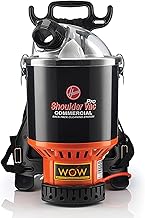
Backpacks win on capacity, endurance, and reach — the Tomahawk and corded Hoover Shoulder Vac Pro both use that chiropractic harness design. Sticks win on quick response and storage. Larger operations often keep one of each.
Does 55KPa suction actually matter?
Less than airflow and head design. Sealed suction figures are measured at the port, not the floor. A well-designed anti-tangle head at 45KPa often outperforms a poor one at 55KPa on carpet.
Is the corded Hoover still worth considering?
Yes, for fixed-route janitorial work where outlets are plentiful and unlimited runtime beats mobility. Its HEPA media filtration is a strong argument in dust-sensitive interiors.
Do scented or fragrance features help?
They mask rather than remove. Treat them as a minor bonus; sealed filtration does the real work of keeping air clear.
Final Thoughts
For most furnished interiors, the X7A Pro is the balanced choice — strong suction, tidy self-standing form, and a head that handles hardwood and low pile without complaint. Step up to the Hurricane Mode model if the larger 1.8L cup suits your floor plate, or the Tomahawk 18V backpack if you clean large commercial spaces quietly during occupied hours.