Key takeaways
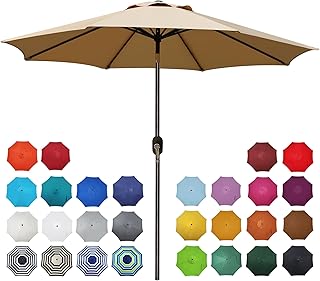
- Vent architecture: A single vented crown releases pressure, but tiered canopies do it better — each layer bleeds air while overlapping edges keep the shade pool continuous instead of punching a bright hole through the middle of your table.
- Rib count and material: Eight ribs is the practical minimum for wind. Fiberglass flexes and returns; cheap steel bends once and stays bent, which permanently distorts the shadow edge and gives you that lopsided, sagging look.
- Canopy weight and weave: Look for 200–240GSM solution-dyed fabric. Denser weave means less light punching through as hot spots, so the shade underneath reads as soft and even rather than dappled and busy.
- Color and reflected tone: Beige and taupe bounce a warm, flattering light onto faces and food. Navy and black absorb more, cutting glare hard for a cooler, cinematic feel — great near pools, less kind to skin tones at dinner.
- Base mass and tilt control: Wind resistance is a system. Match the canopy to a base of at least 50 lbs for freestanding poles, and prioritize crank-and-tilt so you can drop the canopy edge against low western sun without repositioning the whole table.
What's inside
A patio umbrella is really two things at once: a shade structure and a light modifier. When wind enters the picture, most buyers focus entirely on the first job and forget the second — until a gust folds the canopy at 6 p.m. and the whole seating area goes from warm, filtered glow to flat glare in a heartbeat. The frustration isn’t just the broken rib. It’s losing the quality of light you were sitting outside for in the first place.
This guide looks at wind-capable patio umbrellas through a lighting-and-ambience lens: how vents move air without shredding the mood, how canopy weave and color shift the tone of light hitting your table, and how tilt mechanisms let you chase or block low sun as the evening moves. Below you’ll find the models that hold their shape in real breeze while still doing something graceful with daylight.
As an Amazon Associate we earn from qualifying purchases.


How to Choose a Patio Umbrella Wind (2026)
- Vent architecture: A single vented crown releases pressure, but tiered canopies do it better — each layer bleeds air while overlapping edges keep the shade pool continuous instead of punching a bright hole through the middle of your table.
- Rib count and material: Eight ribs is the practical minimum for wind. Fiberglass flexes and returns; cheap steel bends once and stays bent, which permanently distorts the shadow edge and gives you that lopsided, sagging look.
- Canopy weight and weave: Look for 200–240GSM solution-dyed fabric. Denser weave means less light punching through as hot spots, so the shade underneath reads as soft and even rather than dappled and busy.
- Color and reflected tone: Beige and taupe bounce a warm, flattering light onto faces and food. Navy and black absorb more, cutting glare hard for a cooler, cinematic feel — great near pools, less kind to skin tones at dinner.
- Base mass and tilt control: Wind resistance is a system. Match the canopy to a base of at least 50 lbs for freestanding poles, and prioritize crank-and-tilt so you can drop the canopy edge against low western sun without repositioning the whole table.
The Best Patio Umbrella Wind (2026)s Reviewed
PURPLE LEAF 10′ x 10′ Cantilever Double Top
The double-top design is the standout here — the gap between canopies vents air continuously while the upper layer keeps the shade footprint unbroken, so you get a genuinely even shadow across a full dining set. Rated to 35 MPH, and the offset pole means nothing interrupts sightlines or the flow of light across the table.
EliteShade USA 9ft 3-Tier Market Umbrella
Three tiers means three pressure-release points, and in practice this is the most composed canopy in gusty conditions of anything at this size. The stepped layers scatter light beautifully, producing a graduated shade edge rather than a hard line, and the commercial-grade build shows in how little the frame chatters in wind.
Midtown Umbrellas 9 Ft with Terylast Fabric
The navy Terylast canopy is the pick if you want glare control over warmth — it absorbs aggressively and keeps midday light from bouncing off a pale deck into everyone’s eyes. Auto-tilt on an aluminum frame with eight reinforced ribs makes chasing the evening sun effortless, and the ten-year fade rating means that navy stays navy instead of drifting toward washed-out slate.
JEAREY 9FT Push Button Tilt Market Umbrella
A well-judged everyday performer, and the beige canopy is the more ambient choice of the bunch — it transmits just enough warm light to keep the space feeling lit rather than shaded. Eight ribs and a waterproof, UV-blocking canopy handle moderate breeze cleanly; pair it with a heavy base and it holds its own.
9′ Market Umbrella with 8 Sturdy Ribs
Straightforward, honest value with the essentials intact: eight ribs, crank lift, and push-button tilt for repositioning shade as the sun drops. It’s the sensible choice for a sheltered courtyard or a balcony where wind is occasional rather than constant.
Frequently Asked Questions
Do vents actually make a difference in wind?
Yes, and measurably. Vents let pressure escape upward instead of building beneath the canopy and lifting it. Multi-tier designs like the EliteShade and PURPLE LEAF double top take this furthest, which is why they tolerate higher sustained wind than single-canopy models.
How does canopy color change the feel of the space?
More than people expect. Light canopies transmit and scatter sunlight, so the area underneath stays bright and warm-toned. Dark canopies absorb it, producing deeper contrast and cooler shade. Choose warm for dining, dark for reading or poolside glare.
What base weight do I need?
For a freestanding 9-foot umbrella, 50 lbs minimum, and 75 lbs if your yard is exposed. Table-mounted poles can go lighter since the table adds stability. Cantilever models like the PURPLE LEAF need substantially more — follow the manufacturer’s spec, not a general rule.
Should I close it overnight?
Always. No umbrella is rated for unattended overnight wind, and closing it takes seconds. It’s the single biggest factor in whether your canopy still looks crisp in year three.
Final Thoughts
For the best combination of wind composure and light quality, the PURPLE LEAF cantilever double top and the EliteShade 3-tier market umbrella lead clearly — both vent air properly without breaking up the shade they cast. If you want strong glare control and a canopy color that holds, the Midtown Umbrellas 9 Ft in navy is the smart middle-ground pick.