Key takeaways
- Shoulder clearance: Side sleepers need the top three to four inches to yield generously. Press your palm into the surface and look for a soft entry followed by firmer resistance underneath — that gradient keeps the shoulder sunk while the ribcage stays lifted.
- Spinal line: Have someone photograph you on your side. Your spine should read as one continuous curve from neck to tailbone, no dip at the waist and no arch at the hip.
- Heat behavior: Memory foam cradles well but traps warmth in the pocket it forms around you. If you sleep hot, prioritize hybrids with coil airflow or foams built with phase-change covers.
- Motion and edge: Side sleepers reposition more than back sleepers. Pocketed coils isolate movement between partners; reinforced perimeters keep you from feeling like you’re sliding off when you drift toward the edge.
- Trial length: Foam needs three to four weeks to break in and your body needs the same to adapt. A year-long trial removes the pressure to decide during that unreliable first fortnight.
What's inside
Side sleepers occupy an awkward middle ground in the mattress market. Your shoulder and hip carry nearly all your body weight through a narrow contact patch, so a surface that feels supportive when you’re upright in a showroom can turn into a pressure point by 3 a.m. Too firm and the joints compress; too soft and the spine sags out of neutral. I approach bedrooms the way I approach any room I’m lighting: the goal is to remove the small irritants that keep a space from letting you settle. A mattress that fights your shoulder is the same category of problem as a fixture that glares at eye level — you may not name it, but you feel it all night.
This guide looks at the Nectar lineup through that lens, alongside two hybrid alternatives worth comparing. I’ve focused on contour depth at the shoulder, how each surface handles heat once you’ve been still for an hour, and whether the edges hold up when you roll toward them. Firmness labels are noted, but they matter less than how the layers behave under concentrated load.
As an Amazon Associate we earn from qualifying purchases.




How to Choose a Which Nectar Mattress Is Best For Side Sleepers (2026)
- Shoulder clearance: Side sleepers need the top three to four inches to yield generously. Press your palm into the surface and look for a soft entry followed by firmer resistance underneath — that gradient keeps the shoulder sunk while the ribcage stays lifted.
- Spinal line: Have someone photograph you on your side. Your spine should read as one continuous curve from neck to tailbone, no dip at the waist and no arch at the hip.
- Heat behavior: Memory foam cradles well but traps warmth in the pocket it forms around you. If you sleep hot, prioritize hybrids with coil airflow or foams built with phase-change covers.
- Motion and edge: Side sleepers reposition more than back sleepers. Pocketed coils isolate movement between partners; reinforced perimeters keep you from feeling like you’re sliding off when you drift toward the edge.
- Trial length: Foam needs three to four weeks to break in and your body needs the same to adapt. A year-long trial removes the pressure to decide during that unreliable first fortnight.
The Best Which Nectar Mattress Is Best For Side Sleepers (2026)s Reviewed
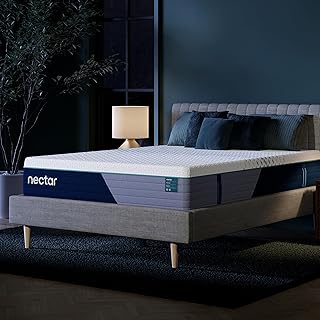
Nectar Premier 13″ Hybrid, Queen
The strongest all-around choice here for side sleepers: a plush comfort layer that lets the shoulder drop, sitting on pocketed coils that push back at the hip and keep the waist from collapsing. The coil layer also vents heat that solid foam would otherwise hold onto.
Nectar Luxe 14″ Memory Foam, Queen
Fourteen inches of foam gives you the deepest cradle in the Nectar range, which suits lighter side sleepers and anyone with cranky shoulders. The tradeoff is a slower response — repositioning takes a little more effort than on a coil bed.
Nectar 12″ Memory Foam, Queen
The original, and still a sensible entry point at medium firm with genuine contouring in the top layers. Side sleepers over roughly 200 pounds may find the shoulder relief thinner than they’d like and should size up to the Luxe.
Sleepmax Plush 14″ Cooling Hybrid, Queen
A plush hybrid built around pressure relief and spinal alignment, with the coil support Nectar’s all-foam models lack. The 365-night trial and long warranty make it low-risk if you’re unsure whether foam or hybrid suits you.
Sweetnight CoolNest 14″ King
Five-zone construction firms up under the hips while staying softer at the shoulders, which is exactly the geometry side sleepers need. CertiPUR-US certified with a medium feel and breathability tuned for warm rooms.
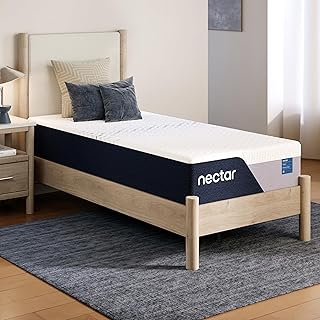
Nectar 12″ Twin Memory Foam
Same medium-firm build as the Queen in a twin footprint — useful for guest rooms, teens, or bunk setups where a side sleeper still needs proper shoulder give.
Frequently Asked Questions
Is medium firm right for side sleeping?
Usually, yes. Medium firm on a foam or hybrid bed means firm support underneath with a yielding top layer, which is the combination side sleepers want. Genuinely soft mattresses tend to let the hips sink too far.
Foam or hybrid for side sleepers?
Foam contours more precisely; hybrids breathe better and are easier to move on. If you run warm or share the bed, go hybrid. If shoulder pressure is your main complaint, foam.
How long until it feels right?
Give it three to four weeks. Foam softens with use and your body adjusts to a new support profile — early impressions are often misleading in both directions.
Do I need a new foundation?
A solid platform or slats no more than three inches apart will do. Old box springs flex unevenly and undermine the support layer you paid for.
Final Thoughts
For most side sleepers, the Nectar Premier 13″ Hybrid strikes the best balance of shoulder give and hip support with airflow built in. If you want a deeper cradle and don’t mind a slower surface, the Nectar Luxe 14″ delivers it, while the Sweetnight CoolNest 14″ is the pick for warm rooms and king-size needs.