Key takeaways
- Firmness that reads medium, not plush: Side sleepers need the shoulder and hip to sink while the waist stays supported. Medium firm is the reliable middle ground; go softer only if you’re under roughly 130 lb.
- Zoned construction: A mattress with softer zones at the shoulders and firmer support under the lumbar keeps the spine level. Seven-zone latex layouts are worth the premium for dedicated side sleepers.
- Height and bed frame geometry: A 4-inch slab on a platform sits very differently from a 12-inch hybrid on a divan. Measure before you buy, especially if you’ve planned sightlines around wall lights or a low headboard.
- Certifications you can verify: GOLS covers organic latex, CertiPUR-US covers the foam layers. These tell you what’s off-gassing into a room you’ll spend a third of your life in.
- Trial length over marketing copy: Bodies take two to three weeks to recalibrate to a new surface. A 100- or 120-night trial is the only honest way to know if a mattress suits you.
What's inside
I spend my working life shaping how rooms feel after dark — where the pools of warm light fall, how a dimmer curve settles a body down, which surfaces absorb glow and which throw it back. Bedrooms are the hardest brief, because comfort there isn’t only visual. You can hang the softest 2200K bedside sconce in the world and it won’t matter if the sleeper’s shoulder is being pushed back into their neck every night. Side sleepers feel this most acutely: the hip and shoulder carry nearly all the load, and a surface that doesn’t yield at those two points creates the kind of low-grade ache that no amount of atmosphere can dim.
Latex earns its place in that equation because it behaves like a well-tuned dimmer rather than an on/off switch. It gives progressively, springs back without lag, and sleeps cooler than most memory foam — which matters when you’ve already committed to blackout layers and a warm, low-lumen scheme. Below I’ve gathered the latex mattresses and one topper I’d genuinely specify for a side-sleeping client, with notes on firmness, height, and build so you can match the bed to the room rather than the other way round.
As an Amazon Associate we earn from qualifying purchases.


How to Choose a Latex Mattress For Side Sleepers (2026)
- Firmness that reads medium, not plush: Side sleepers need the shoulder and hip to sink while the waist stays supported. Medium firm is the reliable middle ground; go softer only if you’re under roughly 130 lb.
- Zoned construction: A mattress with softer zones at the shoulders and firmer support under the lumbar keeps the spine level. Seven-zone latex layouts are worth the premium for dedicated side sleepers.
- Height and bed frame geometry: A 4-inch slab on a platform sits very differently from a 12-inch hybrid on a divan. Measure before you buy, especially if you’ve planned sightlines around wall lights or a low headboard.
- Certifications you can verify: GOLS covers organic latex, CertiPUR-US covers the foam layers. These tell you what’s off-gassing into a room you’ll spend a third of your life in.
- Trial length over marketing copy: Bodies take two to three weeks to recalibrate to a new surface. A 100- or 120-night trial is the only honest way to know if a mattress suits you.
The Best Latex Mattress For Side Sleepers (2026)s Reviewed
10 Inch Full Latex Hybrid Mattress in a Box
A sensible all-rounder: natural latex over individually pocketed springs gives you contour at the shoulder without the sink-and-stay feeling of all-foam beds. The 120-night trial and 20-year warranty make it a low-risk first step into latex, and at 10 inches it suits most standard frames.
Organic Latex Mattress — Queen
Stripped-back and honest, this is latex without hybrid complications, which means consistent response edge to edge and very little motion transfer between partners. Choose it if you value material purity and a firmer, more buoyant surface.
Pure Green Natural Latex Mattress, Full 4″
The zonal support here is the headline — softer through the shoulder section, firmer under the hips — and it does measurably reduce that morning shoulder stiffness. At 4 inches it’s designed as a slim mattress for platform beds, tatami setups, or guest rooms where bulk works against the space.
100% Natural Latex Mattress 90×200cm
A European-sized single built for durability, with compression resistance that keeps it from developing hip-shaped valleys over time. Good pick for a single sleeper with joint sensitivity, or for a compact room where a wider bed would crowd the light.
Coolvie Latex Mattress Queen 12 Inch
The thickest option here and the most temperature-conscious, pairing latex with cooling memory foam over a supportive core. Its 12-inch profile gives side sleepers real room to settle into the shoulder without ever bottoming out.
Frequently Asked Questions
Is latex too firm for side sleepers?
Not when you choose correctly. Latex feels supportive rather than soft, but a medium-firm or zoned latex bed still allows the shoulder and hip to sink — it simply pushes back faster than memory foam, which is why it feels less enveloping.
Do I need a mattress or would a topper do?
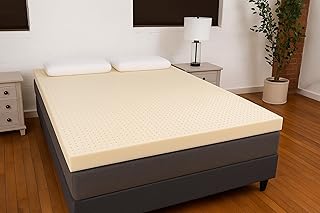
If your current mattress is supportive but too hard at the pressure points, a 3-inch zoned latex topper like the 7 Zone GOLS Certified option solves the problem for far less money. If the core has sagged, replace the mattress.
How long does latex actually last?
Natural latex commonly runs 12 to 20 years, considerably longer than polyfoam. That longevity is the real argument for the higher upfront cost.
Does latex sleep hot?
Latex is naturally more breathable than memory foam thanks to its open-cell structure and pinholing. Hybrids with spring layers, like the Coolvie, add airflow on top of that.
Final Thoughts
For most side sleepers I’d start with the 10 Inch Latex Hybrid for its balance of contour, support, and a genuinely generous trial period. If cooling and profile matter more, the Coolvie Queen 12 Inch is the better specification, and if you’re happy with your current bed’s support, the 7 Zone GOLS Certified Topper is the most efficient fix in this lineup — a small change that makes the whole room work.