Key takeaways
- Carbon mass, not just HEPA: HEPA traps dander and dust; only activated carbon adsorbs ammonia and mercaptans. Thin carbon-coated mesh saturates in weeks, so look for a genuine carbon layer and check replacement cadence before you buy.
- Coverage with headroom: Size for roughly double the room’s square footage. A unit rated well above your space can run on its lowest, quietest setting continuously, which is what actually keeps odor from accumulating.
- Dimmable or defeatable lighting: An always-on AQI display is a small blue lamp in your hallway all night. Confirm the unit has a sleep mode that kills the panel entirely, or plan to place it outside sightlines from the bed and sofa.
- Placement logic: Odor sinks and pools. Position the intake low and within a few feet of the box, with clearance on the discharge side — not shoved flush against a cabinet wall where it recirculates its own output.
- Ozone caution: Ozone and heavy ion output can neutralize smells convincingly, but ozone is a respiratory irritant for people and cats alike. Reserve it for scheduled cycles in unoccupied spaces, never as continuous background treatment.
What's inside
A litter box is a lighting problem before it’s an odor problem. Think about where these boxes actually live: the tucked-away corner of a hall, the far side of a laundry nook, under the console table where the lamp glow falls off. Low light, low airflow, and a warm pocket of stagnant air — exactly the conditions that let ammonia build until it announces itself the moment someone walks in. Guests never comment, but they read the room in about four seconds, and smell is the first channel they read it through.
This guide looks at cat litter odor control the way I look at any fixture I specify: how it performs, and how it behaves in a dim room at 9pm. That means real filtration capacity, honest coverage numbers, and the details most reviews skip — indicator brightness, whether the display can be blacked out, the noise floor against a quiet room, and whether the housing reads as furniture or as an appliance you’ll spend a year trying to hide.
As an Amazon Associate we earn from qualifying purchases.


How to Choose a/an Air Purifier For Cat Litter Smell (2026)
- Carbon mass, not just HEPA: HEPA traps dander and dust; only activated carbon adsorbs ammonia and mercaptans. Thin carbon-coated mesh saturates in weeks, so look for a genuine carbon layer and check replacement cadence before you buy.
- Coverage with headroom: Size for roughly double the room’s square footage. A unit rated well above your space can run on its lowest, quietest setting continuously, which is what actually keeps odor from accumulating.
- Dimmable or defeatable lighting: An always-on AQI display is a small blue lamp in your hallway all night. Confirm the unit has a sleep mode that kills the panel entirely, or plan to place it outside sightlines from the bed and sofa.
- Placement logic: Odor sinks and pools. Position the intake low and within a few feet of the box, with clearance on the discharge side — not shoved flush against a cabinet wall where it recirculates its own output.
- Ozone caution: Ozone and heavy ion output can neutralize smells convincingly, but ozone is a respiratory irritant for people and cats alike. Reserve it for scheduled cycles in unoccupied spaces, never as continuous background treatment.
The Best Air Purifier For Cat Litter Smell (2026)s Reviewed
LEVOIT Vital 100S-P
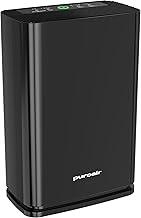
The most dependable all-rounder here: AHAM-verified coverage to 1,073 sq ft, a washable pre-filter that catches fur before it blinds the HEPA media, and a genuinely low noise floor in sleep mode. Its front-loading intake tolerates being set close to a wall, which matters in the narrow utility spaces where litter boxes actually end up.
KNKA APH4000
The strongest pick for open-plan homes, clearing up to 1,695 sq ft in an hour with a dedicated pet mode that leans harder on dander and airborne fur. The AQI readout is useful for confirming your placement is working, though you’ll want sleep mode engaged after dark to shut the panel down.
AIRROMI A2005
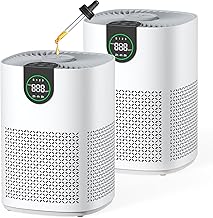
Built specifically around pet odor, with 360-degree intake that suits a floating position beside a box rather than against a wall, plus an optional scent pad if you want a light finishing note. Quiet enough for a bedroom, and the cylindrical white housing disappears next to a plant or side table better than most boxy units.
Ozone & Negative Ion Odor Eliminator with Sensor
A targeted tool, not a whole-room purifier: the sensor triggers short treatment cycles that hit odor directly at the source, which works well inside an enclosed cabinet or covered box. Run it in unoccupied spaces on timed cycles only, and keep pets out during operation.
Plug-In Ionizer Deodorizers (3 Pack)
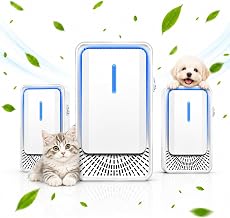
Filterless, silent, and roughly the footprint of a nightlight — these are for the closet, cabinet, or under-vanity void where a full purifier won’t fit. Treat them as supplements that raise the floor between deep cleans, not replacements for HEPA and carbon.
Frequently Asked Questions
How close should the purifier sit to the litter box?
Two to four feet away, with the intake facing the box and at least six inches of clearance behind the exhaust. Closer than that and fine litter dust clogs the pre-filter fast; much further and you’re filtering the room after the odor has already spread.
Will a purifier let me scoop less often?
No. Filtration manages what’s already airborne; it can’t stop ammonia from forming in saturated litter. Daily scooping plus a purifier running continuously is the combination that works.
Are ozone and ionizer units safe around cats?
Low-output ionizers are generally fine in ventilated spaces. Ozone is different — it irritates feline airways, which are more sensitive than ours, so use it only on timed cycles in rooms your cats can’t access.
How often do carbon filters need replacing?
In a litter room, plan on every four to six months rather than the twelve some manufacturers suggest. Once carbon saturates it stops adsorbing entirely, and the first sign is odor returning while the fan still sounds healthy.
Final Thoughts
For most homes, the LEVOIT Vital 100S-P is the safest specification — quiet, verified, and unobtrusive after dark. Scale up to the KNKA APH4000 for open-plan spaces, or choose the AIRROMI A2005 if the unit has to sit in the open and look like it belongs there.