Key takeaways
- Light layers, not one bulb: Look for a chromotherapy or ambient light that is separate from the red-light panel. Single-source cabins force you to choose between treatment lighting and mood lighting, and treatment lighting is rarely relaxing.
- Named wavelengths: A panel advertised at 660nm and 850nm tells you the manufacturer knows what it built. “Red light therapy” with no numbers attached is decoration, which is fine, as long as you paid decoration prices.
- Glare geometry: Sit down and check where the emitters land. Anything at seated eye level will fight you. Panels aimed at the torso and calves, with the ambient light tucked into a ceiling corner, read as much calmer.
- Surface reflectance: Hemlock has a warm, low-gloss surface that softens colored light beautifully. Coated tent fabric absorbs it, so portable units need slightly brighter, better-positioned lighting to feel finished rather than dim.
- Controls you can reach in the dark: A wired panel means squinting at a lit display mid-session. Remotes, preset heat levels, and long timers let you set the scene once and stop touching anything.
What's inside
Most sauna shopping happens in a spreadsheet: watts, EMF readings, cubic feet, preheat times. Then the box arrives, you zip yourself in, and the experience feels less like a spa and more like sitting inside a photocopier. Cold white LEDs, a control panel glowing like a smoke alarm, and light bouncing off pale wood at exactly the wrong angle. Heat is only half of what makes a sauna restorative. The other half is what your eyes are doing while your body cools down.
I design light for rooms people are supposed to relax in, so I look at home saunas differently than most reviewers do. This guide judges the 2026 crop on the things that determine whether a cabin becomes a nightly ritual or a coat rack: the color and placement of the interior lighting, whether the red-light panels use wavelengths worth naming, how the surfaces handle glare, and how easily you can dial the whole scene down at 10pm without waking yourself up.
As an Amazon Associate we earn from qualifying purchases.


How to Choose an Infrared Sauna For Home Use (2026)
- Light layers, not one bulb: Look for a chromotherapy or ambient light that is separate from the red-light panel. Single-source cabins force you to choose between treatment lighting and mood lighting, and treatment lighting is rarely relaxing.
- Named wavelengths: A panel advertised at 660nm and 850nm tells you the manufacturer knows what it built. “Red light therapy” with no numbers attached is decoration, which is fine, as long as you paid decoration prices.
- Glare geometry: Sit down and check where the emitters land. Anything at seated eye level will fight you. Panels aimed at the torso and calves, with the ambient light tucked into a ceiling corner, read as much calmer.
- Surface reflectance: Hemlock has a warm, low-gloss surface that softens colored light beautifully. Coated tent fabric absorbs it, so portable units need slightly brighter, better-positioned lighting to feel finished rather than dim.
- Controls you can reach in the dark: A wired panel means squinting at a lit display mid-session. Remotes, preset heat levels, and long timers let you set the scene once and stop touching anything.
The Best Infrared Sauna For Home Use (2026)s Reviewed
Infrared Sauna Tent with 3L Steamer
The most practical entry point here, with nine heat levels, a 99-minute timer, and five-layer insulated fabric that holds steam well for a folding unit. Ambience comes almost entirely from your room, so place it where you can dim an existing lamp and skip overhead light altogether.
1-2 Person Infrared Sauna with Red Light Therapy
At 40 by 36 inches, this dry-heat cabin fits a spare bedroom corner and pairs seven-color therapy lighting with Bluetooth and radio, so sound and light can be tuned together. The color wash is genuinely usable at low levels, which is rarer than it should be.
OUTEXER Far Infrared Hemlock Sauna
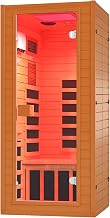
Canadian hemlock, 1200W, low EMF, and a tempered glass door that lets the interior glow spill into the room instead of trapping it. The seven-color light against untreated hemlock produces the softest, least clinical interior of anything in this roundup.
3 Person Ceramic Infrared Sauna with Granite Backdrop
Far and near infrared ceramic emitters, red light therapy, and a granite feature wall that gives colored light something with texture to break against. This is the pick if the sauna is meant to look intentional in the room, not just function in it.
LifePro Revivify Deluxe Portable Sauna
A 2.6L steamer, integrated red light therapy, and six essential oils make this the most complete out-of-box portable experience, aimed squarely at people who want the ritual without the renovation. Setup is genuinely quick, and it packs down flat between uses.
Frequently Asked Questions
Do seven-color chromotherapy lights actually do anything?
The clinical evidence is thin, but the perceptual effect is real. Warm amber and deep red at low brightness signal wind-down to your visual system, while blue and green read as alert. Treat it as excellent mood lighting rather than medicine.
What’s the difference between 660nm and 850nm?
660nm is visible red that acts on skin surface; 850nm is near-infrared that penetrates deeper and is largely invisible. Units like the Infrared Sauna Box that list both are covering surface and depth rather than one or the other.
How much room does a portable sauna really need?
Budget the footprint plus about a foot on every side for airflow and zipper access, and keep the steamer on a heat-safe floor surface. Most tents collapse to roughly the size of a folded card table.
Will a home sauna trip my breaker?
A 1200W unit on standard 110V is comparable to a hair dryer. Give it its own outlet, skip extension cords and power strips, and avoid sharing a circuit with a space heater or window AC.
Final Thoughts
If you want the best-looking, best-lit cabin for the money, the OUTEXER hemlock sauna is the one I’d put in a real room, with the 3 Person Ceramic Infrared Sauna as the upgrade for anyone treating this as furniture rather than equipment. For renters and tight floor plans, the LifePro Revivify Deluxe delivers the ritual with none of the commitment.