Key takeaways
- Coil gauge over coil count: A high spring count means little if the wire is thin. Look for heavy-duty or reinforced pocketed springs, ideally zoned so the lumbar third carries more resistance than the shoulder zone.
- Perimeter reinforcement: Strong edge support is what keeps the mattress reading as a crisp rectangle under a wall wash or a low pendant. Practically, it’s also what lets you sit on the side to tie your shoes without sliding.
- Foam density, not foam thickness: A thick comfort layer of low-density foam collapses fast. Density in the support foam is the number that predicts whether the surface still looks flat in year three.
- Heat pathways: Higher body mass means more compression, which means less airflow. Gel infusions, ice-silk or cool-touch nylon covers, and open coil chambers all help; a plush quilted top with no ventilation does not.
- Profile height and your light plane: At 14 inches plus a foundation, your mattress top may land near 26 to 30 inches. Bedside shade bottoms want to sit roughly at seated eye level, so measure before you commit to lamps.
What's inside
Ambience work has taught me something furniture showrooms rarely mention: a bed is the largest light-reflecting surface in most bedrooms, and the moment it starts to dip in the middle, the whole room reads tired. Shadows pool where they shouldn’t. Bedside lamps that were aimed perfectly now graze a slope instead of a plane. For sleepers in the 230 lb and up range, that visual sag is the cosmetic half of a much bigger problem — the structural half is a coil unit compressing past its recovery point, taking spinal alignment down with it.
This guide looks at hybrid mattresses built to hold their geometry under real load. I’ve weighted the picks toward reinforced pocketed coil counts, perimeter edge rails that keep the silhouette square, and cover materials that behave well under warm, low-angle light rather than glossing out. Everything here sits at a 14-inch profile, which matters more than buyers expect once you start matching nightstand and sconce heights.
As an Amazon Associate we earn from qualifying purchases.

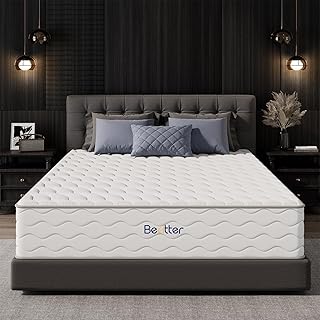


How to Choose a Hybrid Mattress For Heavy People (2026)
- Coil gauge over coil count: A high spring count means little if the wire is thin. Look for heavy-duty or reinforced pocketed springs, ideally zoned so the lumbar third carries more resistance than the shoulder zone.
- Perimeter reinforcement: Strong edge support is what keeps the mattress reading as a crisp rectangle under a wall wash or a low pendant. Practically, it’s also what lets you sit on the side to tie your shoes without sliding.
- Foam density, not foam thickness: A thick comfort layer of low-density foam collapses fast. Density in the support foam is the number that predicts whether the surface still looks flat in year three.
- Heat pathways: Higher body mass means more compression, which means less airflow. Gel infusions, ice-silk or cool-touch nylon covers, and open coil chambers all help; a plush quilted top with no ventilation does not.
- Profile height and your light plane: At 14 inches plus a foundation, your mattress top may land near 26 to 30 inches. Bedside shade bottoms want to sit roughly at seated eye level, so measure before you commit to lamps.
The Best Hybrid Mattresses for Heavy People (2026) Reviewed
BedStory 14 Inch Hybrid Mattress, King
The zoned lumbar band is the standout here, firming exactly where heavier sleepers first develop a hammock. A 10-year warranty on a no-sagging claim is a meaningful signal, and the surface stays visually level enough that a single bedside lamp lights both sides evenly.
14 Inch Cooling Hybrid with Ice Silk Cover, Queen
Seven-zone ergonomic support paired with gel memory foam and an ice-silk face makes this the pick for hot sleepers who also need extra-firm resistance. The cover has a low sheen that diffuses warm light nicely instead of throwing a hot spot back at the ceiling.
Coolvie Hybrid Latex King, 14 Inch
Five-zone heavy-duty springs under a Euro top give you contouring without the sink, and latex adds a springy responsiveness that pure foam builds lose under load. Motion isolation is strong for a coil-forward design, which matters in shared beds with different body weights.
14″ Extra Firm Cooling Gel Hybrid, King
This is the firmest feel on the list and the most straightforwardly supportive for back and neck complaints. Fiberglass-free construction and a 365-night trial take most of the risk out of committing to a genuinely firm surface.
Sleepmax Queen Mattress, 14 Inch
The most balanced option for combination back-and-side sleepers who want pressure relief without giving up structure. CertiPUR-US certification, fiberglass-free build, and a year-long trial make it an easy first hybrid.
Frequently Asked Questions
What firmness should heavier sleepers choose?
Medium-firm to firm, in most cases. Softer surfaces feel supportive for a week or two, then compress past the point where the coil unit can push back, which is when hip and lower-back pain usually appears.
Does a hybrid outlast an all-foam mattress under higher body weight?
Generally yes. Pocketed coils recover their shape mechanically, while foam relies on cell resilience that degrades faster the harder it’s compressed.
Do I need a special foundation?
You need slats no more than three inches apart and a center support leg on queen and larger. A weak base voids most sag warranties and undoes the coil engineering you paid for.
How does a 14-inch mattress affect bedroom lighting?
It raises your reading plane by two to four inches versus a standard 10-inch bed, so wall sconces often need remounting a little higher and table lamps benefit from a slightly taller base or a dimmer to control glare.
Final Thoughts
For most heavier sleepers, the BedStory 14 Inch is the smartest starting point thanks to its zoned lumbar reinforcement and warranty backing. Choose the Coolvie Hybrid Latex King if you want responsive contouring with genuine heavy-duty springs, or the Sleepmax Queen if you sleep in multiple positions and want a year to decide. All three hold a flat, honest line under lamplight — which is the quiet mark of a mattress that’s actually doing its job.