Key takeaways
- Coverage over cubic feet: Match the rated area to the whole open zone your cat roams, not the single room you place the unit in. Dander travels through doorways, so a 1,800–2,600 sq ft rating gives you headroom to run at low speed, which is quieter and gentler on ambience than a small unit screaming at full tilt.
- A washable pre-filter: Cat hair clogs the outer mesh long before the HEPA layer tires. A rinseable pre-filter means you vacuum and wash rather than reorder, and it keeps airflow strong enough that you never notice the machine working.
- Night-time light discipline: A PM2.5 readout is genuinely useful in daylight and genuinely disruptive at 2 a.m. Look for a display-off or true sleep mode. Any indicator you cannot dim will cast a colored wash across a dark bedroom wall.
- Sound floor, not just top speed: Check the quietest published figure — roughly 22–27 dB on the best units here. That is below the threshold where a room stops feeling calm, and it matters more than turbo output for anything placed near a sofa or bed.
- Cat-proofing and placement: Bite-resistant cords, tip-over cutoffs, and a stable base are not gimmicks in a cat household. Give the intake at least six inches of clearance and avoid tucking a purifier behind a skirted armchair, where it starves itself.
What's inside
Anyone who has ever aimed a raking beam of afternoon sun across a living room knows the truth about cats: the air in a home with them is never empty. Light is an honest witness. Point a low lamp at a bookcase or catch a window slot at four o’clock and you will see the drift — fine floating dander, ghosted undercoat, the litter dust that travels farther than anyone expects. As someone who designs how rooms feel rather than how they filter, I notice this constantly, because airborne particulate is what turns a crisp beam into a hazy smudge and makes a carefully lit corner read as dull instead of luminous.
This guide looks at cat-focused air purifiers through that lens as well as the obvious one. We weigh filtration and coverage, of course, but also the things that decide whether a machine belongs in a finished room: how bright its display glows after dark, how loud it hums under a reading lamp, how its silhouette sits beside upholstery, and whether the cord survives a determined chewer. Below are the models worth putting in a room you actually care about.
As an Amazon Associate we earn from qualifying purchases.


How to Choose an Air Purifier Cats (2026)
- Coverage over cubic feet: Match the rated area to the whole open zone your cat roams, not the single room you place the unit in. Dander travels through doorways, so a 1,800–2,600 sq ft rating gives you headroom to run at low speed, which is quieter and gentler on ambience than a small unit screaming at full tilt.
- A washable pre-filter: Cat hair clogs the outer mesh long before the HEPA layer tires. A rinseable pre-filter means you vacuum and wash rather than reorder, and it keeps airflow strong enough that you never notice the machine working.
- Night-time light discipline: A PM2.5 readout is genuinely useful in daylight and genuinely disruptive at 2 a.m. Look for a display-off or true sleep mode. Any indicator you cannot dim will cast a colored wash across a dark bedroom wall.
- Sound floor, not just top speed: Check the quietest published figure — roughly 22–27 dB on the best units here. That is below the threshold where a room stops feeling calm, and it matters more than turbo output for anything placed near a sofa or bed.
- Cat-proofing and placement: Bite-resistant cords, tip-over cutoffs, and a stable base are not gimmicks in a cat household. Give the intake at least six inches of clearance and avoid tucking a purifier behind a skirted armchair, where it starves itself.
The Best Air Purifier Cats (2026)s Reviewed
MOOKA PR1 Large Room Purifier
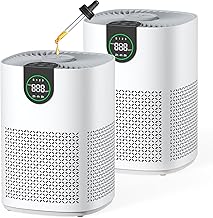
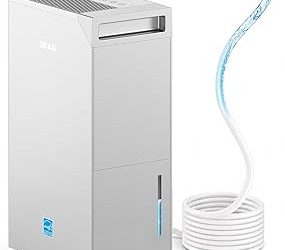
Rated to 2,200 sq ft with a washable filter and an on-board air quality sensor, the PR1 is the value play for open-plan homes where one machine has to cover a lot of ground. Its clean white body disappears against pale walls, though the lit display is bright enough that you will want it in a hallway or dorm corner rather than at bedside.
WISESKY Cat Air Purifier
This is the most deliberately cat-specific unit on the list: five-stage filtration tuned for hair, dander and litter odor, a 360° intake that ignores awkward placement, plus a bite-resistant cord and tip-over protection. App control means you can drop it to silent without crossing a dim room and disturbing the mood.
LEVOIT Vital 100S-P
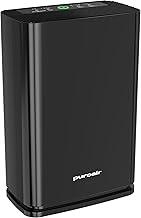
AHAM-verified to 1,073 sq ft with a washable pre-filter built for pet hair, the 100S-P is the sensible bedroom choice. Its sleep mode is genuinely quiet and genuinely dark, which is why I keep specifying it for rooms with layered low-level lighting.
LEVOIT Vital 200S-P
The 200S-P scales the same formula to 1,875 sq ft while holding 27 dB at its lowest setting — remarkable restraint for that output. Smart monitoring and auto mode let it ramp up during the daytime shedding storm and settle back down by evening.
P358 Double-Sided Pet Purifier
A double-sided H13 HEPA arrangement plus washable pre-filter gives this 2,500 sq ft model unusually high intake area for its footprint, which pays off in multi-cat homes. The grey finish reads warmer under incandescent and tungsten light than stark white units do.
Frequently Asked Questions
Will a purifier stop my cat allergy entirely?
No. HEPA filtration removes airborne dander effectively, but allergens also settle into rugs, cushions and bedding. Pair a purifier with regular washing of soft furnishings for a real difference.
Where should I place it?
Near the cat’s main sleeping or grooming spot, with clear space on all intake sides. Corners and cabinet recesses look tidier but measurably reduce circulation.
How often do filters need changing?
Rinse the pre-filter monthly in a cat home. HEPA layers typically last six to twelve months, though heavy shedders push that toward the shorter end.
Does running one all day cost much?
Very little. On auto or sleep mode these units draw a few watts, which is why continuous low-speed operation beats intermittent bursts.
Final Thoughts
For most cat households I would start with the LEVOIT Vital 200S-P — it covers real square footage without intruding on a room’s sound or light. Choose the WISESKY if your cat treats cords as toys, or the MOOKA PR1 if you need broad coverage on a tighter budget.