Key takeaways
- Pressure ceiling versus working pressure: Max PSI is a peak figure measured at the moment of trigger release. For clear coat, the useful band sits between 1200 and 2000 PSI at the nozzle, which means a 2500 PSI machine gives you headroom and control rather than a mandate to use it all. Treat higher numbers as reserve capacity for driveways and fence posts.
- Flow rate, because rinsing is a volume problem: GPM determines how fast you can carry soap and grit off a panel before it dries into spotting. Anything at or above 1.7 GPM sheets water cleanly off vertical glass and painted surfaces, which is the difference between a streak-free finish and forty minutes of chasing mineral deposits with a drying towel.
- Foam delivery method: A detachable foam cannon produces the thick, clinging lather that gives dwell time; an onboard soap tank produces a thinner mix suited to broad rinsing. Cannon systems win for pre-soak work on a dark finish where you want contact time before any mitt touches the paint.
- Nozzle set and taper: Look for a 40-degree tip and a soap tip at minimum. The 25-degree tip belongs on wheel wells and lower rockers, and the zero-degree pencil jet should never come near a clear coat. A five-nozzle set costs almost nothing extra and removes the temptation to improvise.
- Stability and hose length: A 25-foot hose lets you circle a sedan without repositioning the unit, and anti-tipping geometry matters more than it sounds when you are pulling a wand across a garage floor at an angle. Every tipped machine is an interrupted rinse, and every interrupted rinse dries into a visible ring.
What's inside
Paint is a mirror. That is the whole reason car detailing is difficult, and it is the same reason a hand-rubbed walnut credenza looks flawless under a warm pendant and merciless under a bare LED shop bulb. Gloss does not hide anything; it redirects light. Every swirl, water spot, and half-rinsed panel becomes visible the moment a beam strikes the surface at a grazing angle instead of head-on. Most people never see the flaws they left behind because they wash at noon in open shade, where light arrives from everywhere at once and cancels out its own shadows.
This guide approaches electric pressure washers the way we approach a finish under a fixture: as a tool for controlling how a surface reads. A washer that lifts contaminants cleanly and rinses without leaving a film gives you a surface that behaves predictably under light. One that streaks, pulses, or forces you to scrub gives you a panel that flickers with micro-scratches under any directional source. Below are the machines worth putting in a garage bay, plus the specs that actually matter once you start judging your work by reflection rather than by feel.
As an Amazon Associate we earn from qualifying purchases.




How to Choose a Electric Pressure Washer For Car Detailing (2026)
- Pressure ceiling versus working pressure: Max PSI is a peak figure measured at the moment of trigger release. For clear coat, the useful band sits between 1200 and 2000 PSI at the nozzle, which means a 2500 PSI machine gives you headroom and control rather than a mandate to use it all. Treat higher numbers as reserve capacity for driveways and fence posts.
- Flow rate, because rinsing is a volume problem: GPM determines how fast you can carry soap and grit off a panel before it dries into spotting. Anything at or above 1.7 GPM sheets water cleanly off vertical glass and painted surfaces, which is the difference between a streak-free finish and forty minutes of chasing mineral deposits with a drying towel.
- Foam delivery method: A detachable foam cannon produces the thick, clinging lather that gives dwell time; an onboard soap tank produces a thinner mix suited to broad rinsing. Cannon systems win for pre-soak work on a dark finish where you want contact time before any mitt touches the paint.
- Nozzle set and taper: Look for a 40-degree tip and a soap tip at minimum. The 25-degree tip belongs on wheel wells and lower rockers, and the zero-degree pencil jet should never come near a clear coat. A five-nozzle set costs almost nothing extra and removes the temptation to improvise.
- Stability and hose length: A 25-foot hose lets you circle a sedan without repositioning the unit, and anti-tipping geometry matters more than it sounds when you are pulling a wand across a garage floor at an angle. Every tipped machine is an interrupted rinse, and every interrupted rinse dries into a visible ring.
The Best Electric Pressure Washer For Car Detailing (2026)s Reviewed
Sun Joe SPX3000
The dual detergent tanks are the quiet advantage here, letting you keep a pH-neutral shampoo in one and a wheel cleaner in the other without dumping and flushing between stages. At 2030 PSI PWMA-rated, it delivers steady, honest pressure that will not scare a ceramic coating, and the total-stop trigger keeps the pump from cycling while you reposition.
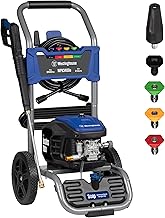
Westinghouse ePX3500
Anti-tipping geometry and a compact vertical footprint make this the easiest unit on the list to work around in a single-car bay. The five-nozzle set plus onboard soap tank covers a full detailing sequence, and the pro-style steel wand transmits far less flex than the plastic assemblies at this price.
Westinghouse WPX3400e
The brushless motor runs noticeably quieter and holds pressure more evenly under sustained trigger time, which matters when you are rinsing a full vehicle in one continuous pass. At 2.0 GPM it sheets water off glass beautifully, though the 3400 PSI ceiling demands discipline with tip selection near paint.
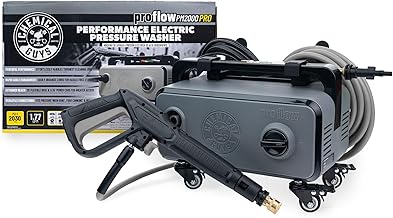
Chemical Guys PM2000 PRO
Built by a company that thinks in terms of finish quality rather than raw output, this one pairs a 25-foot hose with a 1.77 GPM flow rate tuned for foam work. The 2030 PSI rating sits squarely in the safe band for automotive clear coat, making it hard to misuse.
Westinghouse ePX3100v
The most sensible entry point for someone detailing one or two vehicles: a detachable foam cannon, three nozzles, and enough flow to rinse without streaking. Its built-in carry handle and light weight suit anyone storing the unit on a shelf between weekends.
Frequently Asked Questions
Will a pressure washer damage my paint?
Not at a sensible distance with the right tip. Keep a 40-degree nozzle 12 to 18 inches from the panel and never let a narrow jet linger on an edge, badge, or existing chip where water can work beneath the film.
How much PSI do I actually need?
Around 1500 to 2000 PSI handles automotive work comfortably. Buying a 2500 PSI machine and using it at partial throttle gives better longevity than running a smaller unit at its limit.
Do I need a separate foam cannon?
If you care how the finish reads under directional light, yes. Thick foam provides dwell time that loosens grit before your mitt makes contact, which is where most swirl marks originate.
Why does my car spot even after a thorough rinse?
Spotting is dissolved minerals left behind by evaporation, not a washing failure. Work panel by panel out of direct light, use enough flow to sheet water off rather than bead it, and dry immediately.
Final Thoughts
For most garages, the Westinghouse ePX3500 hits the best balance of stability, nozzle range, and safe working pressure. Step up to the WPX3400e if you want brushless quiet and the flow rate to sheet-rinse in one pass, or choose the Sun Joe SPX3000 if the dual-tank workflow appeals and you want proven, unfussy performance for less.