Key takeaways
- Reflectance value: Pale species (birch, ash, white oak) bounce roughly 40–55% of incident light, acting as a soft uplight for faces. Dark walnut and espresso stains drop to 8–15%, absorbing your fixture’s output. Dark tops are gorgeous but demand more lumens overhead — plan on a brighter pendant or a second light source.
- Undertone versus bulb temperature: Acacia and pecan carry orange-red undertones that sing at 2700K and turn slightly muddy under 4000K. Bamboo and birch run neutral-to-yellow and stay honest across the range. Match the wood to the bulbs you already own, not the other way around.
- Sheen level: Satin and matte finishes diffuse a pendant into a broad, soft pool. Semi-gloss and gloss produce a specular reflection — a mirror image of the bulb — right where the centerpiece sits. For any table under a direct downlight, keep sheen at satin or lower.
- Grain scale and raking light: Wirebrushed and open-pore surfaces catch low-angle light and cast micro-shadows, which reads as texture and depth. Tight, closed-grain tops look flatter and cleaner. Decide whether you want the surface to be a texture or a canvas.
- Thickness and edge shadow: A 1.5-inch slab throws a real shadow line under raking light; a 0.7-inch top reads as a floating plane. Neither is better, but thickness is the fastest way to add visual weight without adding darkness.
What's inside
Most dining table shopping happens under flat showroom fluorescents or in a product photo lit by a softbox the size of a garage door. Then the table lands in a real room, under a single pendant or a pair of sconces, and the wood looks nothing like it did on screen. Ash reads gray-green under 4000K downlights. Walnut swallows light and makes a small room feel like a cave. A glossy topcoat turns a beautiful fixture into a hotspot glaring back at everyone across the table. The hardwood is rarely the problem — the mismatch between the wood’s optical behavior and the light falling on it usually is.
This guide approaches hardwood selection the way a lighting designer approaches a surface: by reflectance value, undertone, grain scale, and sheen. Those four variables determine whether your table glows at 7pm or goes muddy. Below are the species and specific tables worth considering in 2026, plus what each one does under warm bulbs, cool bulbs, daylight, and candles.
As an Amazon Associate we earn from qualifying purchases.




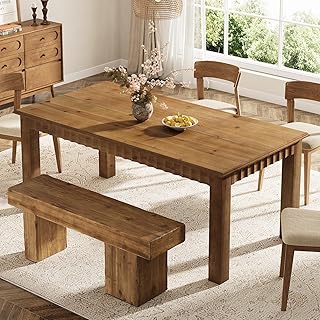
How to Choose a Hardwood for a Dining Table (2026)
- Reflectance value: Pale species (birch, ash, white oak) bounce roughly 40–55% of incident light, acting as a soft uplight for faces. Dark walnut and espresso stains drop to 8–15%, absorbing your fixture’s output. Dark tops are gorgeous but demand more lumens overhead — plan on a brighter pendant or a second light source.
- Undertone versus bulb temperature: Acacia and pecan carry orange-red undertones that sing at 2700K and turn slightly muddy under 4000K. Bamboo and birch run neutral-to-yellow and stay honest across the range. Match the wood to the bulbs you already own, not the other way around.
- Sheen level: Satin and matte finishes diffuse a pendant into a broad, soft pool. Semi-gloss and gloss produce a specular reflection — a mirror image of the bulb — right where the centerpiece sits. For any table under a direct downlight, keep sheen at satin or lower.
- Grain scale and raking light: Wirebrushed and open-pore surfaces catch low-angle light and cast micro-shadows, which reads as texture and depth. Tight, closed-grain tops look flatter and cleaner. Decide whether you want the surface to be a texture or a canvas.
- Thickness and edge shadow: A 1.5-inch slab throws a real shadow line under raking light; a 0.7-inch top reads as a floating plane. Neither is better, but thickness is the fastest way to add visual weight without adding darkness.
The Best Hardwoods for Dining Tables (2026), Reviewed
Pemberly Row Solid Acacia Dining Table, 79″
Kiln-dried acacia with a natural finish is the most forgiving surface on this list — mid-range reflectance, warm undertone, and enough figure to look alive without competing with your fixtures. At 79 inches it wants two pendants or a linear fixture rather than one central drop, otherwise the ends fall into shadow.
Plank+Beam Classic 72″ in Pecan Wirebrush
The wirebrushed texture is the reason to pick this one: open pores catch grazing light from sconces or a low-hung pendant and produce genuine depth instead of a flat plane. Its non-toxic, low-sheen finish keeps bulb reflections diffuse, which matters if you eat under a bare-bulb fixture.
BAKEVE Bamboo Dining Table, 47.2″
FSC-certified bamboo in walnut tone gives you a dark, contemporary surface without the light-absorbing depth of true walnut, and at 47 inches it suits small rooms where a single pendant does all the work. Bamboo’s linear grain reads calm and orderly under directional light.
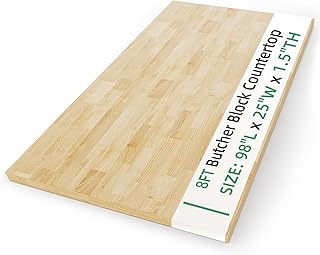
Butcher Block Birch Countertop, 98″ Unfinished
Unfinished birch is the highest-reflectance option here, effectively functioning as a bounce card for faces at the table — excellent in rooms with limited fixtures. You choose the sheen, so seal it matte or satin; a gloss coat would waste the species’ best quality.
63-Inch Solid Wood Farmhouse Table, Dark Brown
The dark brown finish delivers drama and a strong contrast frame around dinnerware, but budget for light: plan on a pendant at 60–65 watts equivalent or better, hung 30–34 inches above the top. Heavy-duty legs and a compact footprint make it a solid fit for candlelit, low-key rooms.
Frequently Asked Questions
Which hardwood looks best under warm 2700K bulbs?
Acacia, pecan, and cherry — all carry red-orange undertones that warm light amplifies. Cool-toned ash and gray-washed oak tend to look dull and slightly dirty at 2700K.
How do I stop my table from glaring under a pendant?
Drop the sheen or diffuse the source. A satin or matte topcoat scatters reflection, and a frosted or shaded bulb eliminates the specular hotspot entirely. Refinishing a glossy top to satin with a scuff-and-recoat is a weekend job.
Is a solid wood tabletop a good option for a custom build?
Yes, and it gives you sheen control. Something like the Howizz 55 x 28-inch dark walnut acacia top lets you pair a specific finish with your existing lighting rather than accepting a factory gloss.
Does table thickness change how a room feels?
It changes shadow, which changes perceived weight. Thick slabs anchor a room under directional light; thinner tops read airier and work better in bright, daylit spaces.
Final Thoughts
For most rooms, the Plank+Beam Classic 72″ in pecan wirebrush is the safest bet — its texture and low sheen behave well under almost any fixture. The Pemberly Row acacia table is the better pick if you want warmth and length, and the unfinished birch butcher block is the one to choose when your room is light-starved and you need the surface itself to do some of the lifting.