Key takeaways
- Verify the actual footprint: Short queen means 60″ x 75″, but plenty of platforms are cut to 74″ or notched around a wheel well. Measure the deck itself, corner to corner, before you order anything.
- Match thickness to your headroom: An 8-inch build preserves clearance under overhead cabinets and makes climbing in easier in tight bunkrooms. A 10- or 12-inch profile sleeps far better but eats vertical space and can crowd window trim, blocking the wall-wash effect of any perimeter lighting you’ve installed.
- Prioritize heat and moisture handling: RVs swing from cold-soaked to greenhouse in hours, and condensation gathers under any mattress sitting on a solid plywood deck. Gel-infused or open-cell foam plus a breathable knit cover keeps the sleep surface from turning into a heat trap.
- Insist on certifications: Look for CertiPUR-US, OEKO-TEX, and an explicit fiberglass-free claim. In a sealed 300-square-foot space with limited air exchange, off-gassing and shed particulates matter more than they would in a house.
- Test the edges and the roll: You’ll be sitting on the perimeter to pull on boots and sliding across the mattress rather than walking around it. Weak edge support and poor motion isolation are the two failures RV owners notice first.
What's inside
I spend my working life shaping how rooms feel after sunset — dimming curves, color temperature, the exact height at which a sconce stops flattering a face. Which is why I find RV sleeping quarters so fascinating and so frequently sabotaged. Owners will invest in warm 2700K puck lights, a dimmable strip under the cabinetry, blackout shades that seal like a darkroom, and then lie down on the slab of factory foam that came with the coach. All that atmospheric work collapses the moment your hip presses into a compression point. Ambience isn’t only visual. It’s the whole sensory envelope, and the mattress is the largest surface in it.
The short queen makes this harder than it should be. At 60 by 75 inches, it’s five inches shy of a standard queen, so most retail bedding simply doesn’t apply, and the options that do fit vary wildly in thickness, density, and how honestly they’re labeled. This guide walks through the short queen mattresses genuinely worth putting in a camper, plus a few adjacent sizes for owners working with a short king or a bunk. I’ve weighted my picks toward the things that matter in a small, temperature-volatile, constantly-moving room: heat management, edge integrity, motion isolation, and certified-clean materials.
As an Amazon Associate we earn from qualifying purchases.


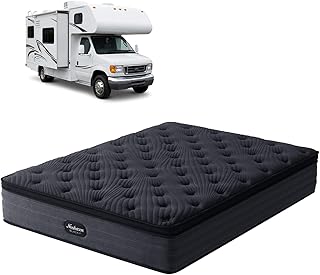
How to Choose a/an Rv Short Queen Mattress (2026)
- Verify the actual footprint: Short queen means 60″ x 75″, but plenty of platforms are cut to 74″ or notched around a wheel well. Measure the deck itself, corner to corner, before you order anything.
- Match thickness to your headroom: An 8-inch build preserves clearance under overhead cabinets and makes climbing in easier in tight bunkrooms. A 10- or 12-inch profile sleeps far better but eats vertical space and can crowd window trim, blocking the wall-wash effect of any perimeter lighting you’ve installed.
- Prioritize heat and moisture handling: RVs swing from cold-soaked to greenhouse in hours, and condensation gathers under any mattress sitting on a solid plywood deck. Gel-infused or open-cell foam plus a breathable knit cover keeps the sleep surface from turning into a heat trap.
- Insist on certifications: Look for CertiPUR-US, OEKO-TEX, and an explicit fiberglass-free claim. In a sealed 300-square-foot space with limited air exchange, off-gassing and shed particulates matter more than they would in a house.
- Test the edges and the roll: You’ll be sitting on the perimeter to pull on boots and sliding across the mattress rather than walking around it. Weak edge support and poor motion isolation are the two failures RV owners notice first.
The Best Rv Short Queen Mattress (2026)s Reviewed
Celestial Sleep 10 Inch RV Short Queen Mattress
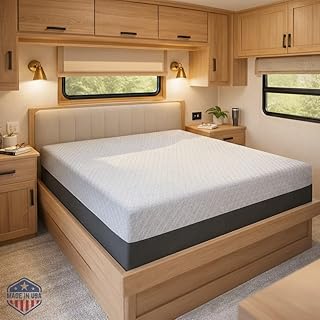
This is the pick I hand to owners who want one decision, made well: US-made, CertiPUR-US and Oeko-Tex certified, explicitly fiberglass-free, and tuned to a medium feel that suits side and combination sleepers. The 10-inch cooling foam build hits the sweet spot between real pressure relief and headroom you can still live with.
Zinus 8 Inch Short Queen Ultima RV Mattress
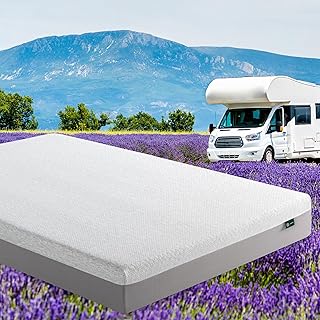
The right answer for low-clearance bunks and anyone replacing a thin factory pad without rebuilding the bed frame. Medium-firm, breathable, certified clean, and it arrives compressed enough to maneuver through a narrow coach door — a practical detail people forget until they’re wrestling a mattress around a dinette.
12 Inch Cooling Gel Memory Foam Hybrid Short Queen
The most luxurious option here, pairing gel foam with coils for genuine edge support and quiet motion isolation, wrapped in a soft cooling knit. Reserve it for coaches with generous overhead space; in a tight slide-out, twelve inches changes the whole proportion of the room.
ESHINE Short King RV Mattress
If your rig came with a short king platform, this 10-inch memory foam build is the cleaner solution than gapping two mismatched pieces together. The shock-absorbing construction earns its keep on rough forest-road approaches to a campsite.
Sealy Dreamlife 12″ Foam Mattress-in-a-Box
A residential-grade option for fifth wheels and park models with true king platforms, layering SealyComfort gel memory foam over transition foam with a stain-resistant surface treatment. It’s the closest thing on this list to sleeping at home.
Frequently Asked Questions
Is a short queen really different from a queen?
Yes — five inches shorter in length. Sheets and mattress protectors need to be short-queen specific or they’ll bunch and pull loose every time you shift.
Do I need a mattress protector in an RV?
More than at home. A breathable waterproof protector guards against condensation from below and humidity from cooking and showering in a compact space.
Will memory foam sleep too hot in summer?
Modern gel-infused and open-cell foams handle heat well, but pair one with real airflow. A slatted or ventilated base beneath the mattress makes a bigger difference than most people expect.
What about a twin or smaller build for a bunk?
The Dreamfoam Copperflex Essential 6-inch gel foam in twin is a sensible bunk or dinette-conversion option, with stain protection that suits kids’ spaces.
Final Thoughts
For most owners, the Celestial Sleep 10-inch short queen is the balanced choice — certified materials, honest sizing, and a medium feel that works across sleep positions. Go with the Zinus 8-inch Ultima if clearance is your constraint, or step up to the 12-inch cooling gel hybrid when you have the headroom and want the sleep quality to match the ambience you’ve built around it.