Key takeaways
- Material and light response: High-loft textures like sherpa and boucle scatter light and stay matte, which is forgiving in bright, south-facing rooms. Leather and tight-weave chenille produce a soft sheen, so they benefit from indirect or diffused lighting rather than a bare bulb overhead.
- Silhouette under backlight: Barrel chairs read as a single continuous curve when a window sits behind them, which is graceful but can look bulky in small rooms. Chairs with defined arms and a separate back cushion break up that outline and hold visual detail even in near-silhouette.
- Base visibility in shadow: A dark metal or plastic swivel base disappears into floor shadow, making the chair appear to float. A wood base catches ambient light and grounds the piece, which suits rooms where you want the furniture to feel anchored and warm.
- Footprint versus lamp placement: Measure the chair’s diameter, then check the swing radius against nearby floor lamps and side tables. A 39-inch oversized chair needs roughly a foot of clearance to rotate without knocking a shade out of alignment.
- Color temperature match: Camel, saddle, and beige warm up further under 2700K bulbs and can drift orange. Dark blue and black hold their hue across bulb temperatures, making them the safer choice if your lighting varies room to room.
What's inside
Most people shop for a swivel chair by looking at the fabric swatch and the price tag, then wonder why the finished room feels off. The chair that photographed beautifully in a showroom under flat overhead panels turns muddy at home, or its nap catches the afternoon sun and glares like a snowbank. A swivel chair is unusual among seating: it rotates, which means every surface of it will eventually face every light source you own. Boucle at 10am reads as soft texture; the same boucle at 7pm under a warm bulb can flatten into a shapeless mass. Leather does the opposite, drinking daylight and then throwing a hot specular streak once a lamp comes on beside it.
This guide evaluates swivel chairs the way a lighting designer would: how the material handles direct and indirect light, whether the silhouette holds its shape when backlit, how the base reads in shadow, and where the chair should sit relative to your windows and lamps. Six chairs are covered below, spanning sherpa and chenille barrels, a solid-wood leather piece, a performance-fabric option, and a compact armless desk chair. Each has a distinct light signature, and the right one depends less on trend than on the quality of light in the room you’re furnishing.
As an Amazon Associate we earn from qualifying purchases.


How to Choose a Swivel Chair (2026)
- Material and light response: High-loft textures like sherpa and boucle scatter light and stay matte, which is forgiving in bright, south-facing rooms. Leather and tight-weave chenille produce a soft sheen, so they benefit from indirect or diffused lighting rather than a bare bulb overhead.
- Silhouette under backlight: Barrel chairs read as a single continuous curve when a window sits behind them, which is graceful but can look bulky in small rooms. Chairs with defined arms and a separate back cushion break up that outline and hold visual detail even in near-silhouette.
- Base visibility in shadow: A dark metal or plastic swivel base disappears into floor shadow, making the chair appear to float. A wood base catches ambient light and grounds the piece, which suits rooms where you want the furniture to feel anchored and warm.
- Footprint versus lamp placement: Measure the chair’s diameter, then check the swing radius against nearby floor lamps and side tables. A 39-inch oversized chair needs roughly a foot of clearance to rotate without knocking a shade out of alignment.
- Color temperature match: Camel, saddle, and beige warm up further under 2700K bulbs and can drift orange. Dark blue and black hold their hue across bulb temperatures, making them the safer choice if your lighting varies room to room.
The Best Swivel Chairs (2026) Reviewed
360° Swivel Accent Armchair, 39.3″ Oversized, Camel
The sherpa boucle here has genuine depth, and at 39 inches wide it becomes the light-catching centerpiece of a room rather than a supporting piece. The removable back and arm pillows are the practical advantage: you can reshape the silhouette so it doesn’t read as a solid mass when a window sits behind it.
CHITA Genuine Leather Swivel Chair, Saddle
Real leather over a solid wood base gives you two different light behaviors in one piece — a warm sheen on the seat and a matte grain on the frame that reads clearly in shadow. Place it where light arrives at an angle rather than head-on, and the saddle tone develops the depth that flat lighting flattens out.
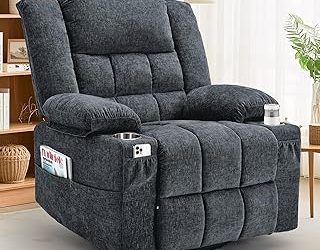
Zihanhome Chenille Swivel Accent Chair, Dark Blue
Chenille has a subtle directional sheen that shifts as the chair rotates, and in dark blue that effect stays elegant instead of shiny. This is the most stable color choice on the list under mixed bulb temperatures, which makes it a reliable pick for reading nooks lit by a single lamp.
KISLOT Swivel Barrel Accent Chair, Linen
The performance fabric is tightly woven and near-matte, so it absorbs glare in rooms with harsh afternoon exposure. Linen tones sit neutral enough to work under both daylight and warm artificial light without shifting hue noticeably.
Swivel Accent Chair with Armrest, Sherpa Teddy, Beige
The teddy sherpa nap is the softest light-diffuser in this group, giving the curved back a gentle halo effect near a window. The defined armrests keep the shape legible when the chair is backlit, which is where plain barrel designs tend to lose definition.
Frequently Asked Questions
Will a light-colored swivel chair look washed out near a window?
It can, especially in camel or beige under strong direct sun. Positioning the chair perpendicular to the window rather than facing it preserves shadow detail and keeps the texture readable.
Does leather show glare more than fabric?
Yes. Leather produces specular highlights that fabric diffuses. A shaded floor lamp or wall-bounced light solves this; an exposed bulb overhead does not.
How much clearance does a swivel chair need?
Allow roughly 10 to 12 inches around the chair’s widest point so it can rotate freely without contacting lamp bases or table edges.
Are armless swivel chairs better for small spaces?
Generally yes. An armless design like the mid-back walnut-style office chair keeps the visual footprint low and doesn’t cast a wide shadow across a compact desk area.
Final Thoughts
For a room where the chair should command attention, the 39.3″ oversized camel sherpa armchair offers the most texture and the most flexibility in how its silhouette reads. The CHITA saddle leather chair is the choice for rooms with layered, indirect lighting where a warm sheen and a grounded wood base pay off. If your lighting is inconsistent or you want a color that holds steady from morning to evening, the Zihanhome chenille in dark blue is the dependable pick.