Key takeaways
- Steam volume control: Fixed-output machines over-wet sealed hardwood, and standing moisture dries into cloudy rings that catch grazing light. Look for at least two settings, ideally three, so you can drop to a low mist on finished wood and open it up on textured porcelain.
- Pad material and swap-out cost: Microfiber density determines whether soil lifts away or gets redistributed as a thin, light-scattering layer. Double-sided washable pads extend your working time per fill and cost far less over five years than proprietary disposables.
- Head geometry and reach: A wide cleaning path covers open floor faster, but a low-profile swivel head is what gets you under a credenza or into the dim corner behind a floor lamp base, where dust settles and reads dark.
- Heat-up time and tank capacity: Sub-30-second heating keeps momentum on small jobs. Tank size sets your session length before an interruption, and stopping mid-room is how you end up with an overlap line that shows under directional light.
- Attachment range: If you also want to steam upholstery, grout, glass, or a stone hearth, a detachable handheld or a canister system with a real accessory kit is the difference between one tool and four.
What's inside
Anyone who has spent time balancing color temperature across a room knows the frustration: you dial in a warm 2700K wash across the living room, add a grazing fixture to bring out the grain in the oak, and then the floor undercuts everything. Steam mops matter more than most people realize in a well-lit home, because raking light is unforgiving. Low-angle illumination turns a faint haze of detergent residue into a visible film, and it throws every streak, smear, and dried mop mark into relief. If you have ever switched on a floor lamp at dusk and suddenly seen tracks across tile that looked spotless at noon, you have met the problem firsthand.
This guide approaches steam cleaner mops the way a lighting designer approaches surfaces: with attention to how a finish reads under different beams, angles, and intensities. Steam works in this context because it leaves no surfactant behind to catch light. The tradeoff is that the machine has to manage heat, moisture, and pad contact well enough not to create its own artifacts. Below are six models worth considering in 2026, along with the specifications that actually determine whether your floors will look clean when the sconces come on.
As an Amazon Associate we earn from qualifying purchases.


How to Choose a Steam Cleaner Mop (2026)
- Steam volume control: Fixed-output machines over-wet sealed hardwood, and standing moisture dries into cloudy rings that catch grazing light. Look for at least two settings, ideally three, so you can drop to a low mist on finished wood and open it up on textured porcelain.
- Pad material and swap-out cost: Microfiber density determines whether soil lifts away or gets redistributed as a thin, light-scattering layer. Double-sided washable pads extend your working time per fill and cost far less over five years than proprietary disposables.
- Head geometry and reach: A wide cleaning path covers open floor faster, but a low-profile swivel head is what gets you under a credenza or into the dim corner behind a floor lamp base, where dust settles and reads dark.
- Heat-up time and tank capacity: Sub-30-second heating keeps momentum on small jobs. Tank size sets your session length before an interruption, and stopping mid-room is how you end up with an overlap line that shows under directional light.
- Attachment range: If you also want to steam upholstery, grout, glass, or a stone hearth, a detachable handheld or a canister system with a real accessory kit is the difference between one tool and four.
The Best Steam Cleaner Mops (2026) Reviewed
Shark Steam & Scrub S8201
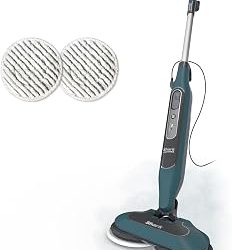
The self-cleaning rotating pad and Steam Blaster mode make this the strongest performer on textured tile and set-in grime, where a passive pad tends to smear rather than lift. The LED headlights sound gimmicky until you realize they cast exactly the kind of low-angle beam that exposes the soil ambient ceiling fixtures hide.
Shark Steam Pocket Mop S3501
A genuinely light machine with two washable double-sided pads, which means four working surfaces per session and no mid-job laundry break. Swivel steering and modest weight make it the easiest pick for frequent quick passes on sealed floors rather than deep periodic cleaning.
BISSELL PowerFresh 1940A
Variable steam and a 12-inch path give you real control across mixed flooring, which matters when a hallway transitions from engineered wood to porcelain under the same run of downlights. The flip-down scrubber handles isolated stuck spots without forcing you to switch to a separate tool.
McCulloch MC1385 Canister Steam Cleaner
This is the choice for anyone whose cleaning list extends past floors, with 23 accessories covering grout lines, upholstery, fixtures, and glass. The canister format delivers steadier pressure over long sessions, though it asks for more storage room and a bit more setup than a stick mop.
11-in-1 Steam Mop with 23FT Cord
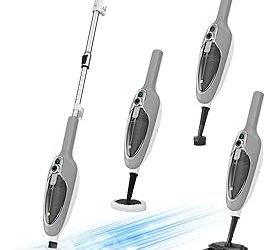
The long cord is the quiet advantage here, letting you clear an open-plan space without hunting for another outlet or unplugging mid-pass. Three steam modes and a detachable handheld cover blinds, window glass, and fabric, all surfaces where residue shows plainly once side light hits them.
Frequently Asked Questions
Will a steam mop damage hardwood floors?
Sealed hardwood in sound condition tolerates low-setting steam with a fast-drying pass. Avoid steam entirely on unsealed, waxed, or damaged wood, where moisture reaches the substrate through gaps in the finish.
Do steam mops actually sanitize?
Steam at roughly 212°F and above reduces common household bacteria on hard, non-porous sealed surfaces with sufficient dwell time. It is not a substitute for a disinfectant in situations that call for one.
Why do my floors still look streaky after steaming?
Almost always a saturated pad or leftover detergent from previous cleanings. Flip or swap the pad more often, and use plain distilled water rather than adding any cleaning solution to the tank.
Is distilled water necessary?
It is worth the small cost. Hard tap water leaves mineral scale that gradually restricts steam output and, in some cases, deposits a faint chalky film that reads clearly under angled light.
Final Thoughts
For most homes, the BISSELL PowerFresh 1940A hits the best balance of steam control and coverage for daily floors, while the Shark Steam & Scrub S8201 earns its place if your tile and grout need active scrubbing rather than a passive wipe. If your cleaning ambitions extend to upholstery, fixtures, and hard-to-reach detail work, the McCulloch MC1385 canister is the one that will still be earning its shelf space years from now.