Key takeaways
- Flame depth over flame brightness: 3D flame systems use a layered reflector or rotating drum to push the illusion back behind the glass. Flat LED strips look convincing in a product photo and unconvincing across the room. If a listing emphasizes “3D” or “multi-layer,” that is the feature doing the work.
- Heat-independent flame mode: Non-negotiable. A fireplace you can only run when you need heat is a fireplace you use four months a year. Confirm the unit has a flame-only setting before anything else.
- Color temperature and dimming range: Cooler orange-white flames clash with 2700K bulbs and make a warm room look sallow. Adjustable brightness matters more than adjustable color — a dimmed flame reads warmer regardless of its native tone.
- Placement determines format: Stove-style units are portable and cast light on nearby walls and floors, which is genuinely atmospheric. Recessed linear units disappear into architecture and give a cleaner, more contemporary glow but commit you to a stud-bay cut.
- Thermostat resolution and timer: A wide-range thermostat with a 12-hour timer lets the unit hold a temperature instead of cycling hard between blast and silence. Look for degree-level control rather than just high/low.
What's inside
Most people shop for an electric fireplace the way they shop for a space heater, and that is where the disappointment starts. Warmth is the easy part — any 1500W unit will raise the temperature of a average room. What separates a unit you actually enjoy from one you quietly stop turning on is the quality of the light it throws: whether the flame reads as depth or as a flat LED panel, whether the glow lands warm enough to sit inside your existing lamp palette, and whether the thing can run its light show without also cooking you out of the room in April.
This guide approaches the category from a lighting-and-ambience standpoint first, heat output second. I look at flame geometry, color temperature, brightness control, and how each unit behaves as a light source in a real living room at 8pm — then at the practical stuff: thermostat accuracy, footprint, mounting requirements, and whether the remote is worth using. Six units, from compact stove-style heaters to a 60-inch recessed linear, with notes on where each one belongs.
As an Amazon Associate we earn from qualifying purchases.



How to Choose a/an Fireplace Heater Electric (2026)
- Flame depth over flame brightness: 3D flame systems use a layered reflector or rotating drum to push the illusion back behind the glass. Flat LED strips look convincing in a product photo and unconvincing across the room. If a listing emphasizes “3D” or “multi-layer,” that is the feature doing the work.
- Heat-independent flame mode: Non-negotiable. A fireplace you can only run when you need heat is a fireplace you use four months a year. Confirm the unit has a flame-only setting before anything else.
- Color temperature and dimming range: Cooler orange-white flames clash with 2700K bulbs and make a warm room look sallow. Adjustable brightness matters more than adjustable color — a dimmed flame reads warmer regardless of its native tone.
- Placement determines format: Stove-style units are portable and cast light on nearby walls and floors, which is genuinely atmospheric. Recessed linear units disappear into architecture and give a cleaner, more contemporary glow but commit you to a stud-bay cut.
- Thermostat resolution and timer: A wide-range thermostat with a 12-hour timer lets the unit hold a temperature instead of cycling hard between blast and silence. Look for degree-level control rather than just high/low.
The Best Fireplace Heater Electric (2026)s Reviewed
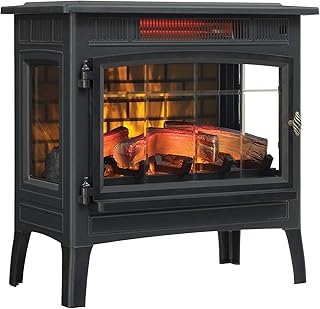
duraflame Freestanding Stove Heater with 3D Flame
The 3D flame here is the most convincing effect in the compact stove category — it has real dimensional movement rather than a scrolling pattern, and the light spill onto surrounding floor and walls does most of the ambience work. Rated for around 1,000 sq ft, it suits a den or a bedroom corner where you want a visible heat source that also functions as a lamp.
Dr. Infrared DR-991 with Humidifier
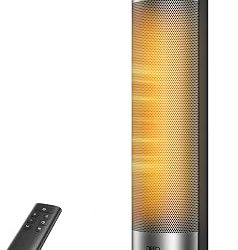
Infrared heat plus a built-in humidifier addresses the dry-air complaint that kills most electric fireplace enthusiasm by February, and the LED display makes the thermostat actually usable. The flame effect is good rather than exceptional, so choose this one if comfort engineering ranks above visual drama.
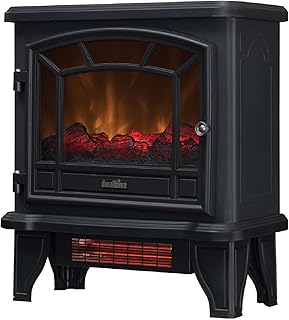
duraflame Infrared Quartz Stove Heater
Infrared quartz delivers a gentler, more even warmth than forced-air convection, which matters if you sit close to it for long stretches. The flame is warmer-toned than the 3D sibling and dims down to a genuinely ambient level, making it the better late-evening companion.
R.W.FLAME 43″ Mantel TV Stand Fireplace
The wooden surround does something a bare firebox cannot: it frames the light and gives it a focal architecture, so the glow reads as a hearth rather than a glowing rectangle. Adjustable LED flame colors let you tune it to your room’s lamps, and doubling as a TV stand solves the low-light-under-a-screen problem neatly.
Tehanld 60″ Ultra-Thin Recessed Fireplace
At 60 inches recessed into a wall, this becomes an architectural light band rather than an appliance — the log-and-crystal media set gives you two very different moods from the same unit. The 60-99°F thermostat and child lock are the practical wins; just plan for the framing work before you order.
Frequently Asked Questions
Can I run the flame without the heat?
On every unit here, yes. Flame-only mode draws a negligible amount of power — comparable to a small lamp — so year-round ambient use is entirely reasonable.
Do electric fireplaces actually heat a room?
A 1500W unit produces roughly 5,100 BTU, which is enough to make a 300-500 sq ft space noticeably warmer. Treat manufacturer square-footage claims as best-case figures in a well-insulated room.
Recessed or freestanding?
Freestanding units move with you and throw light onto adjacent surfaces, which is more atmospheric. Recessed linear models look cleaner and more integrated but require permanent installation.
Are they expensive to run?
At typical rates, a 1500W unit costs roughly 15-25 cents per hour on high. Zone heating one occupied room this way is usually cheaper than raising the whole house thermostat.
Final Thoughts
For the most convincing flame in a portable format, the duraflame Freestanding 3D Flame Stove is the pick — it earns its keep as a light source even when the heat is off. The Dr. Infrared DR-991 is the comfort choice thanks to the humidifier, and if you want the fireplace to read as architecture rather than appliance, the Tehanld 60″ recessed unit delivers the cleanest ambient glow of the group.