Key takeaways
- Wall clearance over stated width: A 30-inch chair that needs 12 inches behind it occupies more floor than a 34-inch zero-wall model. Measure the reclined footprint, not the seated one, and check whether that footprint pushes into a floor lamp’s spread.
- Back height against your sightline: Anything above roughly 40 inches will interrupt light traveling from a window or sconce across the room. Lower backs keep the upper third of a wall open, which is where reflected light does most of its work in a small space.
- Upholstery reflectance: Chenille and light faux leather bounce warm light and keep a corner from going dead. Deep charcoals absorb it, so pair dark seating with a nearby lamp or a pale wall rather than tucking it into an unlit corner.
- Recline geometry: A wide angular range gives you a reading position and a lounging position. Look for something that stops around 100 to 110 degrees so a task lamp still reaches your page instead of your forehead.
- Swivel as a lighting tool: Rotating bases let you chase good light through the day: window in the morning, lamp at night. In a one-chair room, that flexibility is worth more than an extra inch of seat width.
What's inside
Small rooms punish furniture that ignores light. A recliner is the largest object most people put in a compact living room or bedroom, and when it lands in the wrong spot it swallows the lamp glow, throws a hard shadow across the floor, and makes 400 square feet read like 300. The frustration usually gets blamed on square footage, but the real culprit is a chair that blocks the window, sits too tall for the sightline, or reclines backward into the only warm pool of light in the room.
This guide approaches compact recliners the way a lighting designer would: how the silhouette interacts with a window, how the upholstery handles a single warm bulb, how much wall clearance the mechanism needs before it starts eating your lamp real estate. Below are six recliners that hold up in tight rooms, with notes on the ones that genuinely disappear into an ambience-first layout.
As an Amazon Associate we earn from qualifying purchases.


How to Choose a Recliner For Small Space (2026)
- Wall clearance over stated width: A 30-inch chair that needs 12 inches behind it occupies more floor than a 34-inch zero-wall model. Measure the reclined footprint, not the seated one, and check whether that footprint pushes into a floor lamp’s spread.
- Back height against your sightline: Anything above roughly 40 inches will interrupt light traveling from a window or sconce across the room. Lower backs keep the upper third of a wall open, which is where reflected light does most of its work in a small space.
- Upholstery reflectance: Chenille and light faux leather bounce warm light and keep a corner from going dead. Deep charcoals absorb it, so pair dark seating with a nearby lamp or a pale wall rather than tucking it into an unlit corner.
- Recline geometry: A wide angular range gives you a reading position and a lounging position. Look for something that stops around 100 to 110 degrees so a task lamp still reaches your page instead of your forehead.
- Swivel as a lighting tool: Rotating bases let you chase good light through the day: window in the morning, lamp at night. In a one-chair room, that flexibility is worth more than an extra inch of seat width.
The Best Recliner For Small Space (2026)s Reviewed
HRVEOCEI Modern Small Recliner
The 90 to 160 degree range is the standout here, giving you a genuinely upright reading posture that most compact recliners skip. Its mid-height gray back stays below typical window sill lines, so morning light still crosses the room rather than stopping at the chair.
Furnimart Small Manual Recliner
Overstuffed chenille in a soft gray reads warmer than the photos suggest, and the chunky cushioning catches lamplight in a way that keeps the silhouette from looking flat. Manual operation means no cord to route, which matters when your only outlet is already running a lamp.
Sweetcrispy Massage Recliner
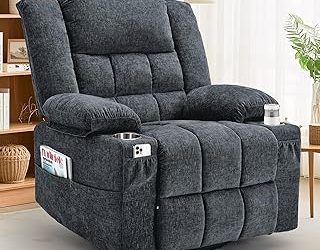
Built for home theater use, with lumbar support that holds up through a full film and a dark grey finish that intentionally absorbs stray light. Give it a bias light or a nearby lamp for non-viewing hours, or the corner it occupies will go visually flat.
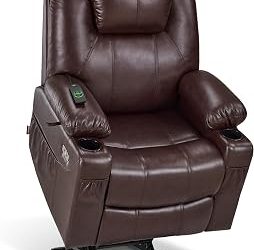
Zero Wall Power Recliner
The zero-wall mechanism is the best space trick in this roundup, letting the chair sit nearly flush and freeing up the wall behind it for a floor lamp or sconce. Light brown faux leather bounces warm light generously, which makes a small room feel less enclosed than a dark fabric would.
Korser Swivel Rocker Recliner
The swivel base is genuinely useful in a small room: rotate toward the window for daylight, back toward the lamp at night, no rearranging required. Beige chenille and side pockets round it out, and the profile stays low enough to keep sightlines open.
Frequently Asked Questions
How much room does a small recliner actually need?
Plan for the chair’s width plus roughly four inches on each side, and check the manufacturer’s reclined depth. Zero-wall designs need only two to four inches behind them; traditional mechanisms often want a foot or more.
Do dark recliners make a small room feel smaller?
They can, but only in poor light. A charcoal chair beside a warm lamp reads as grounding rather than heavy. The problem arises when dark upholstery sits in an unlit corner with nothing to define its edges.
Is a manual or power recliner better for tight spaces?
Manual chairs win when outlets are scarce, since a power recliner’s cord often competes with the lamp you actually want plugged in. Power models offer finer angle control if you can route the cable cleanly.
Will a swivel recliner work on carpet?
Yes, though low-pile carpet turns more smoothly than plush. Test the rotation before committing to a corner placement, since restricted swivel undercuts the main reason to choose one.
Final Thoughts
For the tightest rooms, the Zero Wall Power Recliner is the clear pick, freeing the wall behind it for lighting you would otherwise lose. The Korser Swivel Rocker earns its place through flexibility, letting a single chair follow the light from morning to evening, while the HRVEOCEI offers the best recline range for anyone who reads under a task lamp before switching to lounging mode.