Key takeaways
- Coverage match: Size the unit to your room — not just square footage, but ceiling height and open floor-plan connections. A purifier rated for 1,000 ft² struggles in a lofted living-dining combo that measures 800 ft² on paper.
- Filter stage depth: True HEPA captures 99.97% of particles down to 0.3 microns, but activated carbon is what pulls dander odors and VOCs out of the air. The strongest units pair both.
- Noise profile: Sound shapes mood. A unit rated “quiet” at 24 dB reads like a whisper in a bedroom; anything above 50 dB on high will dominate conversation in a shared space.
- Sleep-friendly lighting: Bright indicator LEDs and harsh night displays undermine bedroom calm. Look for dedicated sleep modes that dim or kill ambient light from the unit entirely.
- Maintenance reality: Washable pre-filters save long-term cost and keep airflow consistent; non-washable replacements mean a recurring expense that can double the annual ownership price.
What's inside
Pet allergies don’t just live on the couch — they hover. Dander drifts through the air like dust motes caught in a sunbeam, settling on every surface and triggering symptoms long before you spot a single strand of fur. For homes shared with animals, the invisible atmosphere matters as much as any visible design choice, and a subpar air purifier leaves the room feeling heavy rather than refreshed.
This guide cuts through the noise. We evaluated the leading pet allergy air purifiers of 2026 through a lens that blends air-science performance with the way a room actually *feels* — the quiet hum at night, the soft glow of a display, the way clean air changes the entire experience of a living space.
As an Amazon Associate we earn from qualifying purchases.



How to Choose a Pet Allergy Air Purifier (2026)
- Coverage match: Size the unit to your room — not just square footage, but ceiling height and open floor-plan connections. A purifier rated for 1,000 ft² struggles in a lofted living-dining combo that measures 800 ft² on paper.
- Filter stage depth: True HEPA captures 99.97% of particles down to 0.3 microns, but activated carbon is what pulls dander odors and VOCs out of the air. The strongest units pair both.
- Noise profile: Sound shapes mood. A unit rated “quiet” at 24 dB reads like a whisper in a bedroom; anything above 50 dB on high will dominate conversation in a shared space.
- Sleep-friendly lighting: Bright indicator LEDs and harsh night displays undermine bedroom calm. Look for dedicated sleep modes that dim or kill ambient light from the unit entirely.
- Maintenance reality: Washable pre-filters save long-term cost and keep airflow consistent; non-washable replacements mean a recurring expense that can double the annual ownership price.
The Best Pet Allergy Air Purifiers (2026) Reviewed
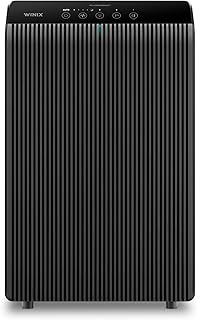
WINIX 5510
The WINIX 5510 is the polished successor to the beloved 5500-2, and it shows in the details. With app support and a massive 1,881 ft² single-hour rating, it handles open-plan spaces where dander spreads fast. The high-deodorization carbon layer tackles the earthy pet smell that pure-HEPA units ignore, and Auto Mode adjusts fan speed in real time — a feature that keeps the room’s ambient sound level consistent rather than lurching between quiet and loud.
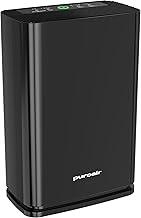
PuroAir 240
The PuroAir 240 punches well above its compact footprint. Its CarbonTech filter, rated at up to 500× the strength of standard carbon, is the standout — ideal for rooms where litter boxes or pet beds concentrate odor. At up to 1,000 ft² it suits bedrooms and home offices without visual clutter, and the Sleep Mode dims the interface to near-darkness, preserving the calm of a well-lit space without competing light pollution.
LEVOIT Vital 100S-P
AHAM Verifide and designed with pets as the explicit use case, the Vital 100S-P brings verified clean-air delivery to rooms up to 1,073 ft². The washable pre-filter is a genuine convenience — no scrambling for replacements after shedding season hits. In a bedroom setting, the Quiet HEPA Sleep Mode earns its name: low hum, dimmed display, and no flickering blue ring to disrupt your bedtime lighting scheme.
KNKA APH4000
Designed for rooms up to 1,695 ft², the KNKA APH4000 combines a washable pre-filter with a dedicated Pet Mode that prioritizes dander, dust, and pollen capture. The built-in AQI display adds a layer of transparency — you can actually *see* the air quality shift from red to green as the room cleans. For anyone who treats data as part of the design process, that visual feedback loop is genuinely satisfying.
Frequently Asked Questions
Can an air purifier fully eliminate pet allergies?
No single device removes 100% of allergens. A quality HEPA purifier dramatically reduces airborne dander and pollen, but combining it with regular grooming, vacuuming, and washable slipcovers yields the best results for allergy sufferers.
How often should I replace the filters?
HEPA filters typically need replacing every 6–12 months depending on use and pet density. Carbon filters may require more frequent swaps. Units with washable pre-filters reduce overall maintenance frequency and keep airflow efficient between deeper filter changes.
Is it safe to run an air purifier around pets?
Yes. HEPA and carbon filters contain no harmful emissions. The main concern is positioning — keep cords tucked and intake grilles away from curious chewers. Units with child-lock or pet-lock features add an extra layer of safety.
Do air purifiers use a lot of electricity?
Most modern pet-oriented purifiers draw between 30W on low and 80W on high — roughly comparable to a standard ceiling fan. Running one continuously at medium speed costs a few dollars per month on most electricity plans.
Final Thoughts
For large open spaces, the WINIX 5510 leads with coverage and smart controls. The LEVOIT Vital 100S-P strikes the best balance of verified performance and bedroom-friendly design. And for odor-heavy homes, the PuroAir 240’s carbon filtration stands in a class of its own. Each choice transforms not just air quality, but the felt atmosphere of the room it inhabits.