Key takeaways
- Fibre before finish: Viscose from bamboo and Tencel lyocell pull moisture off the skin faster than cotton and dry faster too, which is what actually keeps you cool. Polyester jersey feels smooth in the shop and clammy at 3am.
- Membrane quality: Look for a thin polyurethane film, not vinyl or laminated PVC. TPU passes water vapour while blocking liquid; vinyl blocks both and traps a warm, humid layer against your body.
- Acoustic behaviour: Crinkle is the noise equivalent of a flickering bulb — low-level, constant, and disproportionately irritating. Flex a corner of the fabric hard before you commit; if it rustles in your hand, it will rustle under your hip.
- Depth and grip: Measure your mattress including any topper, then add two inches. A protector that migrates overnight bunches into ridges you’ll feel through the sheet. Deep pockets plus a full elastic skirt beat corner straps every time.
- Wash tolerance: Waterproof films degrade with heat. Choose something rated for warm-wash and low-tumble, and expect to replace it every two to three years rather than treating it as permanent.
What's inside
I spend my working life tuning bedrooms for feel rather than function — 2700K on a dimmer, no glare above eye level, warm pools of light instead of one flat ceiling wash. And almost every time a client tells me their bedroom still doesn’t feel restful, the culprit isn’t the lighting plan at all. It’s the bed running hot. Thermal discomfort behaves exactly like a badly aimed downlight: you can’t point at it, but your body registers it all night and never fully settles. Most mattress protectors make this worse, sealing a sheet of plastic between you and a mattress that was engineered to breathe.
This guide treats the protector as part of the room’s sensory layer, not a piece of laundry. I’ve weighted three things heavily: how well the fabric moves heat and moisture away from the skin, how silent it stays when you shift position, and whether the waterproof membrane does its job without turning the surface into a vapour trap. Below are the cooling protectors worth specifying in 2026, plus the criteria I use when a client’s sleep problem turns out to be a temperature problem.
As an Amazon Associate we earn from qualifying purchases.



How to Choose a Mattress Protector Cooling (2026)
- Fibre before finish: Viscose from bamboo and Tencel lyocell pull moisture off the skin faster than cotton and dry faster too, which is what actually keeps you cool. Polyester jersey feels smooth in the shop and clammy at 3am.
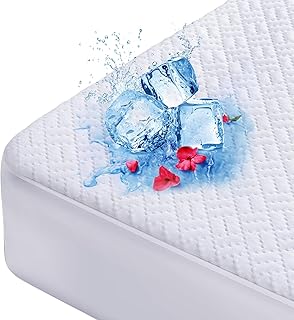
- Membrane quality: Look for a thin polyurethane film, not vinyl or laminated PVC. TPU passes water vapour while blocking liquid; vinyl blocks both and traps a warm, humid layer against your body.
- Acoustic behaviour: Crinkle is the noise equivalent of a flickering bulb — low-level, constant, and disproportionately irritating. Flex a corner of the fabric hard before you commit; if it rustles in your hand, it will rustle under your hip.
- Depth and grip: Measure your mattress including any topper, then add two inches. A protector that migrates overnight bunches into ridges you’ll feel through the sheet. Deep pockets plus a full elastic skirt beat corner straps every time.
- Wash tolerance: Waterproof films degrade with heat. Choose something rated for warm-wash and low-tumble, and expect to replace it every two to three years rather than treating it as permanent.
The Best Cooling Mattress Protectors (2026) Reviewed
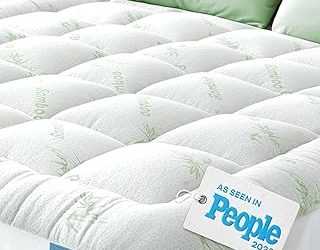
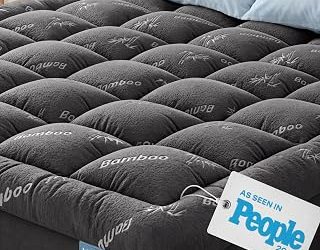
PlushDeluxe Bamboo Waterproof Protector (King)
The viscose-from-bamboo face has a cool, faintly slippery hand that stays dry through the night, and the 18-inch pocket handles a pillow-top plus topper without straining. This is my default recommendation for anyone who describes their bed as “stuffy” rather than actively sweaty.
Cooling 3D Air Fabric Protector (Queen)
The spacer-knit construction holds a millimetre of air between skin and membrane, which is genuinely effective at moving heat sideways instead of storing it. Best suited to firm mattresses, where the slight extra loft reads as cushioning rather than mush.
AllerEase Platinum Zip-Off Top (Full)
The zip-off top panel is the smartest piece of design in this category — you launder the part that gets wet and leave the encasement in place. Choose it if allergens and temperature are joint concerns, since it seals the mattress properly without the sauna effect of a full vinyl encasement.
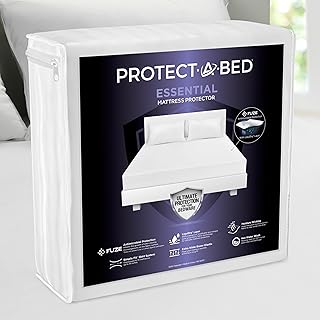
Protect-A-Bed Essential (Queen)
Unshowy, quiet, and reliably thin, this is the one I put in guest rooms and short-let properties where nobody will be checking depth measurements. It won’t cool an already-hot mattress, but it also won’t add a degree of its own.
Premium Tencel Waterproof Protector (King)
Tencel lyocell manages humidity better than almost anything else at this price, and the finish is smooth enough that it disappears under a percale sheet. The pick for hot sleepers who’ve already tried a cooling protector and found it merely adequate.
Frequently Asked Questions
Will a protector cancel out my cooling mattress?
A thin TPU-backed protector in bamboo or Tencel costs you very little airflow. Thick quilted pads and vinyl sheets, on the other hand, will comprehensively undo whatever you paid for in the mattress.
Waterproof or water-resistant?
Waterproof for children, pets, and anyone managing incontinence or night sweats. Water-resistant is fine if you’re only guarding against the occasional spilled glass and want the most breathable option available.
How often should it be washed?
Every four to six weeks alongside your sheets, warm water, low heat, no fabric softener. Softener leaves a film across the membrane that blocks vapour transfer and shortens the protector’s life.
Why does my protector feel hot despite the cooling claim?
Usually humidity rather than heat. If the surface feels damp, the membrane isn’t passing vapour — that’s a materials problem you can’t fix with a lighter duvet.
Final Thoughts
For most bedrooms, the PlushDeluxe Bamboo protector delivers the best balance of silence, breathability and fit. Serious hot sleepers should go straight to the Premium Tencel option, and anyone dealing with allergies as well as temperature will get the most from the AllerEase Platinum zip-off design. Get this layer right and the room finally does what your lighting has been trying to do all along.