Key takeaways
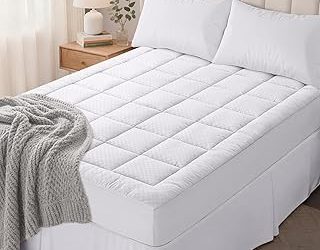
- Loft height: Two inches gives you a gentle sink and a soft edge. Three to five inches builds a visible crown that catches raking light from a bedside lamp and produces the deep, rolled shoulder you see in hotel photography. Anything above five inches starts to swallow fitted sheets and complicate the sightline over a low footboard.
- Fill ratio and construction: Down clusters give airy loft; feather quills give structure and springback. A baffle box grid holds fill in place instead of letting it drift to the corners, which matters visually as much as physically: uneven fill creates blotchy shadows that no dimmer can smooth out.
- Cover fabric and finish: One hundred percent cotton with a matte, tight weave diffuses warm light beautifully. Slick synthetics throw specular highlights that read cheap under a directional reading lamp, and they tend to look grey rather than white at low color temperatures.
- Anchoring: Elastic corner straps or a full skirt keep the topper square. A topper that shifts overnight breaks the symmetry of the bed, and asymmetry is the first thing the eye catches when a room is lit from one side.
- Heat behavior: Feather and down breathe well on their own. Hybrid builds like the WhatsBedding five-inch duck feather and memory foam construction trade some airflow for support, so hot sleepers should favor all-natural fill or a cotton-topped cooling pad.
What's inside
I spend my working hours deciding how light lands in a room, and the bed is almost always the largest surface a lamp has to work with. A compressed, flat mattress reads as a slab under any fixture you point at it: no crown, no gradient, no soft shoulder where the sheet turns down. Clients often blame the lamps. Nine times out of ten the problem is that the bed has nothing for light to travel across, so every source in the room lands hard and flat.
A down feather topper fixes that at the same time it fixes the comfort problem, which is why it sits on my short list of low-cost, high-impact bedroom upgrades. This guide looks at the current crop through both lenses: how the fill behaves under body weight, and how the finished profile behaves under a 2700K bedside bulb. Below you’ll find the toppers worth considering in 2026, the specs that actually matter, and answers to the questions that come up most.
As an Amazon Associate we earn from qualifying purchases.



How to Choose a/an Down Feather Mattress Topper (2026)
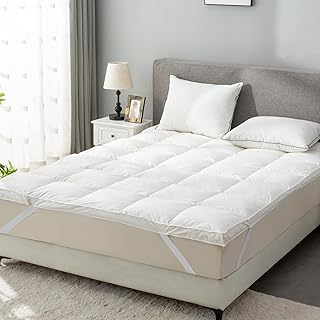
- Loft height: Two inches gives you a gentle sink and a soft edge. Three to five inches builds a visible crown that catches raking light from a bedside lamp and produces the deep, rolled shoulder you see in hotel photography. Anything above five inches starts to swallow fitted sheets and complicate the sightline over a low footboard.
- Fill ratio and construction: Down clusters give airy loft; feather quills give structure and springback. A baffle box grid holds fill in place instead of letting it drift to the corners, which matters visually as much as physically: uneven fill creates blotchy shadows that no dimmer can smooth out.
- Cover fabric and finish: One hundred percent cotton with a matte, tight weave diffuses warm light beautifully. Slick synthetics throw specular highlights that read cheap under a directional reading lamp, and they tend to look grey rather than white at low color temperatures.
- Anchoring: Elastic corner straps or a full skirt keep the topper square. A topper that shifts overnight breaks the symmetry of the bed, and asymmetry is the first thing the eye catches when a room is lit from one side.
- Heat behavior: Feather and down breathe well on their own. Hybrid builds like the WhatsBedding five-inch duck feather and memory foam construction trade some airflow for support, so hot sleepers should favor all-natural fill or a cotton-topped cooling pad.
The Best Down Feather Mattress Topper (2026)s Reviewed
ELEMUSE Queen Goose Down Feather Topper
The goose down and feather fusion fill strikes a genuinely balanced note: enough cluster content to feel cloud-like on contact, enough quill to keep from bottoming out by morning. The deep pocket construction means it stays put on a taller queen mattress, and the crown it builds holds its shape under side lighting rather than collapsing into a flat plane.
Goose Down Feather Topper with Straps
This is the one I recommend when a client wants plushness without giving up a tidy silhouette. The baffled pillowtop keeps fill distributed evenly across all sixty by eighty inches, and the hypoallergenic, all-season build handles a warm room better than most featherbeds in its price bracket.
Dual Layer Goose Feather Down Topper
The two-layer approach separates feather support underneath from down softness on top, which is the right order of operations for anyone who has been disappointed by single-chamber featherbeds. The organic cotton shell is the quiet standout here: a soft, non-reflective surface that reads clean and warm under incandescent or filament lighting.
3-Inch Goose Feather Topper, King
Three inches of feather over a king frame is the most dramatic profile change on this list, and it is aimed squarely at pressure relief and back pain rather than pure softness. Adjustable straps and an anti-slip base keep the sizeable panel from creeping, and the cotton cover holds a crisp edge line where it meets the mattress.
Cotton Extra Thick Pillow Top Pad, Queen
A sensible choice if you want the pillowtop profile with less loft to manage. The breathable cotton top layer suits hot sleepers, and the lower stack height keeps standard fitted sheets from straining at the corners.
Frequently Asked Questions
Will a down topper make a firm mattress feel soft?
It softens the contact surface, not the support core. A three-inch feather layer changes how the bed feels in the first few inches of sink, but a genuinely too-firm mattress underneath will still make itself known.
Do I need a deep pocket sheet?
For anything three inches or thicker, yes. Standard sheets will still fit a two-inch pad, but they will pull the corners and flatten the loft you paid for.
How do I keep the fill from clumping?
Shake and rotate it weekly, and choose a baffle box design from the start. Fill migration is far easier to prevent than to correct.
Are feather toppers a problem for allergies?
Modern hypoallergenic processing removes most of the trigger material, and a tight cotton shell adds another barrier. Pair it with a washable protector if you are sensitive.
Final Thoughts
For most bedrooms, the ELEMUSE queen topper is the easiest recommendation: balanced fill, reliable loft, no fuss. If you want a more refined surface and better long-term structure, the Dual Layer Goose Feather Down topper with its organic cotton shell is worth the step up, and the 3-Inch Goose Feather Topper in king is the pick when pressure relief and a bold, light-catching profile matter more than anything else.