Searching for the Sleepal AI lamp usually leads to a practical problem: the buying decision is not really about a lamp, but about which bedside light can shape both ends of the night — dimming down as you fall asleep and brightening gradually before your alarm. A lamp that only glows warmly at bedtime does half the job, while one with a harsh display or a fixed sunrise can undo the calm it promises.
This roundup is for light sleepers, phone-alarm users trying to clear the nightstand, and anyone whose bedroom gets no morning daylight. One note up front: no verifiable Amazon US listing for the Sleepal AI Lamp itself could be confirmed, so it cannot anchor this list. The four lamps below were chosen from their Amazon listing titles and stated features — sunrise and sunset simulation, sleep sounds, brightness steps and display behaviour — and each one is a lamp you can actually order.
Quick Picks
As an Amazon Associate we earn from qualifying purchases.
Product
Best for
Key spec from title
Hatch Restore 3 (Putty)
Screen-free bedtime routines
Sunrise alarm clock, sound machine and smart light
Philips SmartSleep Wake-Up Light HF3520/60
Coloured sunrise with radio
Colored sunrise and sunset simulation, FM radio
Philips SmartSleep Sleep and Wake-Up Light HF3650/60
Guided wind-down breathing
Simulated sunrise and sunset, RelaxBreathe to Sleep
Lumie Bodyclock Shine 300
Long, slow dawn simulations
Custom light duration, wake-up, night and reading light
How to Choose
Decide whether you need a sunrise, a sunset, or both
A sleep aid lamp earns its place by working at both ends of the night. Sunrise simulation matters if dark mornings make waking feel abrupt: the light climbs gradually before the sound alarm, so your eyes adjust before you are fully awake. Sunset simulation matters if you read in bed and want the room to fade on a timer instead of switching off suddenly. Some models, like the Philips HF3650/60, add a guided breathing wind-down, while simpler lamps only dim. List which end of the night troubles you more, then check the listing states that exact function rather than assuming every wake-up light also fades at bedtime.
Check brightness steps and how long the dawn lasts
Two numbers separate a gentle lamp from a glowing alarm clock: how many brightness settings it offers and how long the sunrise can run. The Philips HF3520/60 lists 20 brightness settings, which gives finer control in a small bedroom where full output would be blinding. The Lumie Bodyclock Shine 300 instead competes on duration, with custom light lengths from 15 to 90 minutes for both sunrise and sunset. A short, steep sunrise suits heavy sleepers who need light quickly; a long, shallow one suits people who wake somewhere inside the ramp. Match the ramp to your sleep depth, not to the headline feature list.
Look at what plays at night, not just in the morning
Sound is where these lamps diverge most. The Hatch Restore 3 is built around a sound library and white noise for the whole night, positioning itself as a sound machine first and a light second. The Philips HF3520/60 lists five natural sounds plus FM radio, which suits listeners who like variety at wake-up but silence overnight. The Lumie lists 15 sounds alongside its radio. Before buying, decide whether sound should run all night, only during wind-down, or only as the alarm itself — a lamp that cannot keep white noise running until morning will disappoint a buyer who needs masking more than light.
Pay attention to the display and the controls
A sleep lamp can sabotage itself with a bright clock face. Check whether the listing mentions a dimmable or auto-dimming display, and think about where the lamp will sit: a display that cannot go fully dark is a real problem for light-sensitive sleepers in small rooms. Controls matter at 6 a.m. too. The Philips HF3520/60 uses tap snooze on the lamp itself, while app-controlled models such as the Hatch Restore 3 ask you to build routines on your phone in advance. If the whole point is keeping the phone out of the bedroom, favour lamps whose daily controls live on the device, not in an app.
The 4 Best Options
Hatch Restore 3 (Putty)
Top Pick
Hatch Restore 3 (Putty)
Best for: Sleepers who want one device to handle wind-down sounds, overnight white noise and a sunrise wake-up.
The Restore 3 suits buyers who want the lamp to run an entire routine rather than a single alarm. Its listing frames it as three devices in one housing — a sunrise alarm clock, a sound machine and a smart light — aimed at a screen-free sleep routine, meaning the bedside unit itself stays free of a glowing phone-style interface. The Putty finish is the neutral fabric colourway in the range. Choose it if bedtime structure matters more to you than a classic clock face: the value sits in repeatable wind-down and wake-up sequences, with white noise available for the hours in between.
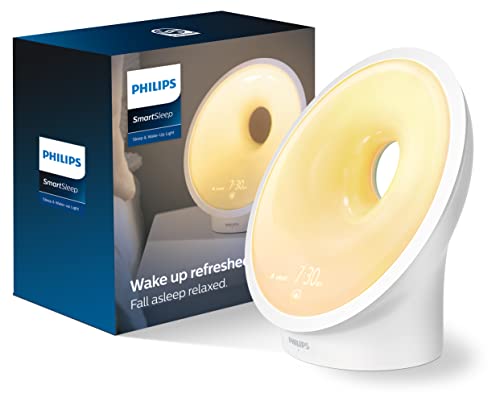
Philips SmartSleep Wake-Up Light HF3520/60
Philips built the HF3520/60 around colour rather than content libraries. Its listing promises coloured sunrise and sunset simulation, so the dawn moves through warm tones instead of simply getting brighter, and the same lamp works as a reading light in the evening. Five natural sounds handle the audio alarm, FM radio covers listeners who prefer waking to a station, and tap snooze lets you silence it by touching the top of the lamp rather than hunting for a button half asleep. Pick this model if you want a self-contained lamp with no routines to programme and a long-established wake-up light design.
Specs
Brand: Philips
Model number: HF3520/60
Functions from listing title: colored sunrise and sunset simulation
Wake-up sounds: 5 natural sounds, plus FM radio
Extra functions from listing title: reading lamp, tap snooze
Best for: Buyers who want coloured light at both ends of the night and radio as a wake-up option.
Watch out for: The sound set is fixed at five natural sounds, so check that selection covers you if you dislike generic nature audio.
ASIN: B0093162RM
Philips SmartSleep Sleep and Wake-Up Light HF3650/60
Runner-Up
Philips SmartSleep Sleep and Wake-Up Light HF3650/60
Best for: People who fall asleep slowly and want guided breathing plus a fading sunset, not just a morning alarm.
Brand: Philips
Model number: HF3650/60
Functions from listing title: simulated sunrise and sunset
Wind-down feature from listing title: RelaxBreathe to Sleep
The HF3650/60 is the wind-down specialist in the Philips line. Beyond simulated sunrise and sunset, its listing names RelaxBreathe to Sleep, a guided feature that uses light to pace your breathing as you settle — a different approach from playing sounds and hoping they work. Multiple lights and sounds give more combinations than the HF3520/60, and the design targets people whose main problem is falling asleep rather than getting up. Choose it if your evenings are the broken half of the night: the breathing guidance and fading sunset do the heavy lifting, while the sunrise side still covers dark winter mornings.
Lumie Bodyclock Shine 300
Lumie Bodyclock Shine 300
Best for: Light sleepers and shift workers who need a long, adjustable dawn rather than a fixed short ramp.
Brand: Lumie
Model number: NBCSA-1000
Functions from listing title: sunrise and sunset alarm clock, bedside lamp
Light timing: custom light duration, 15 to 90 minutes
Lumie takes the opposite route from app-driven rivals: the Bodyclock Shine 300 concentrates on the light itself. Its listing highlights custom light duration, so both the sunrise and the sunset can stretch from 15 to 90 minutes, and the same unit covers wake-up, night and reading duties with warm LEDs rather than coloured effects. A radio and a set of built-in sounds handle the audio side without any subscription-style library. Pick the Lumie if you wake gradually over a long window, share the room with someone on a different schedule, or simply want the dawn length — not an app — to be the headline feature.
Which One Fits Your Situation
You fall asleep fine but dread dark winter mornings
Start with the Lumie Bodyclock Shine 300 or the Philips HF3520/60. The Lumie’s sunrise can stretch to 90 minutes, which helps when you surface slowly, while the Philips adds coloured dawn tones and radio for a firmer finish. Either way, place the lamp close to the bed at pillow height, because distance flattens the effect of any sunrise ramp.
Your problem is switching off at night, not waking up
The Philips HF3650/60 fits best here. RelaxBreathe gives your attention something structured to follow, and the sunset fade removes the jolt of a hard lights-out moment. The Hatch Restore 3 is the alternative if you prefer sound-led wind-downs, since its routine approach layers audio over the dimming light and can repeat the same sequence nightly without further input from you.
You want the phone out of the bedroom entirely
Choose between the Hatch Restore 3 and the Philips HF3520/60 based on where you accept the phone’s role. The Hatch keeps the bedside device screen-free but still uses an app for setup. The Philips keeps daily control on the lamp itself, including tap snooze, so after unboxing the phone can stay in another room for good.
You share a room and need masking sound all night
The Hatch Restore 3 is the natural pick, because its listing leads with the sound machine role and white noise rather than treating audio as an alarm accessory. Pair it with the dimmest display setting you can tolerate. The other three lamps play sounds mainly around sleep and waking, which may leave a gap in the middle of the night.
Common Mistakes
Buying a wake-up light when the real problem is falling asleep, then ignoring whether the listing includes a sunset or wind-down function at all.
Placing the lamp across the room or behind a shade, which weakens the sunrise ramp the product was bought for.
Choosing the brightest model for a small bedroom without checking how many brightness steps it offers for fine control.
Assuming every lamp keeps white noise running all night, when many only play sounds during wind-down and wake-up windows.
Leaving the clock display at full brightness, then blaming the lamp when the glowing numbers disturb light-sensitive sleep.
Frequently Asked Questions
Can a sleep aid lamp replace a phone alarm completely?
For most sleepers, yes, provided the lamp has its own sound alarm and you set a backup for the first few mornings. The Philips HF3520/60 and Lumie Bodyclock Shine 300 both pair light with audio alarms on the device itself. Keep the phone alarm as a safety net only until the routine feels reliable.
What happened to the Sleepal AI Lamp itself?
Sleepal’s lamp adds contactless sleep tracking to the sunrise format, which is why it attracts attention. However, no verifiable Amazon US product listing for it could be confirmed when this roundup was prepared, so it does not appear as a purchasable pick here. The four lamps above cover the light-based half of its promise through ordinary retail listings.
Is a longer sunrise always better than a short one?
Not necessarily. A 90-minute ramp suits people who wake gradually and stay in lighter sleep near morning, while heavy sleepers often need a shorter, steeper climb backed by sound. The right length is the one that gets you awake before the audio alarm fires, so treat adjustable duration as the safer feature.
Do these lamps help with falling asleep as well as waking?
Some do, but only the models whose listings state a sunset or wind-down function. The Philips HF3650/60 adds guided breathing, and the Hatch Restore 3 builds full bedtime routines. A basic sunrise-only lamp will not dim your evening down, so check the listing wording rather than assuming symmetry.
H
Home Beautiful Design Editorial Team
We compare specs, materials and verified owner reviews before a product earns a spot. Rankings are never paid.
Affiliate disclosure. As an Amazon Associate we earn from qualifying purchases at no extra cost to you. Prices accurate as of the date shown.
Discover the best reed diffuser for living rooms, bedrooms, and bathrooms. Compare five elegant, long-lasting reed diffusers for inviting home fragrance.