4 Best Emergency Light Batteries to Recharge (November 2026)
Find the best rechargeable emergency light battery for power outages and backup lighting. Compare sealed lead-acid and Ni-Cd options, capacity, and fit.
The decision is which rechargeable battery keeps an emergency light working when the mains power goes out, and the answer depends on the light itself rather than the battery shelf. Emergency lights use specific voltages, terminal types, and sizes, so a battery that is almost right can still fail to connect or fit inside the housing. The four batteries below cover the common 12-volt sealed lead-acid sizes and one small nickel-cadmium pack, and each one suits a different kind of emergency fixture.
This guide is for homeowners replacing the battery inside an emergency light, landlords keeping exit and stairwell lights ready, and anyone maintaining backup lighting in a garage or hallway. Every battery here was chosen from the names and specifications shown on its Amazon page, so the details reflect what the listing itself states about voltage, capacity, terminals, and size.
Quick Picks
As an Amazon Associate we earn from qualifying purchases.
Product
Best for
Key spec from title
ExpertPower EXP1245
Compact emergency fixtures
12-volt sealed lead-acid, 4.5 amp-hour
Mighty Max ML7-12
Longer runtime in larger fixtures
12-volt sealed lead-acid, 7.2 amp-hour
NEAFAZA Ni-Cd 2-Pack
Small plug-in emergency lights
3.6-volt nickel-cadmium, 1000 milliamp-hour
Power Sonic PS-1250F1
A middle-capacity replacement
12-volt sealed lead-acid, 5 amp-hour
How to Choose
Match Voltage, Terminals, and Size First
An emergency light battery must match the old battery on voltage, terminal type, and physical size, or it will not work in the fixture. Read the label on the battery you are replacing and compare voltage first: a 12-volt light needs a 12-volt battery, and a 3.6-volt light needs a 3.6-volt pack. Then check the terminals, because an F1 terminal and an F2 terminal look similar but do not accept the same connectors. Finally, measure the battery compartment, since a battery with the right voltage is useless if the housing will not close over it. A battery that fits loosely can rattle and lose its connection, so measure twice before ordering.
Choose Capacity for the Runtime You Need
Capacity, measured in amp-hours, decides how long the emergency light stays on after the power fails. A 4.5 amp-hour battery suits a compact fixture that only needs to light a hallway for a short outage, while a 7.2 amp-hour battery keeps a larger fixture running noticeably longer. Do not assume a bigger capacity is always better, because a larger battery is also heavier and may not fit the housing. Pick the smallest capacity that covers the runtime your building needs, and check the fixture manual for the capacity range it accepts. A larger battery that the fixture cannot charge properly will fail sooner than the right size.
Check the Chemistry and the Fixture It Fits
Sealed lead-acid batteries suit most wired emergency lights and alarm panels, while small nickel-cadmium packs suit plug-in lights with a built-in charging circuit. The two chemistries are not interchangeable, so the fixture decides which one you buy. Nickel-cadmium packs are often sold as direct replacements for a specific fixture model, so check the compatibility list on the listing against your light. A sealed lead-acid battery should be replaced with the same sealed type, because a flooded battery has no place inside a wall-mounted light. When the chemistry is unclear, the label on the old battery settles the question.
Treat Sealed Batteries and Charging With Care
Safety starts with the sealed construction the listings describe: sealed lead-acid batteries are spill-proof and can be mounted in any position, which matters inside a fixture that may sit at an angle. Keep the battery away from heat sources and never puncture or open the case, since the sealed design is what keeps the electrolyte inside. One listing in this guide also states UL certification, which is a useful check when comparing otherwise similar batteries. Always disconnect the fixture from mains power before swapping the battery, and recycle the old battery rather than putting it in household waste. Keep spare batteries in a cool, dry place, away from heat.
The 4 Best Options
ExpertPower EXP1245
Top Pick
ExpertPower EXP1245
Best for: A compact emergency fixture that needs the original small battery size.
The ExpertPower EXP1245 is the pick for compact emergency fixtures that need a small, dependable 12-volt battery. It is a sealed AGM lead-acid battery rated at 4.5 amp-hours, with an F1 terminal that matches the connectors in many emergency lights and alarm panels. The spill-proof ABS case allows mounting in any position, and the battery measures 3.5 by 2.7 by 3.9 inches at 3.2 pounds, so it fits housings where a larger battery will not. It suits a hallway or stairwell light that needs a straightforward replacement in the original size.
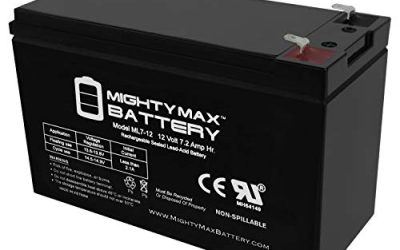
Mighty Max ML7-12
Runner-Up
Mighty Max ML7-12
Best for: A larger fixture where longer runtime matters more than compact size.
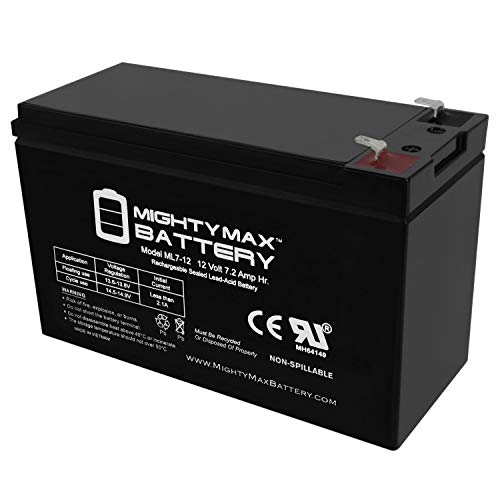
The Mighty Max ML7-12 is the pick when a larger fixture needs more runtime than a 4.5 amp-hour battery can give. It is a sealed lead-acid battery rated at 7.2 amp-hours with an F1 terminal, and the listing states UL certification with a 1-year warranty. At 5.94 by 2.56 by 3.94 inches and 4.5 pounds, it is bigger and heavier than the compact option, so it suits fixtures with room to spare. It fits a larger emergency light, an alarm panel, or any fixture where the extra capacity is worth the extra size.
NEAFAZA 3.6V 1000mAh Ni-Cd 2-Pack
NEAFAZA 3.6V 1000mAh Ni-Cd 2-Pack
Best for: Small plug-in emergency lights that take a 3.6-volt nickel-cadmium pack.
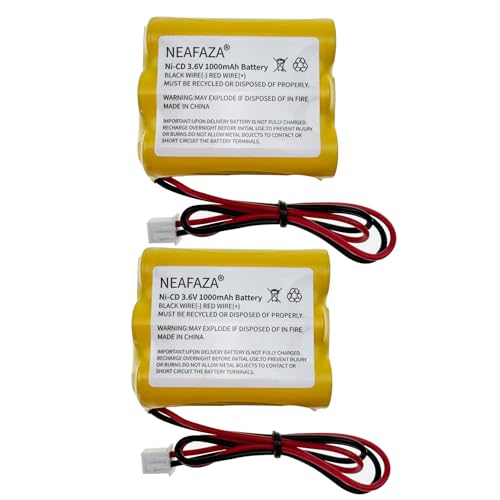
The NEAFAZA pack is the pick for small plug-in emergency lights that run on a 3.6-volt nickel-cadmium battery. It comes as a two-pack rated at 1000 milliamp-hours, and the listing names the fixtures it fits, including the OSA107, the PowerSonic A5289-1, and the DISON KRH-15/51. Buying two at once covers a pair of lights or leaves a spare ready for the next replacement. It suits a household with several small emergency lights of the same model, where matching the exact replacement pack matters more than capacity.
Power Sonic PS-1250F1
Power Sonic PS-1250F1
Best for: A standard fixture whose original battery was a 5 amp-hour unit.
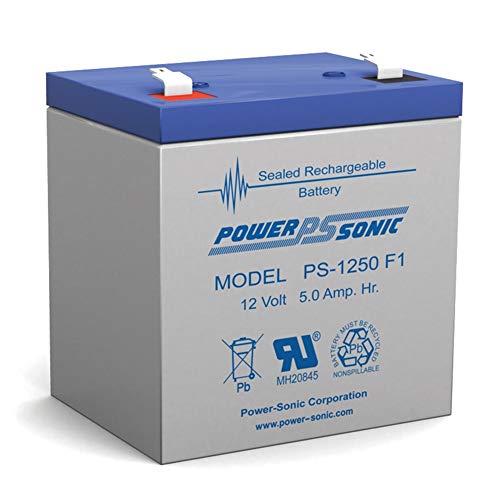
The Power Sonic PS-1250F1 is the middle-capacity pick for fixtures that fall between the compact and large batteries in this guide. It is a 12-volt sealed lead-acid battery rated at 5 amp-hours with an F1 terminal, and the listing describes it for alarm systems and emergency lighting. That middle capacity gives a useful runtime gain over a 4.5 amp-hour battery without the size and weight jump to 7.2 amp-hours. It suits a standard emergency light or alarm panel where the original battery was a 5 amp-hour unit.
Which One Fits Your Situation
Your Fixture Takes a Small 12-Volt Battery
Choose the ExpertPower EXP1245 if the battery you are replacing is a compact 12-volt unit with an F1 terminal. Its 4.5 amp-hour capacity and small case match the most common compact emergency lights, and the spill-proof sealed design mounts in any position inside the housing.
You Want More Runtime From a Larger Fixture
Choose the Mighty Max ML7-12 if the fixture has room for a bigger battery and you want the light to stay on longer during an outage. The 7.2 amp-hour capacity is the largest in this guide, and the UL certification and 1-year warranty on the listing add reassurance.
Your Light Uses a Small Nickel-Cadmium Pack
Choose the NEAFAZA 2-pack if your emergency light runs on a 3.6-volt nickel-cadmium battery. Match your light model against the compatibility list on the listing, and the two-pack covers a pair of lights or gives you a spare for the next change. The 1,000 milliamp-hour capacity suits small fixtures, and a spare in the cupboard covers the next change.
Your Original Battery Was 5 Amp-Hours
Choose the Power Sonic PS-1250F1 if the battery coming out of the fixture is a 12-volt 5 amp-hour unit. Matching the original capacity keeps the charging circuit and runtime as the fixture maker intended, without forcing a larger battery into a small housing. The F1 terminal matches the original wiring, so the swap needs no new connectors or adapters.
Common Mistakes
Buying a battery with the right voltage but the wrong terminal type, then finding the fixture connectors will not attach and the light stays dark.
Choosing a larger capacity battery that does not fit the housing, so the fixture cover will not close.
Replacing a nickel-cadmium pack with a sealed lead-acid battery, or the reverse, when the fixture charging circuit only suits one chemistry.
Ignoring the old battery label and guessing the voltage, which risks a battery that cannot power the light at all when the power fails.
Throwing the old battery in household waste instead of taking it to a battery recycling point.
Frequently Asked Questions
How do I find the right battery for my emergency light?
Open the fixture and read the label on the battery inside, noting voltage, capacity, terminal type, and dimensions. Match all four against the replacement listing, and check any compatibility list the listing names. When the old label is unreadable, the fixture manual or the maker support line can confirm the battery the light was built for.
How long does an emergency light battery last before replacement?
It depends on the fixture, the battery chemistry, and how often the light runs on battery power. Sealed lead-acid batteries in emergency lights are commonly replaced every few years, and a light that no longer stays on through a short outage is telling you the battery is done. Test the light regularly to catch a weak battery.
Can I use a higher capacity battery in my emergency light?
Only if it fits the housing and the fixture manual allows it. A higher capacity battery of the same voltage and terminal type can give longer runtime, but the larger case often will not fit, and some charging circuits are sized for a specific capacity. Staying with the original capacity is the safe choice when the manual is silent.
What should I do with the old emergency light battery?
Take it to a battery recycling point or a household waste centre that accepts batteries. Sealed lead-acid and nickel-cadmium batteries should never go in household waste, because both contain materials that need proper handling. Many hardware and electronics shops collect old batteries for recycling. A recycling point keeps the materials out of landfill and recovers the lead for reuse.
H
Home Beautiful Design Editorial Team
We compare specs, materials and verified owner reviews before a product earns a spot. Rankings are never paid.
Affiliate disclosure. As an Amazon Associate we earn from qualifying purchases at no extra cost to you. Prices accurate as of the date shown.
Shop the best 5 inch led light bar for trucks and off-road use. Compare four compact bars by beam pattern, lumens, waterproofing, and mounting in this guide.
The best car battery for led lights 2 buyers need is a sealed 12V battery with the right capacity and terminals. Compare three proven models side by side.
The best wide angle battery led light covers a broad area without wiring. Compare three battery flood lights on beam angle, brightness, sensor and runtime.
Find the best AR 15 laser light for your rifle with green and red laser-light combos, Picatinny mounting, brightness, runtime and zero retention explained.
BDF S05 mirror window film for daytime privacy and heat control: how the one-way mirror effect works, what to measure, and the night-time limit to know.


 Power Sonic PS-1250F1