Our Top Picks
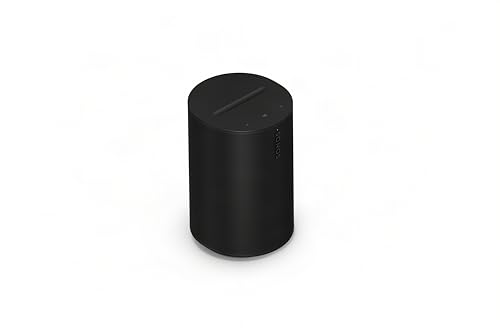
 Sonos Era 300 Wireless Smart Speaker with DolbyPack of 16.65 x 6.65 x 7.44 inches9.9 poundsCheck on Amazon
The Short Answer: Match the Deal to the Room, Not the Discount
The best Sonos deal for most people is a Sonos Beam (Gen 2) bundled with a Sub Mini if the TV room is under about 14 x 18 ft, or a pair of Era 100s if there is no TV involved at all — those two configurations deliver the largest jump in perceived sound per dollar, and both go on promotion more often than the flagship Arc Ultra. Buy the Arc Ultra only if your seating distance is 9 ft or more and your TV is 55 in or larger; buy the Ray only for a bedroom, dorm, or secondary screen where you want better dialogue and nothing else.
Everything below ranks the current Sonos line by four things a product listing never tells you: how much room the speaker can actually cover, what role it plays (soundbar, satellite, standalone, sub, component), whether it joins a multiroom system cleanly, and what else you have to buy before the setup is finished. Prices are given as general market ranges, because Sonos promotions move constantly and vary by retailer and region.
Sonos Era 100 SL Compact, Microphone-Free Speaker - Black
Chosen because it specifies Microphone-Free Speaker and Black.
View on Amazon

Sonos Beam Gen 2 - Black - Soundbar with Dolby Atmos
Chosen because it specifies Black and Soundbar with Dolby Atmos.
View on AmazonSonos Era 300 Wireless Smart Speaker with Dolby Atmos - Black
Chosen because it specifies Black.
View on AmazonWhat Counts as a Real Deal on Sonos Gear
Sonos discounting follows a predictable pattern, and knowing the pattern stops you from overpaying in the wrong week.
- Seasonal percentage cuts (usually 15–25% off street price). The deepest cuts land around major gift-giving periods and again in late spring. Standalone speakers and soundbars move most; subs and amplifiers discount least.
- Bundles (effectively 10–20% off the sum of parts). A soundbar plus sub, or a soundbar plus two rear speakers, is where the real value sits. Bundles are the only reliable way to get a discount on a Sub, which almost never goes on sale alone.
- Certified refurbished (typically 20–30% below new). Sonos sells its own refurbished units with the same warranty as new. This is the single best price channel for the Arc Ultra, the Five, and the Amp.
- Previous-generation stock (30–45% below the current model). When a model is replaced, remaining stock clears fast. The trade-off is a shorter support window and, on older units, an app-platform restriction covered later in this article.
- Open-box and display units (10–25% off). Highest variance, no pattern, and the only category where you should verify the serial number is not registered to someone else before buying.
What is not a deal: a “sale” that only brings a product back to the price it sat at for most of the year. Soundbars in particular have a wide gap between list and typical street price, so a 20% off badge can still be a mediocre number.
The Four Deal Tiers by Room Coverage
Sonos does not publish room-size guidance in a way that maps to real furniture. This table does, using typical ceiling heights of 8–9 ft and normal drywall construction.
| Tier | Typical room | Core product | Role | Typical street price range | Extras needed for a complete setup |
|---|---|---|---|---|---|
| 1 — Single small room | Up to ~10 x 12 ft, bedroom, office, kitchen | Sonos Era 100 (one or two) | Standalone music speaker | Usually $200–$250 each | None. Two units pair in stereo for free. |
| 1b — Small TV room | Up to ~10 x 10 ft | Sonos Ray | Compact soundbar | Usually $220–$280 | Optical cable (in box). No sub or rears recommended. |
| 2 — Main living room | ~12 x 16 ft to 14 x 18 ft | Sonos Beam (Gen 2) | Soundbar, dialogue + virtual height | Usually $400–$500 | Sub Mini for bass; two Era 100s for rears |
| 3 — Large or open-plan room | ~16 x 20 ft and up, or open plan | Sonos Arc or Arc Ultra | Soundbar with real height channels | Usually $700–$1,000 | Sub 4, two Era 300s as rears, eARC-capable TV |
| 4 — Whole home | Multiple rooms, 3+ zones | Era 100 / Era 300 / Five mix | Multiroom zones | Usually $200–$600 per room | Strong Wi-Fi mesh, one account, consistent app platform |
The practical takeaway: Tier 1 and Tier 2 discounts are frequent and small. Tier 3 discounts are infrequent and large. If you are building toward a large-room system, waiting for a bundle is worth more than chasing a percentage on a single speaker.
Soundbars: Every Current Model, Ranked for Deal Value
Sonos Ray — the small-room deal that is genuinely cheap, with real limits
The Ray is about 22 in wide, 2.8 in tall, and 3.7 in deep, which means it fits on a narrow media console and under TVs as small as 32 in. It is the only current Sonos soundbar that connects by optical cable rather than HDMI. That single fact drives most of its compromises: no HDMI eARC means no automatic lip-sync correction, no TV remote volume-over-HDMI handshake in some setups, and no Dolby Atmos decoding at all.
Room coverage: it is convincing in rooms up to roughly 10 x 10 ft at a 6–8 ft listening distance. Push it into a 14 x 18 ft room and the mid-bass thins out noticeably.
Role: a dialogue-and-clarity upgrade for a secondary screen. It cannot act as the front stage of a surround system — the Ray cannot be paired with rear speakers, and while it can be grouped with other Sonos speakers for music, it will not form a discrete 5.1 system.
Multiroom: fully joins a Sonos system over Wi-Fi. No Bluetooth, so it is not a portable speaker.
Extras needed: none beyond the optical cable in the box. A subwoofer is not supported.
Deal read: usually $220–$280. Refurbished units are the value play here; the absolute saving is small either way, so buy the Ray on convenience rather than price.
Skip it if your TV is 50 in or larger, or if you sit more than 9 ft away.
Sonos Beam (Gen 2) — the best all-round Sonos deal for most homes
The Beam (Gen 2) is roughly 25.6 in wide, 2.7 in tall, and 3.9 in deep — about the same footprint as the Ray but with an HDMI eARC connection, Dolby Atmos decoding (virtualised through five front-firing arrays rather than up-firing drivers), and built-in far-field microphones for voice control. It supports Sonos Voice Control and Alexa; Google Assistant is not available on current-generation Sonos products.
Room coverage: honest performance from about 10 x 12 ft up to 14 x 18 ft with a seating distance of 7–10 ft. Above that, it runs out of headroom before it runs out of clarity.
Role: the most flexible soundbar in the line. It can be the front stage of a full 5.1 system with a sub and two rear speakers, or used alone as a music speaker in a small living room.
Multiroom: joins any current Sonos system. No Bluetooth and no line-in without an adapter path, so it is a fixed installation.
Extras needed for a complete setup: a Sub Mini or Sub 4 for genuine low-frequency output, and two Era 100s if you want real rear channels rather than virtualised ones. Add roughly 60–80% of the soundbar’s own price to get there.
Deal read: usually $400–$500, and bundles with the Sub Mini are where the meaningful savings appear. This is the product to buy if you want one purchase that covers both TV and music well.
Sonos Arc — the previous flagship, and the best large-room bargain
The Arc is about 45 in wide, 3.4 in tall, and 4.5 in deep. It has 11 internal drivers including two up-firing height arrays, HDMI eARC, Dolby Atmos, and a genuinely wide soundstage. It was the flagship until the Arc Ultra arrived, which means remaining stock and refurbished units are the cheapest route into a true Atmos soundbar.
Room coverage: designed for rooms of roughly 14 x 18 ft and larger with seating 8–12 ft from the screen. It needs a TV of 50 in or more to look proportionate; at 45 in wide it will overhang a 43 in TV.
Role: front stage of a 5.1.2 system. Pairs with any current Sub and with Era 100s or Era 300s as rears.
Multiroom: fully current-generation. Note that the Arc supports SonosNet bridging, while the newer Arc Ultra does not — relevant if you have a large home with marginal Wi-Fi and older Sonos units.
Extras needed: a sub is close to mandatory for a room this size, plus rears if you want the height channels to read as height rather than width.
Deal read: usually $650–$900 depending on remaining stock. Because it is the outgoing flagship, this is where the largest percentage discounts in the entire Sonos catalogue appear.
Sonos Arc Ultra — the current flagship, worth it only in a big room
The Arc Ultra is about 46.4 in wide, 2.9 in tall, and 4.6 in deep. It uses a different bass architecture than the Arc, with a dedicated woofer section that produces noticeably more low-end without a separate sub, plus 9.1.4 channel processing. It supports Bluetooth audio in addition to Wi-Fi, and it uses the speaker’s own microphones for quick room tuning rather than requiring a phone walk-around.
Room coverage: comfortable in rooms of 16 x 20 ft and up, and the only Sonos soundbar that does not obviously collapse in an open-plan space of 25 ft or more.
Role: flagship front stage. It is the one Sonos soundbar where adding a Sub 4 is optional rather than obligatory, which changes the maths on the total system price.
Multiroom: current-generation only, Wi-Fi only — it cannot bridge a SonosNet network the way the Arc can.
Extras needed: HDMI eARC on the TV is mandatory. Two Era 300s make the strongest rear pair; a Sub 4 adds depth but the improvement is smaller than on the Beam or Arc.
Deal read: usually $850–$1,000. Discounts are shallow and infrequent, so refurbished stock is the practical way to save. Buy it if the room justifies it; otherwise the Arc or Beam is the smarter purchase.
Subwoofers: When the Extra Box Is Actually Worth Buying
Sonos Sub 4 — the deal you should only take as part of a bundle
The Sub 4 is roughly 15.8 x 15.8 x 6.2 in and weighs in the region of 36 lb. It is a sealed, dual-driver design — two force-cancelling drivers facing each other in a single cabinet, which is why it can sit flat against a wall or under a sofa without rattling the furniture. That force-cancelling arrangement is the reason the cabinet can be as slim as it is.
Room coverage: genuinely useful in rooms from about 12 x 16 ft upward. Below that, a Sub Mini usually integrates better.
Role: extends any Sonos soundbar or speaker pair below roughly 40 Hz. With a Beam, it is the single biggest upgrade you can make; with an Arc Ultra, it is a refinement.
Multiroom: binds to one room’s system at a time. You cannot share one Sub across two rooms.
Extras needed: mains power within about 6 ft. It pairs wirelessly, so no signal cable is required. Allow 2–3 in of clearance on all sides if you place it vertically.
Deal read: usually $700–$850 and almost never discounted alone. The only sensible way to buy is inside a soundbar-plus-sub bundle.
Sonos Sub Mini — the better deal for most rooms
The Sub Mini is a cylindrical, roughly 9 x 9 x 11 in cabinet weighing about 14 lb — light enough to move one-handed and small enough to tuck beside a sofa. It uses a single downward-and-forward driver arrangement rather than the Sub 4’s force-cancelling pair, so it is less about extreme output and more about filling the 40–100 Hz region that small soundbars and single speakers cannot reach.
Room coverage: ideal for rooms of 10 x 12 ft to 14 x 18 ft. In a room much larger, it works hard and audibly compresses at high volume.
Role: the natural partner for the Ray (not supported), Beam (Gen 2), Era 100 pair, or Era 300 pair. It turns a thin-sounding Beam into something with real weight.
Extras needed: mains power only. Roughly 6 in of clearance behind it if placed against a wall.
Deal read: usually $380–$450. Bundled with a Beam it is the highest-value Sonos purchase in the whole line for a typical living room.
Standalone Speakers: The Multiroom Backbone
Sonos Era 100 — the default deal, and the right answer more often than not
The Era 100 is about 7.2 in tall, 4.7 in wide, and 5.2 in deep. It replaced the older One, adding a second tweeter for a proper stereo image from a single box, Bluetooth playback, and USB-C line-in via an optional adapter. It has far-field microphones for Sonos Voice Control and Alexa.
Room coverage: one unit comfortably covers a 10 x 12 ft bedroom or office. Two units in a stereo pair cover a 12 x 16 ft living room for music. It is not a TV speaker on its own — it cannot decode TV audio without a soundbar or the Amp.
Role: standalone music speaker, stereo pair, or rear surround channel in a Beam or Arc system. This dual role is why it is the most commonly discounted Sonos product.
Multiroom: the best multiroom citizen in the line. Bluetooth plus Wi-Fi plus line-in means it works whether or not the network does.
Extras needed: the USB-C line-in adapter (usually $20–$30) if you want to connect a turntable or wired source. Two units for stereo.
Deal read: usually $200–$250 each, and two-packs are the recurring promotion. This is the safest Sonos purchase you can make.
Sonos Era 300 — the deal for people who want spatial audio in one box
The Era 300 is about 10.2 in tall, 6.3 in wide, and 7.3 in deep — noticeably bigger than the Era 100 and shaped like an hourglass, with six drivers firing forward, sideways, and upward. That geometry is what produces its spatial-audio presentation, and it is also why placement matters more than on any other Sonos speaker.
Room coverage: one unit fills a 12 x 14 ft room; a stereo pair handles 16 x 20 ft. As a rear surround in an Arc or Arc Ultra system, a pair is the strongest rear configuration Sonos sells.
Role: standalone spatial music speaker, or premium rear channel. It is overkill as a rear speaker for a Beam in a small room.
Multiroom: full current-generation support, Bluetooth, Wi-Fi, USB-C line-in via adapter.
Extras needed: clearance. Because it fires upward and sideways, it wants roughly 4 in of space on the sides and should not be pushed into a shelf cubby. Allow 8–12 in from a side wall for the side-firing drivers to work.
Deal read: usually $380–$480. Bundles with the Arc Ultra are the most common discount route.
Sonos Five — the deal for people who want a wired turntable and real bass
The Five is about 14.3 in wide, 8 in tall, and 6 in deep and weighs around 14 lb. It is the only current Sonos speaker with a 3.5 mm line-in jack built in — no adapter needed — plus a headphone-grade analog input path and six Class-D amplifiers driving three tweeters and three mid-woofers. It is a stereo speaker in a single box.
Room coverage: a single Five covers a 12 x 14 ft room with more authority than an Era 100 pair in some material. Two Fives in a stereo pair handle a 16 x 20 ft room for music.
Role: the audiophile-oriented standalone. It cannot be used as a surround rear in a home-theatre configuration.
Multiroom: current-generation, Wi-Fi, line-in, no Bluetooth. It has no microphones and no voice control.
Extras needed: a turntable with a built-in phono preamp, or a separate preamp. Nothing else.
Deal read: usually $450–$600 and rarely promoted, which makes certified refurbished the best channel.
Sonos Move 2 — the deal for a portable that stays in the house
The Move 2 is roughly 9.5 in tall, 6.3 in wide, and 5 in deep, weighs about 6.6 lb, and has a built-in handle recess. It is battery-powered with roughly a full day of playback, has an IP56 rating for dust and water resistance, and includes Bluetooth plus Wi-Fi plus USB-C line-in via adapter.
Room coverage: comparable to an Era 100 indoors. Outdoors it covers a patio or deck up to about 20 x 20 ft at moderate volume.
Role: a movable single-room speaker. It cannot be used as a surround channel and cannot be stereo-paired with an Era 100.
Multiroom: joins the system on Wi-Fi and hands off to Bluetooth when it leaves the network.
Extras needed: the charging base is included. A spare base for a second location is the only common add-on.
Deal read: usually $380–$450. Refurbished units are common and the battery is user-replaceable, which reduces the risk of buying used.
Sonos Roam 2 — the deal for a genuinely pocketable speaker
The Roam 2 is about 6.6 in tall and 2.4 in across, weighs under a pound, and is IP67 rated. It is the smallest and cheapest way into the Sonos ecosystem, with Bluetooth, Wi-Fi, and a battery that lasts a full day at moderate volume.
Room coverage: a single small room, a bathroom, a tent, a hotel room. It is not a room-filling speaker and should not be bought as one.
Role: personal and travel speaker that doubles as a small multiroom zone.
Extras needed: none, though a Qi wireless charging pad is a common add-on.
Deal read: usually $150–$190. This is the product most often discounted to a genuinely low price, but the absolute saving is small.
Sonos Ace: The Headphone Deal That Only Makes Sense With a Soundbar
The Ace is Sonos’s over-ear headphone, with active noise cancellation, roughly 30 hours of battery life, and a physical connection to a Sonos soundbar that swaps TV audio to the headphones instantly. That feature — not the noise cancelling — is the reason to buy it.
Role: personal listening and late-night TV without waking the house. The TV-audio handoff only works if you own a compatible Sonos soundbar.
Room coverage: not applicable. It covers one pair of ears.
Multiroom: it connects to the system for TV swap but does not act as a multiroom zone.
Deal read: usually $350–$450. Discounts cluster around gift-giving periods. If you do not own a Sonos soundbar, the value proposition drops sharply — the Ace is a good headphone, but at this price it competes with established headphone brands on noise cancelling and sound quality alone, where it is not the leader.
Components That Unlock Gear You Already Own
Sonos Amp — the deal for passive speakers and in-ceiling setups
The Amp is a stereo amplifier rated at roughly 125 W per channel into 8 ohms, and about double that into 4 ohms. It is roughly 8.5 x 8.5 x 2.5 in and is designed to sit on a shelf or in a rack, with banana-plug speaker terminals, an HDMI ARC input, analog line-in, and a subwoofer output.
Role: makes any passive speaker pair a Sonos zone. It also drives in-ceiling and in-wall speakers, and can power two pairs in parallel if the impedance allows.
Room coverage: depends entirely on the speakers you attach. In practice the Amp is the standard choice for a kitchen ceiling pair or a pair of bookshelf speakers you already like.
Extras needed: speakers, speaker cable, and a screwdriver. If using it for TV audio, the HDMI ARC input must be connected to the TV’s ARC or eARC port.
Deal read: usually $650–$800. Rarely discounted new; refurbished is the value channel.
Sonos Port — the deal only for legacy hi-fi integration
The Port is a small streamer with analog and digital outputs plus a line-in, used to add Sonos streaming to an existing amplifier or receiver. It is roughly 5.4 x 5.4 x 1.6 in.
Role: a bridge, not a speaker. It does nothing audible on its own.
Extras needed: an amplifier and speakers, plus a cable run.
Deal read: usually $450–$550. Buy the Amp instead if you do not already own an amplifier — the Amp is more capable for similar money.
Legacy and Secondhand Sonos: What Is Still Worth Buying
The secondhand market is full of Sonos gear, and some of it is genuinely good value. The dividing line is the app platform.
- Sonos One and One SL. The direct predecessor of the Era 100. Still current-platform compatible and functionally close. A used pair is a cheap route to rear channels. Usually $90–$160 used.
- Sonos Play:5 (Gen 2). Current-platform compatible and still a strong music speaker. Heavier and larger than the Five, no line-in without an adapter on some revisions. Usually $200–$300 used.
- Sonos Play:1 and Play:3. Split-platform units. They only work on the legacy app platform and cannot be grouped with current products in one system. Usually $50–$110 used — cheap, but only if you are deliberately building a separate legacy system.
- Sonos Playbar and Playbase. Legacy platform, optical-only, no Atmos. Avoid unless the price is trivial.
- Sonos Connect and Connect:Amp. Legacy platform. The Connect:Amp is functionally superseded by the Amp.
- IKEA Symfonisk speakers. Co-developed with Sonos and current-platform compatible. The bookshelf and lamp versions are the value standouts; the picture-frame model has been the least reliable of the range. Usually $80–$180 used.
The rule: if the model name begins with “Play” or “Connect” and it is a first-generation unit, assume legacy-platform only. If it is an One, One SL, Five, Play:5 Gen 2, Amp, Port, Arc, Beam, Move, Sub Gen 3 or later, assume current-platform.
Measurements That Decide the Deal
These are the numbers that turn a good price into a bad purchase. All figures are approximate and assume a typical 8–9 ft ceiling.
| Product | Approx. width | Approx. height | Approx. depth | Minimum TV size | Clearance to leave |
|---|---|---|---|---|---|
| Sonos Ray | 22 in | 2.8 in | 3.7 in | 32 in | 1 in behind; 2 in each side |
| Sonos Beam (Gen 2) | 25.6 in | 2.7 in | 3.9 in | 40 in | 2 in behind for eARC cable bend |
| Sonos Arc | 45 in | 3.4 in | 4.5 in | 50 in | 4 in below TV; 3 in each side |
| Sonos Arc Ultra | 46.4 in | 2.9 in | 4.6 in | 55 in | 4 in below TV; 3 in each side |
| Sonos Sub 4 | 15.8 in | 15.8 in | 6.2 in | n/a | 2–3 in all sides if vertical |
| Sonos Sub Mini | 9 in | 11 in | 9 in | n/a | 6 in from rear wall |
| Sonos Era 100 | 4.7 in | 7.2 in | 5.2 in | n/a | 2 in from wall |
| Sonos Era 300 | 6.3 in | 10.2 in | 7.3 in | n/a | 4 in sides, 8–12 in from side wall |
| Sonos Five | 14.3 in | 8 in | 6 in | n/a | 3 in from rear wall |
Two placement rules matter more than any spec sheet:
- Soundbar height. The top of a soundbar with up-firing drivers should sit no more than about 4 in below the bottom edge of the TV. Higher than that and the height channels fire into the TV’s back panel instead of the ceiling.
- Rear speaker ear height. Rears should sit at or slightly above seated ear height — roughly 36–42 in from the floor for a typical sofa. On stands, that means a 28–32 in stand plus the speaker’s own height.
Multiroom Compatibility: What Pairs With What
| Product | App platform | Bluetooth | Line-in | Voice control | Can be a surround rear? |
|---|---|---|---|---|---|
| Sonos Ray | Current | No | No | No | No (soundbar) |
| Sonos Beam (Gen 2) | Current | No | No | Yes | No (soundbar) |
| Sonos Arc | Current | No | No | Yes | No (soundbar) |
| Sonos Arc Ultra | Current | Yes | No | Yes | No (soundbar) |
| Sonos Era 100 | Current | Yes | Via adapter | Yes | Yes |
| Sonos Era 300 | Current | Yes | Via adapter | Yes | Yes |
| Sonos Five | Current | No | Yes (3.5 mm) | No | No |
| Sonos Move 2 | Current | Yes | Via adapter | Yes | No |
| Sonos Roam 2 | Current | Yes | No | Yes | No |
| Sonos Play:1 / Play:3 | Legacy only | No | No | Limited | Within legacy systems only |
The compatibility trap worth knowing about: mixing legacy and current products in one system is not possible. A used Play:1 at a bargain price will not group with a new Beam, and the two will not appear in the same room list. If you are buying secondhand to extend an existing system, check the platform before you check the price.
A second trap: newer products rely on Wi-Fi only. Older systems sometimes relied on a proprietary wireless mesh created by the speakers themselves. If your home has weak Wi-Fi at the far end, adding a mesh node is a better investment than buying a specific speaker model for its networking behaviour.
What a Complete Setup Actually Costs
The most common mistake in Sonos buying is budgeting for the soundbar and discovering the finished system costs nearly twice as much. These are general market ranges for new stock.
| Scenario | Room | Core | Add | Typical all-in range |
|---|---|---|---|---|
| Bedroom music | 10 x 12 ft | 1 x Era 100 | Nothing | $200–$250 |
| Office stereo | 10 x 12 ft | 2 x Era 100 | Nothing | $400–$500 |
| Small TV room | 10 x 10 ft | Ray | Nothing | $220–$280 |
| Main living room | 12 x 16 ft | Beam (Gen 2) | Sub Mini | $800–$950 |
| Main living room, full surround | 14 x 18 ft | Beam (Gen 2) | Sub Mini + 2 x Era 100 | $1,200–$1,450 |
| Large room, full Atmos | 16 x 20 ft | Arc | Sub 4 + 2 x Era 100 | $1,650–$2,100 |
| Open plan, flagship | 20 x 25 ft+ | Arc Ultra | Sub 4 + 2 x Era 300 | $2,200–$2,700 |
| Whole home, three zones | Multiple | Beam + 2 x Era 100 | 1 x Era 300 | $1,600–$1,900 |
| Turntable setup | Any | Five | Turntable with preamp | $700–$1,100 plus turntable |
| Passive speakers revived | Any | Amp | Existing speakers + cable | $650–$800 plus speakers |
Build, Wear, and What Actually Fails First
Sonos hardware is unusually durable for consumer audio, but the failure pattern is consistent and it should influence what you buy secondhand.
| Component | Typical construction | What wears first | Realistic service life |
|---|---|---|---|
| Soundbar cabinet | Rigid plastic shell, fabric-wrapped or perforated grille | Grille fabric pilling and dust ingress; HDMI port wear if cables are frequently swapped | 8–12 years |
| Speaker drivers | Fabric dome tweeters, paper or fibreglass mid-woofers, rubber surrounds | Rubber surround hardening in hot, sunlit rooms | 10–15 years |
| Subwoofer | MDF cabinet, sealed, force-cancelling driver pair | Nothing mechanical; amplifier board is the usual failure point | 10–15 years |
| Portable battery (Move, Roam) | Lithium-ion pack, user-replaceable on the Move series | Capacity fade after 500–800 charge cycles | 3–5 years per battery |
| Microphones | Far-field array behind a perforated grille | Dust accumulation reducing wake-word sensitivity | 5–8 years |
| Network board | Integrated Wi-Fi module | Firmware support ending before hardware fails | Software-limited, not hardware-limited |
Two practical conclusions. First, the component most likely to end a Sonos product’s useful life is software support, not a broken driver — which is the strongest argument against paying near-new prices for legacy models. Second, the most common physical failure is a worn HDMI port on a soundbar, so if you buy a used Arc or Beam, inspect the HDMI socket before anything else.
Decision Matrix: Match the Deal to Your Situation
| Your situation | Best pick | Why | Skip |
|---|---|---|---|
| Small apartment, one main room | Beam (Gen 2) | Handles TV and music in one box; no sub needed at low volume | Arc Ultra, Sub 4 |
| Renter who moves often | Era 100 pair | No mounting, no cable runs, packs in a box | Amp, Port, in-ceiling plans |
| Kids and pets in the house | Beam (Gen 2) + Sub Mini | Sub Mini is light and can sit behind a sofa; no floor-standing speakers to knock over | Speaker stands with rears |
| Large open-plan living area | Arc Ultra + Sub 4 | Only configuration with enough output to fill 25 ft of open space | Ray, Beam alone |
| Music-first listener with a turntable | Five, or Amp with existing speakers | Real line-in, no adapter, proper stereo separation | Soundbars |
| Late-night TV without disturbing anyone | Sonos Ace | Instant TV-audio handoff from a Sonos soundbar | Ace without a soundbar |
| Bedroom or secondary screen | Ray | Cheapest entry, adequate at 6–8 ft | Anything bigger |
| Building a whole-home system over time | Era 100s first, soundbar second | Speakers are the multiroom foundation; soundbars are room-specific | Buying the soundbar first |
| Existing passive speakers you love | Amp | Turns them into a full Sonos zone with TV input | Port, unless you own an amplifier already |
| Tight budget, want in cheaply | Certified refurbished Era 100 or Beam | Same warranty as new at roughly 20–30% less | Legacy Play-series units |
Where and When to Look for the Deal
- Sonos’s own store, refurbished section. The most reliable discount on current models, and the only place where the warranty matches new.
- Bundles from authorized dealers. Soundbar-plus-sub and soundbar-plus-rears bundles carry the deepest effective savings because subs are almost never discounted alone.
- Gift-giving season. The widest selection of discounted models, but also the highest chance of stock-outs on the Beam and Era 100.
- Late spring. Less crowded than the winter promotions and often where the Arc and Five see their only annual cut.
- Model transitions. When a product is replaced, remaining stock clears at the steepest discounts of the year. This is the best moment to buy a previous flagship — provided you check the app platform.
One caution: if you are behind a corporate proxy or a regional retail restriction, handle that in your browser or payment configuration rather than expecting a retailer to work around it. Deals are frequently region-locked.
FAQ
Is a refurbished Sonos speaker a safe buy?
Yes, if it comes from Sonos directly or an authorized dealer with a warranty matching new. Refurbished units are typically returned stock that has been re-tested. The savings usually run 20–30% and the failure rate is not meaningfully different from new.
Do I need a subwoofer with a Beam?
In a room larger than about 12 x 16 ft, yes — the Beam’s low-frequency output rolls off well above where a Sub Mini picks up. In a bedroom-sized room at moderate volume, the Beam alone is fine.
Can I mix Sonos speakers from different generations?
Only within the same app platform. Current-generation products group together freely. Legacy products — most Play-series and Connect-series units — form a separate system and cannot be grouped with current speakers.
Are two Era 100s better than one Era 300?
For music in a room up to about 14 x 16 ft, two Era 100s give better stereo separation and cost roughly the same as one Era 300. The Era 300 wins in a larger room or where spatial audio content matters. As rear channels in an Arc system, the Era 300 is the stronger choice.
What is the minimum TV size for an Arc or Arc Ultra?
50 in for the Arc and 55 in for the Arc Ultra. Below that, the soundbar is wider than the screen and the height drivers sit too close to the TV’s underside to work properly.
Does the Ray support rear speakers or a subwoofer?
No. The Ray cannot be paired with rear speakers and does not support a Sonos subwoofer. If you want a surround system, the Beam (Gen 2) is the cheapest entry point.
The Bottom Line
Rank the deal by what the room needs, not by the percentage on the badge. A discounted Beam with a Sub Mini finishes a typical living room for roughly the price of an Arc Ultra alone, and it will sound better in a 12 x 16 ft space than the flagship will. Buy the Era 100 first if you are starting a multiroom system, buy the Arc or Arc Ultra only when the seating distance and TV size justify it, and treat the Sub 4 as a bundle item rather than a standalone purchase. Certified refurbished stock is the quiet best deal across the whole line — same warranty, meaningfully lower price, and no compromise on which model you end up with.