Our Top Picks
 Polk Audio T50 Home Theater Floor Standing Tower9.25 x 8.75 x 36.5 Inches7.75 x 8.75 x 36.25 inches20.35 poundsCheck on Amazon
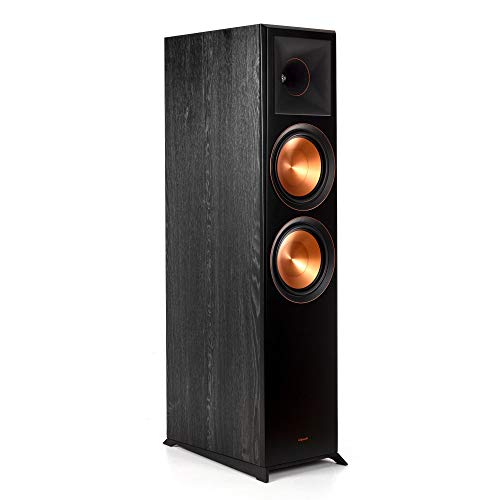 Klipsch RP-8000F Reference Premiere Floorstanding SpeakerLarge10 x 18 x 43 inches60 PoundsCheck on Amazon
The best floor standing speaker deals in 2026 are not the biggest percentage discounts — they are the discounts that land on a cabinet whose footprint, impedance curve, and driver height already fit your room. A pair of 46-inch, 15-inch-deep three-ways at 40% off is a bad deal in a 10 x 12 ft room driven by a 50 W receiver; a modest 15–20% off a slim 8-inch-deep two-way with 90 dB sensitivity is a genuinely good one. Judge every floor standing speaker deal against four filters before you look at the price: cabinet footprint, amplifier demand, listening distance, and the free wall space that good placement actually requires.
The Four Filters That Decide Whether a Deal Is Real
Floor standing speakers are the least forgiving category in home audio to buy on price alone. A bookshelf speaker that is too big can go on a desk or a shelf; a tower that is too big for the room has nowhere to go. It sits 18 inches from a side wall, booming at 80 Hz, and the buyer concludes the speaker is bad when the room was the problem. Run each candidate deal through these four filters in order:
Polk Audio T50 Home Theater Floor Standing Tower Speaker 150W, Black
Chosen because it specifies Black.
View on Amazon
Polk Audio Reserve Series R700 Tower Speaker for Home Theater, Walnut Brown
Chosen because it specifies Walnut Brown.
View on AmazonKlipsch RP-8000F Reference Premiere Floorstanding Speaker - Each (Ebony)
Chosen because it specifies Each (Ebony).
View on Amazon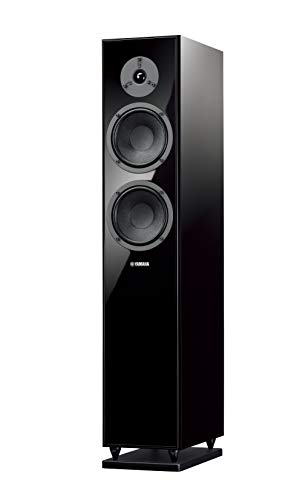
YAMAHA Audio NS-F150 Floor Standing Speaker - Each (Black)
Chosen because it specifies Each (Black).
View on Amazon- Cabinet footprint. Not just the cabinet — the plinth or outrigger base, which is typically 1–3 inches wider and deeper per side. Measure the widest point, not the spec-sheet width.
- Amplifier demand. Sensitivity plus impedance plus listening distance tells you the watts required. A 4-ohm nominal load with a 3.2-ohm minimum will current-limit a receiver rated only for 8 ohms.
- Listening distance. Two-way towers with a 6.5-inch woofer and a 1-inch tweeter crossed near 2 kHz want roughly 6–9 ft. Three-ways with widely spaced drivers want 8–12 ft before the drivers blend.
- Placement space. Rear-ported towers want 12–24 inches behind them; side walls want 18–24 inches. That is space you must physically own, not approximate.
A discount changes none of those numbers. What a discount usually signals is that a series is being replaced, a finish is being discontinued, or a dealer is clearing stock — all of which are legitimate reasons to buy, provided the four filters pass first.
Footprint and Room Size: The Numbers That Matter
Floor standers cluster into recognizable footprint classes. The table below maps cabinet size to the room floor area and listening distance where that size actually works. Treat it as a screening tool, not gospel — a sealed or front-ported design tolerates less wall clearance than a rear-ported one of the same size.
| Cabinet class | Typical footprint (W x D, inches) | Height range | Weight each | Minimum side-wall gap | Recommended room floor area | Minimum listening distance |
|---|---|---|---|---|---|---|
| Slim two-way, 5.25–6.5 in woofer | 7.5 x 10 to 8.5 x 12 | 32–38 in | 28–45 lb | 12–18 in | 100–150 sq ft | 6 ft |
| Standard two-and-a-half-way, dual 6.5 in | 8 x 11 to 9.5 x 13 | 36–42 in | 40–60 lb | 15–20 in | 130–200 sq ft | 7 ft |
| Three-way, dual 8 in | 9.5 x 13 to 12 x 16 | 42–48 in | 60–90 lb | 20–24 in | 200–300 sq ft | 8–9 ft |
| Large three-way, 10 in or dual 10 in | 12 x 16 to 16 x 20 | 45–52 in | 90–140 lb | 24–30 in | 300+ sq ft | 10–12 ft |
| Planar magnetic panel | 16–24 x 2 (plus tilt base) | 48–71 in | 40–60 lb | 24–36 in | 200+ sq ft, wide wall | 8–10 ft |
A concrete example. In a 10 x 12 ft room with an 8 ft ceiling — 120 sq ft — the practical wall for towers is the 12 ft wall, with the speakers 18–24 inches out from it and 18–24 inches in from each side wall. That leaves a 6–8 ft span between cabinets and puts the listening position about 7 ft back, with roughly 2–3 ft of air behind the seat. A slim two-way fits that geometry cleanly. A 12-inch-deep three-way does not: at 24 inches from the front wall its front baffle already sits at the midpoint of the room’s depth, and the listening distance collapses below 6 ft.
Room gain is the other number people miss. Placing a tower within 12 inches of the front wall adds roughly +3 to +6 dB below 100 Hz compared with 3 ft of clearance. That is why a tower that sounds lean in a showroom can sound thick and one-note at home. If you cannot give a rear-ported cabinet at least 12 inches, look for a front-ported or sealed design instead of chasing a bigger discount on the wrong box.
Amplifier Requirements: Sensitivity, Impedance, and the Watts You Actually Need
Sensitivity is quoted as dB at 2.83 V at 1 meter. Every additional 3 dB of sensitivity halves the power needed for the same loudness. Distance costs you roughly 6 dB per doubling: moving from 1 m to 2 m costs about 6 dB, to 3 m about 9.5 dB, to 4 m about 12 dB. Add 10–12 dB of headroom for peaks if you want clean transients rather than compressed ones.
Worked example, 3 m listening distance, 85 dB average with 12 dB peaks (97 dB peaks):
- 88 dB sensitivity: 78.5 dB per watt at 3 m, so you need about +18.5 dB — roughly 70 W per channel.
- 85 dB sensitivity: 75.5 dB per watt, so about +21.5 dB — roughly 140 W per channel.
- 92 dB sensitivity: 82.5 dB per watt, so about +14.5 dB — roughly 30 W per channel.
| Sensitivity (2.83 V / 1 m) | Nominal impedance | Watts for 85 dB avg at 2.5 m | Watts for 85 dB avg at 3.5 m | Amp class that suits it |
|---|---|---|---|---|
| 84–86 dB | 4 ohm, min 3.0–3.6 | 80–100 W | 150–200 W | High-current solid state rated into 4 ohm |
| 87–89 dB | 4–6 ohm, min 3.5–4.5 | 45–70 W | 90–130 W | Solid state, 4-ohm rated |
| 90–92 dB | 6–8 ohm, min 4.5–6 | 20–35 W | 45–70 W | Mid-power integrated, decent tubes |
| 93–96 dB | 8 ohm, min 6+ | 8–15 W | 20–30 W | Single-ended tubes, small Class A |
Impedance is the trap. A speaker with a 4-ohm nominal rating and a dip to 3.2 ohms draws nearly twice the current of an 8-ohm load at the same voltage. Many slim AV receivers rated “100 W x 7 into 8 ohms” are not certified into 4 ohms and will either shut down, run hot, or roll off the bottom end. If your amplifier only lists an 8-ohm rating, either choose a tower quoting 8 ohms nominal with a minimum above 5 ohms, or budget for a two-channel amp with a genuine 4-ohm rating.
Tube amplifiers add a second constraint: they prefer a flat, high impedance. A 90 dB tower with an 8-ohm nominal load and a benign phase angle will sing on 15–25 W of push-pull tubes. A 85 dB, 4-ohm, phase-happy tower will not, no matter how large the discount.
Listening Distance, Driver Height, and Why Towers Need More Space Than Bookshelves
Two numbers determine whether a tower images properly in your room: the height of the tweeter axis and the centre-to-centre spacing of the drivers around the crossover point.
Tweeter axis height on most towers falls between 32 and 40 inches. Seated ear height is typically 36–40 inches on a normal sofa. If the tweeter lands more than about 4 inches above or below your ears, tilt the cabinet with spikes or a plinth rather than accepting a vertical off-axis response that dulls the top end.
Driver spacing matters because two drivers only sum coherently when they are within roughly one wavelength of each other at the crossover frequency. At a 2 kHz crossover, one wavelength is about 6.8 inches. A 6.5-inch woofer and a 1-inch tweeter typically sit 7–8 inches apart, which is why two-way towers image well at 6–8 ft but start to show a vertical null as you move closer. Three-ways push the crossover down to 300–500 Hz, where the wavelength is 27–45 inches, so the midrange and woofer blend across a much wider window — but the tweeter-to-mid spacing still wants 8 ft or more.
Practical distances:
- Slim two-way: 6–9 ft. Below 6 ft, expect a soft vertical null and a slightly disconnected tweeter.
- Dual-woofer two-and-a-half-way: 7–10 ft. The second woofer is rolled off high, so the spacing is forgiving.
- Three-way: 8–12 ft. Closer than 8 ft and the midrange and tweeter never fully integrate.
- Planar panel: 8–10 ft minimum, and the panel needs a wide wall — they radiate front and back and want 3–5 ft behind them.
Start with an equilateral triangle: the distance between the two cabinets equals the distance from each cabinet to your ears. Then toe them in 5–15 degrees so the tweeter axes cross just behind your head. If the centre image is vague, reduce the spread; if it is narrow and pinched, widen it.
Cabinet and Construction Trade-offs Behind the Price Tag
A large part of what you pay for in a tower is the box. Two speakers can share a driver complement and a crossover topology and still differ by $600 a pair purely in cabinet material, bracing, and finish. When a deal looks too good, check which of these you are giving up.
| Cabinet material | Density (approx.) | Resonance behaviour | Weight penalty | Cost tier |
|---|---|---|---|---|
| Standard MDF, 0.6–0.75 in | ~45 lb/ft³ | Needs internal bracing; panels can sing at 200–400 Hz | Moderate | Entry |
| HDF / high-density fibreboard | ~55 lb/ft³ | Lower panel resonance, tighter bass definition | +15–25% over MDF | Mid to upper |
| Birch plywood, 0.7–1 in | ~36 lb/ft³ | High stiffness-to-weight, good damping, harder to finish | Lower | Mid to upper |
| Aluminium or composite extrusion | Varies | Very low resonance, high internal volume efficiency | High | Upper |
| Curved multi-layer laminate | ~45–50 lb/ft³ | Curvature resists panel flex; often the best value per dollar | Moderate | Mid |
Port design is the second trade-off. A rear port gives more bass extension per cabinet volume but demands 12–24 inches of wall clearance. A front port frees placement at the cost of a little midrange leakage through the port. A sealed cabinet has the tightest, most predictable roll-off and the least room interaction, but typically gives up 5–8 Hz of extension and needs more amplifier power or a subwoofer. A passive radiator behaves like a port with no chuffing noise and no placement restriction in the same way, but adds cost and weight.
Finish is where discounting usually shows up first. A vinyl wrap is a legitimate, durable finish that costs the maker very little. Real wood veneer and multi-layer lacquer are where a big share of the price sits, so a discontinued finish — walnut, say, or a matte white — can knock 20–30% off a pair whose acoustics are identical to the black version. That is one of the few genuine bargains in this category: same cabinet, same drivers, cheaper because of colour.
Decision Matrix: Match the Speaker to Your Situation
| Your situation | What actually matters | Spec target | What to avoid | Typical spend |
|---|---|---|---|---|
| Small apartment, 100–130 sq ft listening area | Footprint and wall clearance, not output | Under 8.5 in wide, under 12 in deep, 88 dB+, 8 ohm | Rear-ported three-ways over 13 in deep | $300–$800/pair |
| Kids and pets in the house | Stability and grille protection | Outrigger plinth, metal grille pegs, 50 lb+ per cabinet | Tall narrow cabinets on small spikes; exposed dome tweeters | $400–$1,200/pair |
| Renter who moves every 1–2 years | Box weight and doorway clearance | Under 45 lb per cabinet, 30–32 in carton width | 100 lb+ cabinets, glued plinths, panel speakers | $300–$900/pair |
| Low-power tube amp (15–25 W) | Sensitivity and flat impedance | 90 dB+, 8 ohm nominal, minimum above 5.5 ohm | 4-ohm, 85 dB designs with steep phase angles | $800–$2,500/pair |
| AV receiver rated only into 8 ohms | Benign load | 8 ohm nominal, 6 ohm minimum, 88 dB+ | 4-ohm nominal towers with 3-ohm dips | $400–$1,200/pair |
| Large room, 250–400 sq ft, 10–12 ft away | Output capability and driver area | Dual 8 in or larger, 89 dB+, 100 W+ on tap | Slim single-woofer two-ways that compress early | $1,500–$4,000/pair |
| Music-first, no subwoofer planned | Low-frequency extension and room gain | Claimed -3 dB at 40 Hz or lower, front or rear port | Sealed designs with 55 Hz limits and no sub | $700–$2,000/pair |
| Movies-first with a subwoofer | Midbass punch and dialogue clarity | 90 Hz+ crossover friendly, 90 dB+ sensitivity | Deep-extension towers you will high-pass anyway | $400–$1,500/pair |
| Very small amp, very small room | Efficiency over extension | 92 dB+, 8 ohm, compact two-way | Anything under 86 dB sensitivity | $250–$600/pair |
Budget Floor Standers: Deals Usually $250–$800 a Pair
Polk Monitor XT60
A slim two-way tower that has become the default first floor stander for a lot of people, largely because it is cheap and easy to drive. Cabinet is roughly 7.5 in wide and 11 in deep with a 1-inch-thick base, standing around 36 in tall. Quoted sensitivity is in the high 80s with an 8-ohm nominal rating and a minimum that stays above 4 ohms, so a 50–80 W receiver will run it without complaint. In a 10 x 12 ft room, 18 inches from the side walls and 15–20 inches from the front wall is enough. Rear-ported, so do not jam it against the wall. Deal range is usually $250–$450 a pair; below that it is a strong buy. Bass rolls off in the 45–50 Hz region, so pair it with a subwoofer for movies.
Klipsch R-800F
The Reference series tower is the efficiency play: quoted sensitivity is in the high 90s, which means 10–20 W produces levels most speakers need 80 W to reach. That makes it a natural partner for small tube amps and low-power Class D. Cabinet is around 8 in wide and 14 in deep — deeper than it looks in photos — and about 42 in tall, so check the plinth footprint. It is a two-and-a-half-way with dual 8-inch woofers and a horn-loaded tweeter; the horn gives wide dynamics and a forward treble that some listeners love and others find bright. Impedance is 8 ohms nominal, so it is receiver-friendly. Deal range is usually $400–$700 a pair. In rooms under 120 sq ft, expect boundary gain to thicken the bass; keep 20 inches of rear clearance.
ELAC Debut 3.0 DF63
The Debut line has always been the value pick for people who want a slightly warmer, more forgiving balance than a horn-loaded design. The DF63 is a three-way with a 6.5-inch woofer and dual mid/bass drivers in a cabinet roughly 8 in wide and 12 in deep, standing about 40 in. Quoted sensitivity is in the high 80s with a 6-ohm nominal rating and a minimum near 4 ohms, so plan on an amp that is happy into 6 ohms — most modern integrateds are. It wants 7–9 ft of listening distance to blend the three-way array, which rules it out for a desk setup but suits a 12 x 14 ft room well. Deal range is usually $500–$800 a pair. The rear port needs 12–18 inches of clearance.
Wharfedale Diamond 12.3
A compact two-and-a-half-way, around 7.5 in wide, 12 in deep, and 38 in tall, with a quoted sensitivity in the high 80s and a 6-ohm nominal load. The Diamond series has a reputation for a smooth, unfatiguing midrange that makes long listening sessions easy, which is exactly what you want in a small room where the speaker is close to the walls. It will not deliver the last octave — expect useful output to about 45 Hz — but it integrates with a subwoofer cleanly. It is genuinely happy on 40–60 W. Deal range is usually $400–$650 a pair. The cabinet is light enough — roughly 35–40 lb each — that one person can move it, which matters if you rearrange often.
Q Acoustics 3050i
One of the most placement-tolerant towers at the price. Quoted sensitivity is around 91 dB with a 6-ohm nominal rating, so it plays loud on modest power, and the cabinet is about 8 in wide and 12 in deep at roughly 40 in tall. The two-and-a-half-way driver layout crosses over low enough that it images well from 7 ft. Bass extends into the low 40s, which is enough that many buyers skip a subwoofer entirely in a music system. Rear-ported, so give it 15–20 inches. Deal range is usually $400–$700 a pair, and it has been discounted frequently as newer Q Acoustics series arrive. It is a strong candidate for the 10 x 12 ft room case.
Mission LX-4 MKII
A traditional-looking two-and-a-half-way that costs less than most competitors and gives away little in the basics. Cabinet is roughly 8 in wide, 13 in deep, and 40 in tall; quoted sensitivity is in the high 80s on a 6-ohm nominal load. It is a rear-ported design with a slightly warm balance and a forgiving top end. Amplifier demand is modest — 40 W is plenty in a 150 sq ft room. Deal range is usually $300–$550 a pair, which puts it in the same bracket as several bookshelf speakers on stands, and the tower gives you more cabinet volume and no stand to buy. The trade-off is finish quality: expect a vinyl wrap rather than veneer at this price.
JBL Stage 2 280F
A dual 8-inch two-and-a-half-way with a quoted sensitivity around 91 dB and a 6-ohm nominal rating, which makes it easy to drive from an AV receiver. Cabinet is about 9 in wide and 13 in deep, standing around 42 in. The larger woofer area gives it more midbass weight than the slim two-ways in this bracket, which suits movie systems where the tower is crossed over at 80–90 Hz to a subwoofer. Because it is rear-ported, keep 18–24 inches of wall clearance or the upper bass will thicken. Deal range is usually $400–$700 a pair. In a 200 sq ft room it fills the space easily; in a 100 sq ft room it may be more speaker than you need.
Paradigm Monitor SE 3000F
Quoted sensitivity is high — around 93 dB — with an 8-ohm nominal load, making this one of the most amplifier-friendly towers in the budget bracket. Cabinet is roughly 8.5 in wide and 12 in deep at about 40 in tall. It is a two-and-a-half-way with a 1-inch dome and dual 5.5-inch woofers, so it trades some low-end extension for efficiency and a lively, punchy character. Small tube amps and low-power Class D amps work with it. Deal range is usually $400–$650 a pair. Placement is straightforward: 12–18 inches from the side walls, 12–20 inches from the front wall. Its limitation is the bottom octave — a subwoofer is worth budgeting for.
Dali Spektor 6
A slim two-way, around 7.5 in wide and 11 in deep at 36 in tall, with a quoted sensitivity in the high 80s and a 6-ohm nominal rating that dips toward 4 ohms. That dip means a receiver rated only into 8 ohms will run warmer than ideal; a 4-ohm-capable integrated is a better match. The soft-dome tweeter and wood-fibre woofer give a relaxed, slightly warm presentation that suits long sessions. It is a rear-ported cabinet, so 15 inches of clearance is the minimum. Deal range is usually $350–$600 a pair. In a 10 x 12 ft room it works well; in a 300 sq ft room it will run out of headroom before it runs out of bass.
Monitor Audio Bronze 200
A two-and-a-half-way with a quoted sensitivity around 90 dB and an 8-ohm nominal rating with a minimum near 4.5 ohms — a benign load that most receivers handle. Cabinet is roughly 8 in wide and 12 in deep at about 37 in tall, and the outrigger plinth adds about 1.5 inches per side, so plan for a 10-inch footprint on the floor. Rear-ported. The metal dome tweeter gives a crisp top end that rewards a slightly toe-in setup. Bass reaches into the low 40s. Deal range is usually $450–$750 a pair, and it drops further when the next Bronze generation lands. A good all-rounder for a 130–180 sq ft room with 7–8 ft listening distance.
Mid-Range Floor Standers: Deals Usually $700–$1,800 a Pair
Klipsch RP-8000F II
The Reference Premiere tower is the high-efficiency option in the mid bracket: quoted sensitivity is around 98 dB, so a 10 W single-ended amp will drive it to room-filling levels. Cabinet is about 9.5 in wide and 15 in deep at 43 in tall, and it is heavy — roughly 65–70 lb each. That depth means it needs 20 inches of rear clearance and a room of at least 200 sq ft to avoid boundary gain muddiness. Impedance is 8 ohms nominal. The horn-loaded tweeter and dual 8-inch woofers give a dynamic, forward sound that excels with movies and rock. Deal range is usually $800–$1,400 a pair. If your amplifier is small or your room is large, this is one of the most sensible pairings available.
KEF Q750
A two-and-a-half-way using KEF’s coaxial Uni-Q driver, which places the tweeter in the acoustic centre of the midrange. That geometry is the reason it images so well at short distances: the drivers are coincident, so there is no vertical null as you move closer. Quoted sensitivity is around 88 dB with an 8-ohm nominal rating and a minimum near 3.7 ohms — the dip means a 4-ohm-capable amp is worth having. Cabinet is roughly 8 in wide, 13 in deep, 38 in tall. Rear-ported. It works from 6.5 ft, which makes it a strong pick for a 10 x 12 ft room. Deal range is usually $900–$1,400 a pair, dropping when the Q Meta generation is discounted.
ELAC Uni-Fi 2.0 UF52
A three-way with a concentric mid/tweeter and a dedicated 5.25-inch woofer. Quoted sensitivity is low — around 85 dB — on a 6-ohm nominal load with a minimum near 4 ohms, so this is the speaker in this bracket that most rewards a high-current amplifier. Plan on 100–150 W or a genuinely 4-ohm-stable integrated. Cabinet is about 8 in wide and 13 in deep at 42 in tall. In exchange you get unusually good midrange integration and a neutral tonal balance that flatters acoustic music. It wants 8–9 ft of listening distance. Deal range is usually $700–$1,100 a pair. Do not buy it to run from a slim receiver.
Wharfedale EVO 4.4
A three-way with an AMT-style ribbon tweeter, a 2-inch dome midrange, and dual 6.5-inch woofers. Quoted sensitivity is around 89 dB with a 4-ohm nominal rating, so a 4-ohm-capable amp is required — this is not a receiver-only speaker. Cabinet is roughly 9.5 in wide and 14 in deep at 42 in tall, rear-ported, and about 60 lb each. The ribbon tweeter gives a detailed, airy top end without the hardness of some metal domes. Bass reaches the high 30s, so a subwoofer is optional for music. Deal range is usually $1,000–$1,600 a pair. Give it 8–10 ft and 24 inches of rear clearance to hear what the midrange can do.
Dali Oberon 7
A two-and-a-half-way with a quoted sensitivity around 88 dB on a 6-ohm nominal load, dipping toward 4 ohms. Cabinet is about 8 in wide and 13 in deep at 40 in tall, rear-ported, roughly 45 lb each. The soft-dome twe