Our Top Picks
 Sony SS-CS5M2 3-Way 3-Driver Hi-Res Compact Bookshelf Speakers8.7 x 7 x 13.2 inches1 PoundsCheck on Amazon
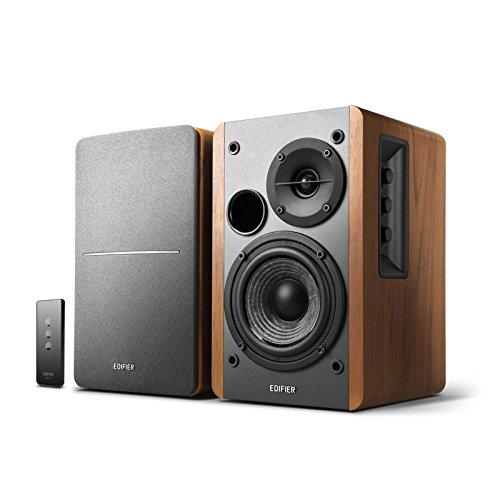 Edifier R1280T Powered Bookshelf Speakers -2.0 Near Field6.9 x 9.5 x 5.8 inches10.8 PoundsCheck on Amazon
The best bookshelf speaker deals right now are not the deepest discounts — they are the discounts on speakers that fit your room, your amplifier (or lack of one), and your listening distance. As a working rule: a 5.25-inch passive pair with 86–88 dB sensitivity suits a 10 x 12 ft room at 6–8 ft listening distance on 30–50 W per channel; a 4-inch powered pair suits a desktop at 2–3 ft; a 6.5-inch pair needs roughly 150+ sq ft and 8–10 ft to breathe. Below about $250 a pair you are almost always accepting a compromise somewhere specific — cabinet bracing, tweeter quality, or amplifier headroom — and above about $1,200 a pair you should be buying for the room you actually have, not the one you plan to build.
How to judge a bookshelf speaker deal in one minute
Ignore the percentage off. Four numbers tell you whether a discount is real value or a clearance problem:
Sony SS-CS5M2 3-Way 3-Driver Hi-Res Compact Bookshelf Speakers (Pair)
Picked as a relevant option in this category.
View on Amazon
Polk Audio T15 100 Watt Home Theater Bookshelf Speakers, Black, 1 Pair
Chosen because it specifies Black and 1 Pair.
View on AmazonEdifier R1280T Powered Bookshelf Speakers -2.0 Near Field Studio Monitor
Picked as a relevant option in this category.
View on Amazon
- Sensitivity (passive only). 84–86 dB means you need a solid amplifier (50–100 W per channel) or you will hear compression at moderate volumes. 88–90 dB works with almost anything, including small class-D amps and budget receivers. Above 92 dB — Klipsch territory — a 15 W amp is genuinely enough.
- Impedance dip. A nominal 4 Ω speaker that dips to 3.2 Ω will shut down cheap all-in-one mini systems. Nominal 8 Ω with a dip no lower than 5 Ω is the safe buy for an unknown amplifier.
- Cabinet volume and driver size. A 5.25-inch woofer in an 8–12 litre cabinet is the sweet spot for small rooms. A 6.5-inch in 16–22 litres needs space behind it and a room to load into, or you get boomy, one-note bass.
- Low-frequency cutoff. Published figures such as 44 Hz–35 kHz are usually measured at −6 dB or −10 dB, not flat. Add roughly 15–25 Hz to the low number to estimate where the speaker actually starts rolling off in a normal room. A speaker quoted at 44 Hz is realistically useful from about 60 Hz.
Those four numbers, plus cabinet dimensions, predict about 80% of how a discounted speaker will behave in your home. The other 20% is tweeter design and crossover quality, which is exactly where budget models cut costs — and exactly what you are paying for when a $600 pair drops to $400.
Room-size fit: the numbers that actually matter
Bookshelf speakers are almost never placed on bookshelves, and the name is misleading in a useful way: the cabinet size that suits a room is determined by the volume of air it has to pressurise, not by the furniture it sits on. Use this table before you buy anything.
| Room size | Typical listening distance | Woofer size | Passive amp power needed | Cabinet volume | Realistic low bass |
|---|---|---|---|---|---|
| 8 x 10 ft (80 sq ft), bedroom or office | 4–6 ft | 4–5 in | 15–30 W/ch | 4–8 L | 70–80 Hz |
| 10 x 12 ft (120 sq ft), spare room | 6–8 ft | 5.25 in | 30–50 W/ch | 8–12 L | 60–70 Hz |
| 12 x 14 ft (168 sq ft), typical living room | 8–9 ft | 5.25–6.5 in | 50–80 W/ch | 12–16 L | 55–65 Hz |
| 14 x 18 ft (252 sq ft) | 9–11 ft | 6.5–7 in | 80–120 W/ch | 16–22 L | 45–55 Hz |
| Open plan, 300+ sq ft with high ceilings | 10–14 ft | 6.5 in + subwoofer | 100–150 W/ch | 18–25 L | Sub required below 50 Hz |
Two practical consequences. First, in a 10 x 12 ft room, a 6.5-inch speaker will usually sound worse than a good 5.25-inch one, because the room reinforces the low end it cannot control. Second, in an open-plan space, no bookshelf speaker delivers satisfying bass regardless of price — budget $300–$600 for a subwoofer rather than $800 extra on the speakers.
Passive or powered? The cost you do not see on the price tag
A discounted passive pair at $300 looks cheaper than a powered pair at $450 until you add amplification. A competent 50 W-per-channel integrated amplifier runs $250–$500, and a streaming amplifier with HDMI and network audio runs $500–$900. That means a $300 passive pair is realistically a $550–$800 system, plus speaker cable at $20–$60, plus stands at $100–$250 if they are going anywhere near ear height.
Powered speakers fold the amplifier into one cabinet, which is why they dominate the sub-$600 end of the market. The trade-offs are real, though:
- One cabinet is heavier and runs warmer. The amplifier side typically weighs 30–50% more than its partner and needs 2–3 inches of clearance behind it. Do not box it into a closed shelf.
- Repair is all-or-nothing. If the amplifier board fails out of warranty, the whole speaker is scrap. With passive speakers, a failed amplifier is a $250 replacement.
- Upgrade paths are shorter. You cannot later swap in a better amplifier, and analogue inputs on many powered models are digitised internally, so an external DAC buys you nothing.
- Resale is weaker. Powered speakers lose value faster because the electronics date them.
The decision rule: if your total budget including amplification is under $600, buy powered. If it is over $800 and you intend to keep the system for a decade, buy passive and put the money into the amplifier, which will outlast two pairs of speakers.
Cabinet materials and construction: what the discount usually hides
When a speaker that normally sells for $700 appears at $450, the saving rarely comes from the drivers — it comes from the box. Cabinet cost is 30–45% of a bookshelf speaker’s bill of materials, and it is the easiest place to economise invisibly.
| Material | Typical thickness | Density / mass | Resonance behaviour | Durability reality | Where you see it |
|---|---|---|---|---|---|
| MDF (medium-density fibreboard) | 15–18 mm | ~750 kg/m³ | Predictable, easy to damp with internal bracing | Swelling if water sits on a cut edge for hours; veneer chips at corners | Most $200–$600 pairs |
| HDF (high-density fibreboard) | 18–25 mm | ~850–900 kg/m³ | Lower panel resonance, better for larger cabinets | Heavier; same moisture caution | Mid-range and premium models |
| Plywood / laminated birch | 18–21 mm | ~650–700 kg/m³ | Higher stiffness-to-mass, livelier if undamped | Very tough; edge layers can chip on impact | Studio monitors and some boutique hi-fi |
| Aluminium / die-cast alloy | 4–8 mm walls | ~2,700 kg/m³ | Very high stiffness, needs internal damping | Dents rather than cracks; paint scratches show | Premium compact models |
| Solid hardwood | 18–25 mm | ~600–800 kg/m³ | Unpredictable; moves with humidity | Can crack along grain in dry indoor air | Niche and vintage-styled models |
What to check on a discounted pair: tap the side panel with a knuckle. A dull thud is fine; a hollow ring means minimal bracing. Look for a rear port with a flared inner lip — a sharp-edged port chuffs audibly at high volume. And check whether the cabinet is a single 18 mm MDF box or a curved, internally braced one, because that difference alone accounts for $150–$250 of the price gap between two speakers with identical drivers.
Placement, clearance, and furniture measurements
Most disappointing bookshelf speaker purchases are placement failures, not product failures. These are the numbers to design around before the speakers arrive.
| Constraint | Measurement to plan for | Why |
|---|---|---|
| Tweeter height vs ear height | Tweeter axis 36–40 in from the floor when seated on a typical 17–18 in sofa; 40–46 in when seated at a desk | Above roughly 10–15° off-axis vertically, treble drops several dB |
| Distance behind the cabinet | Minimum 4 in from a rear wall for a rear-ported design; 12–24 in preferred | Under 4 in, rear-port bass output rises 3–5 dB and turns boomy |
| Distance from side walls | At least 18 in to the nearest side wall; equal on both sides | Asymmetry pulls the stereo image to one side |
| Speaker separation | 0.7–1.0 x the listening distance (e.g. 5–7 ft apart at 7 ft back) | Wider collapses the centre image; narrower loses width |
| Toe-in angle | 0–15° inward, tuned by ear | On-axis tweeters need toe-in; wide-dispersion designs often need none |
| Shelf clearance above | At least 6 in of open space above the cabinet | Enclosed shelves boost upper bass and deaden the tweeter |
| Shelf depth vs cabinet depth | Cabinet depth + 2 in minimum, or the front baffle overhangs the shelf edge | Overhang causes diffraction and a bright, hard treble |
| Stand top plate vs cabinet footprint | Top plate no larger than the cabinet base; 6 x 6 in to 8 x 8 in is typical | Oversized plates reflect energy and blur imaging |
One more measurement that catches people out: a typical 5.25-inch bookshelf cabinet is 12–14 in tall, 7–8 in wide and 9–11 in deep, and weighs 11–19 lb each. On a 24 in stand, the tweeter lands at 36–38 in — right at seated ear height, which is why stands exist. On a 30 in sideboard, the tweeter sits at 42–44 in and you will be listening well below the tweeter axis unless you tilt the speakers forward by 5–10°.
Best powered bookshelf speaker deals for desks and small rooms
These are the models where the discount is worth taking for a 2–5 ft listening distance, a desk, or a room under 120 sq ft. In every case, the amplifier side is the heavier cabinet and needs rear clearance.
Audioengine A2+ Wireless
A 2.75-inch woofer in a 6 x 4 x 5.25 in cabinet weighing about 3–4 lb per side. Roughly 60 W peak total, quoted 65 Hz–22 kHz, USB DAC, analogue input, Bluetooth, subwoofer output. Realistically useful from about 90 Hz upward, which is fine at 2–3 ft on a desk and thin at 6 ft across a room. Usually $250–$300; discounts to $200–$250 appear regularly. Buy it for a desktop, not a living room.
Audioengine HD3
Same 2.75-inch driver as the A2+ but with a headphone output, better DAC section and a slightly larger cabinet. Around 60 W peak, 65 Hz–22 kHz, Bluetooth 5.0, sub out. At $350–$400 list and $300–$340 on promotion, it is the better buy if you listen with headphones at night. Nearfield only — 2–4 ft.
Kanto Ora
A 3-inch woofer in a very small sealed-ish cabinet with USB-C, Bluetooth and analogue inputs, around 100 W peak total. Designed for 2–3 ft desktop use with a subwoofer output that high-passes the mains. Usually $350–$400. The practical advantage is USB-C direct from a laptop with no interface in between.
Kanto Ora4
The 4-inch version, which pushes usable output down to roughly 55–60 Hz and makes 4–5 ft listening comfortable. Same USB-C and Bluetooth input set, roughly $400–$450. If your desk is deeper than 30 in or the speakers sit on a shelf 5 ft away, the Ora4 is the one to wait for a discount on.
Edifier MR4
A 4-inch two-way in a compact MDF cabinet, roughly 42 W total, quoted 60 Hz–20 kHz, with balanced TRS and unbalanced RCA inputs plus a front headphone jack. Usually $120–$160 and frequently discounted to $90–$120. This is the cheapest genuinely neutral desktop speaker worth buying, and the cabinet is heavier and better damped than the price suggests.
Edifier R1280DB / R1280T
A 4-inch woofer, about 42 W total, quoted 55 Hz–20 kHz, with Bluetooth, optical and dual RCA inputs on the DB version. Cabinets are 146 x 234 x 196 mm and about 2.4 kg each. Typically $120–$160, discounted to $90–$130. The treble is bright and the bass is soft, but for a bedroom or kitchen at 4–6 ft it is hard to beat on price.
Mackie CR4-X
A 4-inch woofer, 50 W total, front-panel headphone jack, aux and RCA inputs, and a useful front-facing volume knob. Around $120–$150. Tonally a little forward in the upper mids, which suits spoken-word and video editing more than long music sessions. Cabinet is roughly 8.5 x 6.1 x 7.1 in.
PreSonus Eris E4.5
A 4.5-inch Kevlar woofer, about 50 W total, quoted 70 Hz–20 kHz, with acoustic space and high-frequency trim controls on the rear. Typically $180–$230, discounted to $150–$190. The trim controls are the reason to choose it over cheaper desktop speakers: they let you cut 2–4 dB of bass when the speaker is 4 in from a wall.
iLoud Micro Monitor
Roughly 0.8 kg per cabinet, 3-inch woofers, about 50 W total, quoted 55 Hz–20 kHz with DSP correction. Usually $300–$350. The DSP and tiny cabinet make it unusually room-tolerant, and it travels well — the whole pair fits in a backpack. Listening distance 2–4 ft.
Kali Audio LP-UNF
A 4.5-inch two-way with USB-C, balanced TRS and Bluetooth inputs, around 40 W per side, in a cabinet about 10 x 6.5 x 7 in. Typically $300–$350. Boundary-compensation DIP switches on the rear are the standout feature for desktop use against a wall.
Genelec 8010A
A 3-inch active monitor with die-cast aluminium enclosure, about 25 W per driver, quoted 74 Hz–20 kHz, and 1.5 kg per cabinet. Usually $350–$400 each, so $700–$800 a pair, and discounts are rare. Buy it for a 2–3 ft desk where the metal cabinet and long service life matter more than bass extension.
Best powered bookshelf speaker deals for living rooms and larger spaces
Audioengine HD4
A 4-inch woofer with roughly 30 W per channel, quoted 55 Hz–22 kHz, Bluetooth 5.0, optical and analogue inputs, sub out, and a headphone jack. Cabinet is about 9.5 x 6 x 7.5 in, around 10 lb for the pair. Usually $450–$500, discounted to $380–$430. Comfortable at 4–7 ft in a 10 x 12 ft room.
Kanto YU4
A 4-inch woofer, around 140 W peak total, with Bluetooth, optical, USB DAC, a phono input for a turntable and a sub output. Usually $380–$450. The built-in phono stage removes a $100–$200 accessory from a vinyl setup, which is where the real value sits.
Edifier R1700BT
A 4-inch woofer in a noticeably larger cabinet than the R1280, quoted 52 Hz–20 kHz, with Bluetooth, dual RCA and a remote. Typically $150–$190. The bigger box buys roughly 5–8 Hz of extra bass over the R1280, which matters at 6–8 ft.
ELAC Debut ConneX DCB41
A 4.5-inch woofer, about 50 W per channel, with HDMI ARC, optical, USB, phono and Bluetooth inputs, plus a subwoofer output. Usually $450–$500, discounted to $350–$400. HDMI ARC is the feature that matters: it lets the speakers act as a television sound system with the TV remote controlling volume, in a cabinet about 9.5 x 6.5 x 8 in.
Fluance Ai41
A 5-inch woofer, roughly 80 W total, quoted 45 Hz–20 kHz, with Bluetooth aptX, optical, RCA and a sub output. Typically $250–$300. At 5 inches it is the smallest powered model here that genuinely fills a 10 x 12 ft room at 8 ft without a subwoofer.
Klipsch The Fives
A 4.5-inch woofer with a horn-loaded tweeter, around 160 W peak total, HDMI ARC, optical, USB, phono, Bluetooth and a sub out. Each cabinet is about 5.4 kg. Usually $600–$800, discounted to $450–$600. The horn gives high sensitivity and a very dynamic, forward presentation — excellent for film dialogue, potentially fatiguing for long listening at close range.
Edifier R2000DB
A 5-inch woofer with about 120 W total, optical and dual RCA inputs, Bluetooth and a remote, quoted 55 Hz–20 kHz. Typically $250–$300. A remote control at this price is genuinely useful when the speakers sit across a room.
Kanto YU6
A 5.25-inch woofer, around 200 W peak total, with Bluetooth aptX, optical, phono, USB DAC and a sub out. Usually $450–$500, discounted to $380–$430. Cabinet is roughly 11 x 6.9 x 8.1 in. The best all-rounder in the sub-$500 powered category for a 12 x 14 ft room.
Audioengine HD6
A 5.5-inch woofer with about 50 W per channel, quoted 50 Hz–22 kHz, optical, analogue, Bluetooth and a sub out. Usually $700–$800, discounted to $600–$680. Cabinets are about 11.5 x 7.5 x 9.5 in and 15 lb each. This is the point where powered speakers start matching passive separates on cabinet quality.
Edifier S1000MKII
A 5.5-inch woofer with a planar-magnetic tweeter, around 120 W total, optical, coaxial, Bluetooth and a remote. Typically $300–$400. The planar tweeter gives unusually clean treble for the money, and the cabinet is heavier than the price implies.
Fluance Ai61
A 6.5-inch woofer, roughly 120 W total, quoted 40 Hz–20 kHz, with Bluetooth aptX, optical, RCA and a sub out. Usually $300–$350. Suits a 12 x 14 ft room at 8–9 ft; in anything smaller, plan on using the sub out and a high-pass rather than running them full range.
Klipsch The Sevens
A 6.5-inch woofer with horn-loaded tweeter, around 200 W total, HDMI ARC, optical, USB, phono, Bluetooth and a sub out, roughly 8.9 kg per cabinet. Usually $900–$1,200, discounted to $700–$900. For a 14 x 18 ft room at 9–11 ft, this is the most capable all-in-one powered pair in the mainstream market.
Edifier S2000MKIII
A 5.5-inch woofer with a planar tweeter, roughly 200 W total, optical, coaxial, Bluetooth and a remote, quoted 45 Hz–40 kHz. Typically $450–$550. A large cabinet — about 15 x 8 x 11 in each — so measure the shelf before ordering.
Vanatoo Transparent One Encore Plus
A 5.25-inch woofer with passive radiators, USB, optical, coaxial, analogue and Bluetooth inputs, a subwoofer output with proper high-pass filtering, and DSP room correction. Usually $600–$700. Cabinets are roughly 10.5 x 6 x 8 in. The high-passed sub output is the feature most powered speakers omit at this price.
KEF LSX II
A 4.5-inch Uni-Q driver array, around 100 W per cabinet, quoted 49 Hz–47 kHz, with HDMI ARC, optical, USB, analogue, Bluetooth, AirPlay 2, Chromecast and Spotify Connect. About 3.5 kg each. Usually $1,200–$1,400, discounted to $1,000–$1,200. The coaxial driver means the image stays stable when you move around the room, which matters more than the spec sheet suggests.
KEF LSX II LT
The same driver and DSP platform with a reduced feature set for roughly $200–$300 less — usually $900–$1,000. Read the input list carefully before buying, because the savings come from connectivity, not sound quality. If your sources are a TV over HDMI plus a phone over Bluetooth, check both are present.
JBL 4305P
A 5.25-inch woofer with a horn-loaded compression tweeter, about 150 W per cabinet, quoted 44 Hz–40 kHz, with balanced XLR/TRS, optical, USB, analogue, Bluetooth, AirPlay 2, Chromecast and Roon support. About 7.7 kg each. Usually $1,800–$2,200 a pair. This is a studio monitor dressed as a home speaker, and the compression driver delivers dynamics that dome tweeters cannot match.
SVS Prime Wireless Pro
A 6.5-inch two-way with network streaming, optical, analogue and subwoofer outputs, and roughly 200 W per cabinet. Usually $800–$1,000, discounted to $650–$800. Bass extension is quoted to about 45 Hz, and the cabinet is about 13.4 x 8 x 9.4 in. The best value in high-output powered bookshelf speakers for a large room.
Best active studio monitors that double as hi-fi
Studio monitors are often the best deal in the whole category: they are sold in higher volumes, have less cosmetic markup, and include amplifiers, DSP and room controls. The catch is that most have balanced-only inputs, no remote, and a flat, unforgiving tonal balance.
Adam Audio T5V
A 5-inch woofer with a ribbon tweeter, about 50 W total, quoted 45 Hz–25 kHz, balanced XLR and unbalanced RCA inputs, with rear controls for high and low shelf. About 6.2 kg each. Typically $400–$500 a pair. The ribbon tweeter is the reason to buy it: unusually detailed treble for the money.
Yamaha HS5
A 5-inch woofer, about 70 W total, quoted 54 Hz