Our Top Picks
Match the mower to the acreage first, then to the obstacles: a 42-inch deck cuts about 1.3–1.5 acres an hour, a 54-inch zero-turn does 2.4–2.7, and a 60-inch commercial unit clears 3.2–3.6. That single line of math means a half-acre lot is a 42-inch lawn tractor problem, a two-to-three-acre property is a 54-inch zero-turn problem, and anything past five acres is a 60- to 72-inch machine, a sub-compact tractor with a 60-inch mid-mount deck, or two mowers. Everything else — deck width, cutting speed, turning radius, power source, seat comfort, maintenance intervals and where the thing sleeps in winter — is a set of trade-offs that follow from that first decision.
Work out your mowable acreage before you shop
Total lot size and mowable acreage are different numbers, and the gap is usually bigger than people expect. Subtract the house footprint, driveway, patio, shed, garden beds, mulch rings around trees and any steep bank you would not mow. On a typical suburban lot with a 2,400 sq ft house, a two-car driveway and a patio, you can easily lose a third of the property.
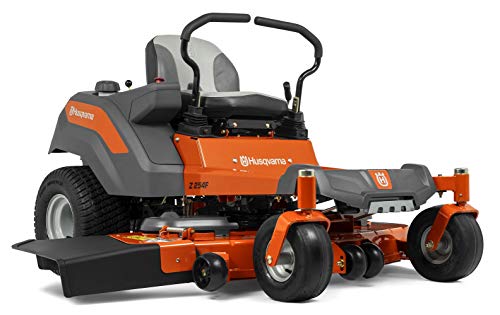
Husqvarna Z254F 54 in. 23 HP Kawasaki Zero Hydrostatic Turn Riding Mower
Picked as a relevant option in this category.
View on Amazon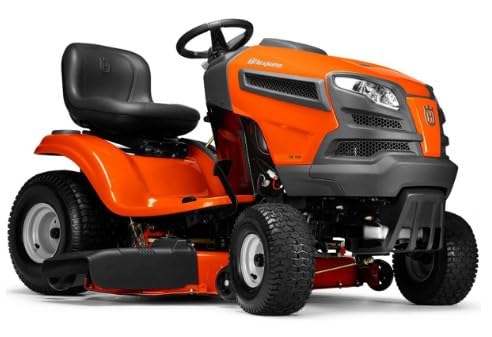
Husqvarna TS 120 (42") 19HP Briggs Lawn Tractor 970846301
Picked as a relevant option in this category.
View on Amazon
EGO Power+ Electric Riding Lawn Mower, 42" Deck Lawn Tractor - TR4204
Chosen because it specifies 42" Deck Lawn Tractor and TR4204.
View on Amazon
EGO Power+ Z6 Zero Turn Electric Riding Lawn Mower, 42" Deck - ZT4214L
Chosen because it specifies 42" Deck and ZT4214L.
View on AmazonThen subtract the areas you will realistically trim rather than mow. A 42-inch deck cannot get closer than roughly 10–12 inches to a fence line or foundation without risking scalping, so every fence post, tree, shrub and raised bed becomes string-trimmer work. A property that is nominally one acre but is broken into six small lawn pockets divided by beds and paths will take longer to mow than a clean two-acre field, because you spend your time turning and trimming rather than cutting.
A practical way to measure: walk the property with a measuring wheel or a phone GPS app and record the open, contiguous lawn areas. Add 15 percent for overlap and turnarounds. That number is your real workload.
| Mowable acreage | Mower type that fits | Typical deck | Realistic ground speed while cutting | Time per cutting |
|---|---|---|---|---|
| Up to 0.75 acre | Rear-engine rider or 34–42 in zero-turn | 30–42 in | 3.5–5 mph | 30–45 min |
| 0.75–1.5 acres | 42–46 in lawn tractor or 42–48 in zero-turn | 42–48 in | 4–5.5 mph | 45–70 min |
| 1.5–3 acres | 48–54 in lawn tractor or 48–54 in zero-turn | 48–54 in | 5–7 mph | 1–1.5 hr |
| 3–5 acres | 54–60 in mid-grade zero-turn | 54–60 in | 7–9 mph | 1.5–2.5 hr |
| 5–8 acres | 60–72 in commercial zero-turn | 60–72 in | 8–11 mph | 2.5–4 hr |
| 8 acres and up | 72 in commercial zero-turn, or 60 in mid-mount deck on a sub-compact tractor plus a second mower | 60–72 in | 9–12 mph | 4–6 hr |
Deck width and cutting speed: the arithmetic that decides everything
The productivity formula the industry uses is simple: theoretical acres per hour equals deck width in inches multiplied by ground speed in mph, divided by 99. A 42-inch deck at 5 mph is 42 × 5 ÷ 99, or 2.1 acres per hour. In the real world you derate that by 25–35 percent for overlap, turnarounds, slowing into corners, wet grass and discharge that cannot keep up with the deck. So the same 42-inch machine delivers about 1.4 acres per hour, which is why a two-acre property on a 42-inch tractor is a 90-minute job every single week.
| Deck width | Cutting speed | Theoretical acres/hr | Realistic acres/hr | Passes across a 100 ft wide lawn |
|---|---|---|---|---|
| 42 in | 5.0 mph | 2.1 | 1.4 | 29 passes |
| 48 in | 5.5 mph | 2.7 | 1.8 | 25 passes |
| 54 in | 7.0 mph | 3.8 | 2.6 | 22 passes |
| 60 in | 8.0 mph | 4.8 | 3.4 | 20 passes |
| 72 in | 10.0 mph | 7.3 | 5.1 | 17 passes |
Two things matter more than the raw numbers. First, cutting speed is not transport speed. A lawn tractor may list 5.5 mph forward, but that is with the transmission in high range and the deck disengaged; mowing in high range with a full deck load stalls the engine or leaves a ragged cut. Second, the deck’s discharge capacity caps your speed regardless of engine size. A 42-inch stamped deck with a single blade spindle cannot process the volume that a 24 hp engine could push it through, so stepping from 18 hp to 24 hp on the same deck buys you almost no extra mowing speed. Horsepower matters for towing, slopes and tall spring growth, not for flat-ground throughput.
Where a wider deck hurts you
Wider is not automatically better, and the counterarguments are worth real money:
- Gate access. A standard residential gate opening is 36 inches. A 42-inch deck will not pass through it, and neither will most riders. If your only access to the back yard is a 36-inch gate, your options narrow to a 30-inch rear-engine rider, a walk-behind, or removing a fence section.
- Trim work. A 60-inch deck with anti-scalp wheels still leaves 8–10 inches of uncut grass along every edge. On a lawn with 300 linear feet of fence, beds and foundation, that is roughly 200–250 sq ft of string trimming every week that a 42-inch machine would have cut.
- Scalping on uneven ground. A wide, rigid deck bridges dips and crowns and digs in on the high spots. If your lawn has more than about 2 inches of undulation across 10 feet, a wide deck will scalp before a narrow one does. Suspended or floating decks reduce this, but they cost more.
- Storage and towing. A 60-inch zero-turn is typically 74–78 inches wide overall, needs an 8-foot-wide opening to drive through comfortably, and will not fit on a 5 × 8 trailer.
Turning radius: the specification nobody checks until they own the machine
Turning radius determines how much of your lawn is mowed and how much is trimmed, and it is the single biggest functional difference between a lawn tractor and a zero-turn.
- Lawn tractors (steering wheel, 2-wheel steer): uncut turning radius of roughly 16–18 inches. That sounds tight, but it is measured to the inside rear tire, not the deck edge, so the actual uncut circle in the grass is 3–4 feet across. Every tree, shrub and bed gets a ring of uncut grass around it.
- Garden tractors: 20–24 inches, wider than a lawn tractor because of the larger frame and tires. The trade is that they pull ground-engaging implements.
- Four-wheel-steer riders: effectively zero-turn with a steering wheel and no lap bars, which suits operators who dislike lever steering or have shoulder problems. They cost more and have more steering components to maintain.
- Zero-turn mowers: true zero radius — the machine pivots on the inside drive tire. In practice, the deck still hangs 20–24 inches behind the drive tires, so you cannot back into a corner and pivot without the deck swinging into the fence. Skilled operators mow around a tree in one pass; everyone else does a three-point turn and still leaves a small ring.
- Front-mount (out-front) decks: the deck sits ahead of the operator, so you can see it and mow under low branches and along fence lines without the deck trailing behind. Turning radius is small, and these are the standard choice for steep banks.
The practical consequence: on a lawn with 40 obstacles, a zero-turn can save 20–35 percent of total mowing time compared with a lawn tractor of the same deck width, purely from reduced trimming and fewer passes. On a wide-open field with nothing to steer around, the zero-turn advantage shrinks to the difference in ground speed.
Power source: gas, battery, or diesel
This is where the buying decision has changed most in the past few years. Battery-electric riders are now genuinely viable for lawns up to about two acres, and diesel sub-compact tractors remain the answer for acreage plus real work. Gas still owns the middle.
| Gas lawn tractor / zero-turn | Battery-electric rider / zero-turn | Diesel sub-compact tractor | |
|---|---|---|---|
| Typical price range | $2,000–$5,500 residential; $8,000–$18,000 commercial | $3,500–$7,500 residential; $20,000+ commercial | $14,000–$26,000 with deck and loader |
| Energy cost per acre mowed | $0.60–$1.10 | $0.10–$0.25 | $0.45–$0.80 |
| Noise at operator ear | 88–95 dB(A) | 74–82 dB(A) | 85–92 dB(A) |
| Run time between refuels | 2–3 hr on 1.5–2.5 gal | 1–4 acres per charge depending on pack size | 5–8 hr on 6–7 gal |
| Recharge / refuel time | 2 minutes | 1.5–4 hr at 240V; 6–10 hr at 120V | 5 minutes |
| Routine maintenance | Oil, filter, plugs, belts, blades, hydro service | Blade sharpening, battery care, tire pressure | Oil, filters, hydraulics, coolant, grease points |
| Expected service life | 800–1,500 hr residential; 2,500+ hr commercial | 500–1,000 charge cycles; pack replacement likely at 5–8 years | 3,000–5,000 hr |
| Best suited to | 1–5 acres, remote property, all-day use | Suburban lots under 2 acres, noise-restricted areas, early-morning mowing | 5+ acres plus loader, tillage, snow removal, hauling |
Three practical notes that spec sheets leave out. Battery riders lose capacity in cold weather — expect 10–20 percent less run time in temperatures below about 40°F, and do not leave the pack on a charger in an unheated shed over winter. Gas machines that sit for months develop ethanol fuel problems; use a stabilizer and run the carburetor dry before storage. And diesel sub-compacts are not lawn mowers with a bigger engine — they weigh 1,400–1,900 lb without a loader, which means they rut soft ground in spring and need a heavier trailer and a bigger storage bay.
Transmission and transaxle: what actually wears out first
The transaxle is the most expensive component on a residential riding mower and the one buyers ignore. A sealed, non-serviceable transaxle on a lawn tractor that costs $2,500 may have a 400–800 hour service life and a $450–$800 replacement cost. A serviceable unit on a machine costing $4,000 might last 1,500 hours. That difference, not horsepower, is why mid-range machines cost more.
| Transaxle class | Typical applications | Serviceable? | Realistic life | Replacement cost |
|---|---|---|---|---|
| Entry sealed transaxle | 42–46 in lawn tractors, entry riders | No — sealed, no drain plug | 400–800 hr | $450–$800 |
| Mid-grade transaxle with filter | 48–54 in lawn and garden tractors | Yes — oil and filter changes | 800–1,500 hr | $900–$1,400 |
| Entry zero-turn drives | Residential zero-turns under $4,500 | Usually sealed | 400–700 hr | $600–$900 per side |
| Mid-grade zero-turn drives | Residential and prosumer zero-turns | Yes — 200–400 hr oil changes | 1,000–2,000 hr | $1,200–$2,000 per side |
| Commercial integrated drives | Commercial zero-turns, 60 in and up | Yes — with external reservoirs and filters | 2,000–4,000 hr | $2,500–$4,000 per side |
Other wear items, roughly in the order they fail: blades (sharpen every 20–25 hours, replace every 100–150), deck belts (100–200 hours), deck spindles (300–600 hours, and greaseable ones last longer), battery (3–5 seasons), deck shell (rust through at 8–15 years on stamped decks that are washed with a hose and stored wet), seat (5–10 years), and tires (cracking before tread wear).
Comfort: the specification that determines whether you actually mow
Comfort is not a luxury item on a machine you sit on for two hours a week for ten years. The measurable parts:
- Seat height and back height. Most riding mower seat pans sit 20–24 inches off the ground. High-back seats with 14–18 inches of back height support the lumbar region; low-back seats do not.
- Suspension. A suspension seat with 2–3 inches of travel makes a bigger difference on rough ground than any other comfort feature. Some mid-range and commercial zero-turns also offer isolated or suspended operator platforms.
- Control type. Lap bars demand continuous hand pressure and both arms; a steering wheel with hydrostatic drive is easier on the shoulders, and foot control of direction frees both hands. Four-wheel-steer riders combine a wheel with tight turning.
- Deck lift. A hand lever is tiring, a foot-assist is better, and electric or hydraulic lift is genuinely worth paying for if you raise and lower the deck often or need to change cut height mid-lawn.
- Vibration. V-twin engines with counterbalanced crankshafts run noticeably smoother than single-cylinder engines. On a 54-inch deck, a twin is not optional.
- Access. Step-through height and the presence of a grab handle matter if the operator has knee or hip limitations. Measure the distance from the ground to the lowest step and to the seat pan before buying if this applies to you.
Storage, clearance and transport: measure before you buy
This is where a purchase goes wrong after the fact. A machine that will not fit through the shed door or onto your trailer is a machine that lives under a tarp. Measure these four things: your widest door opening, your available floor space, your ceiling or door header height, and your trailer deck.
| Machine | Deck | Overall width | Overall length | Height | Minimum opening | Floor space to park |
|---|---|---|---|---|---|---|
| Rear-engine rider | 30 in | 36–40 in | 60–66 in | 38–42 in | 36 in gate or door | 4 × 6 ft |
| 42 in lawn tractor | 42 in | 52–56 in | 68–72 in | 42–46 in | 4 ft single door | 5 × 6 ft |
| 54 in lawn or garden tractor | 54 in | 64–68 in | 72–78 in | 44–48 in | 6 ft | 6 × 7 ft |
| 54 in residential zero-turn | 54 in | 66–70 in | 78–84 in | 46–50 in | 6 ft minimum, 8 ft comfortable | 6 × 8 ft |
| 60 in commercial zero-turn | 60 in | 74–78 in | 82–90 in | 50–70 in with ROPS up | 8 ft wide, 7 ft tall with ROPS folded | 7 × 9 ft |
| Sub-compact tractor with 60 in mid-mount deck | 60 in | 60–64 in (tractor), 72–76 in with deck | 96–110 in tractor only | 84–96 in with ROPS up | 8 × 8 ft door | 10 × 12 ft |
A standard single garage door is 8–9 feet wide and 7 feet tall; a double is 16 feet wide. The height figure catches people out: a commercial zero-turn with a rollover protection structure upright can exceed a 7-foot door header. Most ROPS fold or pin down, but you have to do it every time you park, and a folded ROPS is not protection.
Trailer sizing follows the same logic. A 42-inch lawn tractor fits a 5 × 8 utility trailer with the deck overhanging slightly. A 54-inch zero-turn needs a 6 × 12 with brakes on at least one axle. A sub-compact tractor with a loader and a deck needs a 7 × 16 to 7 × 18 with brakes on both axles, and a tow vehicle rated for 5,000 lb or more. Weights: a 42-inch lawn tractor is 450–550 lb, a 54-inch zero-turn is 700–950 lb, a 60-inch commercial zero-turn is 1,100–1,500 lb, and a sub-compact tractor with loader and deck is 2,600–3,600 lb.
Slopes and terrain: the constraint that eliminates categories
Most residential lawn tractors are rated for slopes up to about 15 degrees — roughly a 3-foot rise over 12 feet of run. Zero-turns are usually rated lower, commonly 10–15 degrees, because they have no differential and lose traction on a sidehill; sliding sideways on a zero-turn is how rollovers happen. If your property has banks steeper than 15 degrees, the honest answers are a front-mount deck machine, an all-wheel-drive rider, a sub-compact tractor with a locking differential, or a walk-behind mower on the bank and a rider everywhere else.
Two other terrain notes. First, wet ground: a zero-turn concentrates its weight on two drive tires and will rut a soft lawn badly in early spring, where a lawn tractor with four tires spreads the load. Second, moss, steep ditches and drop-offs along water: mow those areas across the slope only if the machine is rated for it, and never with a loaded bagger, which raises the center of gravity.
Best riding lawn mowers for a one-to-two-acre property
Best overall lawn tractor: 46–48 inch hydrostatic models
This is the sweet spot for the largest number of buyers: a 46- to 48-inch deck, a V-twin engine in the 22–24 hp range, hydrostatic foot control, and a price usually between $2,600 and $3,800. Representative machines in this class include John Deere’s S-series (the S160 and S170 sit here with 48-inch decks), Cub Cadet’s XT1 LT46 and XT1 LT50, Husqvarna’s YTH22V46 and YTH24V48, and comparable models from Craftsman and Troy-Bilt.
What you get: a 48-inch deck at 5.5 mph realistically cuts 1.6–1.9 acres an hour, which turns a 1.5-acre lawn into a 55–70 minute job including trimming. Hydrostatic drive means no clutching, and most of these machines take a bagger, a mulch kit, a snow blade or a tow-behind spreader. Deck heights adjust from about 1 to 4 inches in 1/2-inch steps, which matters more than people think — cutting at 3.5 inches instead of 2 inches in summer reduces stress on the grass and lets you mow less often.
What you give up: turning radius of 16–18 inches, which means trimming around every obstacle, and a sealed or lightly serviceable transaxle on the cheaper models in the class. If you plan to keep the machine past 700 hours, buy the version with a serviceable transaxle and a filter. The price gap is usually $400–$700 and it is the best money you will spend in this category.
Buy this if: your lawn is 0.75–1.75 acres, mostly flat to gently sloped, with a mix of open lawn and obstacles, and you want one machine that can also pull a cart or push snow.
Best zero-turn for the same property: 48–54 inch residential
For the same lawn, a 48- to 54-inch residential zero-turn cuts mowing time by 25–35 percent once trimming is counted. Representative machines include Toro’s TimeCutter series in 50- and 54-inch widths, Cub Cadet’s Ultima ZT1 in 50 and 54, Husqvarna’s Z248F and Z254F, Hustler’s Raptor X and Raptor XD, and Gravely’s ZT X. Prices generally run $3,000–$5,500.
What you get: 7 mph cutting speeds, zero-radius turns, and typically a fabricated rather than stamped deck at the upper end of the range, which resists scalping better and lasts longer. Most offer a suspension seat option or at least a high-back seat with armrests, and many accept a mulch kit, bagger or striping kit.
What you give up: the ability to tow heavy implements (zero-turns are mowers, not tractors), comfort on long sessions compared with a garden tractor, and tolerance for slopes above about 12–15 degrees. Storage is also bigger — a 54-inch zero-turn needs a 6 × 8 ft footprint and a 6-foot opening.
Buy this if: your lawn is 1–3 acres with lots of trees, beds and fence line, and your priority is finishing faster.
Best riding lawn mowers for three-to-five acres
Best mid-grade zero-turn: 54–60 inch
At this size you are buying into serviceable hydrostatic drives, fabricated 10-gauge decks, larger tires, higher back seats and hydraulic or foot-assist deck lift. Representative machines include Toro’s Titan series in 54 and 60 inches, Scag’s Liberty Z in 52 and 61, Hustler’s Raptor XDX, Kubota’s Z251 and Z411, Ariens’ Apex, Bad Boy’s ZT Elite, and Spartan’s RT series. Expect $5,500–$8,500.
What you get: 8–9 mph cutting speeds and realistic productivity of 2.8–3.4 acres an hour, which puts a four-acre property in the 90-minute to two-hour range. The drives on these machines are serviceable with 200–400 hour oil change intervals and should reach 1,500–2,000 hours. Decks are typically 10-gauge fabricated steel with greaseable spindles and replaceable edge guards. Seats are high-back with suspension on many models, and some offer an isolated operator platform.
What you give up: money, storage space, and the ability to maneuver in tight residential landscaping. A 60-inch zero-turn needs 8 feet of clearance and 7 × 9 feet of floor space, and it will not fit through a standard gate.
Buy this if: you have three to five acres of relatively open ground, you mow weekly through a long season, and you want a machine that will still be working in ten years.
Best garden tractor: 48–54 inch with ground-engaging capability
A garden tractor is the right answer when mowing is only half the job. These machines have heavier frames, larger rear tires, a locking or limited-slip differential, a category-1 three-point hitch or sleeve hitch, and hydraulic or electric deck lift. Representative models include John Deere’s X350 and X370, Cub Cadet’s XT2 GX54 and XT1 GT50, and Husqvarna’s GT series. Prices generally run $4,000–$7,000.
What you get: the ability to run a 42- to 48-inch tiller, a snow blower, a front blade, a cart, a spreader and a roller off one machine, plus better traction on slopes than a zero-turn. Cutting performance is lower than a zero-turn — 5.5–6.5 mph and a 20–24 inch turning radius — so a three-acre lawn takes longer.
What you give up: speed and maneuverability, plus roughly $1,500–$3,000 over an equivalent lawn tractor.
Buy this if: you have a long driveway to clear, a garden to till, or you want one machine for mowing, snow and hauling.
Best riding lawn mowers for five acres and up
Best commercial zero-turn: 60–72 inch
Above five acres, residential equipment becomes a false economy. Commercial zero-turns are built for 1,000–1,500 hours a year and typically deliver 2,000–4,000 hours of service with proper maintenance. Representative machines include Scag’s Tiger Cat II and Turf Tiger II, Exmark’s Lazer Z, Hustler’s Super Z, Kubota’s Z421 and Z724, Toro’s Z Master series, Gravely’s Pro-Turn, Wright’s ZK, Ferris’s ISX series with suspension, and Bad Boy’s Maverick. Expect $9,000–$18,000 depending on deck width and engine.
What you get: 10–12 mph cutting speeds, 60- to 72-inch fabricated decks with 7-gauge or thicker steel, integrated commercial hydro drives with external reservoirs and filters, hydraulic deck lift, suspension seats or full suspension systems, and engines in the 25–37 hp range from Kawasaki, Kohler or Briggs & Stratton’s commercial lines. Productivity is 4–6 acres an hour, which turns an eight-acre property into a manageable two-hour job.
What you give up: a lot of money, a lot of space (7 × 9 ft minimum, more with a bagger), and the ability to use it anywhere tight. Fuel consumption also climbs to 1.5–2.5 gallons an hour under load.
Buy this if: you have five or more acres, mow weekly, or you are mowing commercially. Also consider running two 60-inch machines rather than one 72-inch — you get redundancy and a narrower transport footprint for roughly the same total cost.
Best alternative: sub-compact tractor with a mid-mount deck
If your property is five acres or more and includes driveway maintenance, snow removal, grading, hauling, or a garden, a sub-compact tractor does more per dollar than a big zero-turn. Representative machines include Kubota’s BX series, John Deere’s 1-series, and Yanmar’s SA series, usually with a 54- or 60-inch mid-mount mower, a front-end loader, and a three-point hitch. Expect $14,000–$26,000 for a tractor with deck and loader.
What you get: 60-inch mowing at 3.5–4 acres an hour, plus a loader rated for 500–800 lb, a category-1 hitch for a rotary cutter or tiller, and 3,000–5,000 hours of diesel engine life. Ground-engaging capability and four-wheel drive make it the safest option on slopes.
What you give up: mowing speed (roughly half a commercial zero-turn), turning radius (it is a tractor, not a mower), and a lot of storage — 10 × 12 feet minimum with the loader on. It also weighs 2,600–3,600 lb with loader and deck, which ruts wet lawns and demands a heavy trailer.
Buy this if: you want one machine for mowing plus real work, or your acreage includes areas a zero-turn cannot safely handle.
Best battery-electric riding mowers
Best electric rider for lawns up to two acres
Battery-electric riders have moved from novelty to practical for suburban lots. Representative machines include EGO’s Z6 zero-turn series in 42- and 52-inch widths, Toro’s 60V eTimeCutter in 42- and 60-inch widths, John Deere’s Z370R electric ZTrak, Ryobi’s 80V electric riders and zero-turns, Greenworks’ 60V and 80V riders, and Cub Cadet’s electric lawn tractor models. Prices generally run $3,500–$7,500.
What you