Key takeaways
- Best Home Refrigerator: Top Picks for Every Kitchen The best home refrigerator for most kitchens is a 30–36-inch-wide counter-depth French-door model with adjustable shelves, a filtered water dispenser only if you will use it, and an Energy Star label; however,…
Best Home Refrigerator: Top Picks for Every Kitchen
The best home refrigerator for most kitchens is a 30–36-inch-wide counter-depth French-door model with adjustable shelves, a filtered water dispenser only if you will use it, and an Energy Star label; however, a top-freezer, bottom-freezer, side-by-side, or compact refrigerator may be the better choice for a particular room, budget, or household.
Quick picks by kitchen and household
| Kitchen situation | Best refrigerator type | Why it fits | Typical usable capacity |
|---|---|---|---|
| Small apartment or narrow galley kitchen | Top-freezer, 28–30 inches wide | Compact footprint, wide door opening, lower purchase and repair cost | 14–18 cu. ft. |
| Family with children | French-door with bottom freezer | Fresh food stays at eye level and wide shelves hold large containers | 20–25 cu. ft. |
| Frequent frozen-food use | Side-by-side or bottom-freezer model | More convenient freezer access than a top-freezer | 18–25 cu. ft. |
| Renter or budget-conscious buyer | Top-freezer without a dispenser | Usually lighter, simpler, and less expensive to move and maintain | 14–20 cu. ft. |
| Back pain or limited bending | French-door or bottom-freezer | Most-used refrigerator space is positioned higher | 20–25 cu. ft. |
| Premium, quiet kitchen | Counter-depth French-door or built-in-style refrigerator | Shallower cabinet projection and more integrated appearance | 18–24 cu. ft. |
Refrigerator layouts compared head-to-head
Top-freezer: the practical value choice
A top-freezer refrigerator generally offers the most storage per dollar and the fewest complicated parts. The freezer is easy to reach, but fresh food sits lower, so retrieving vegetables or large containers requires more bending. Door shelves are often generous, and the doors usually need less clearance than wide French-door doors.
Choose this layout for a first home, rental property, garage, or kitchen where purchase price and serviceability matter more than premium organization. A typical 18-cubic-foot top-freezer model usually costs about $500–$1,000, depending on finish, ice maker, and efficiency.
Bottom-freezer: better access to fresh food
Bottom-freezer refrigerators place the refrigerator compartment at a more comfortable height. They are a strong choice for households that open the refrigerator frequently but use frozen food less often. Drawers can be easier to organize than a top freezer, although the lowest freezer basket still requires bending and may be awkward for heavy items.
Expect roughly 18–24 cubic feet of usable storage and a typical market range of $900–$2,000. Some models use a swing door rather than a drawer; a swing-door freezer can require more room in front of the appliance.
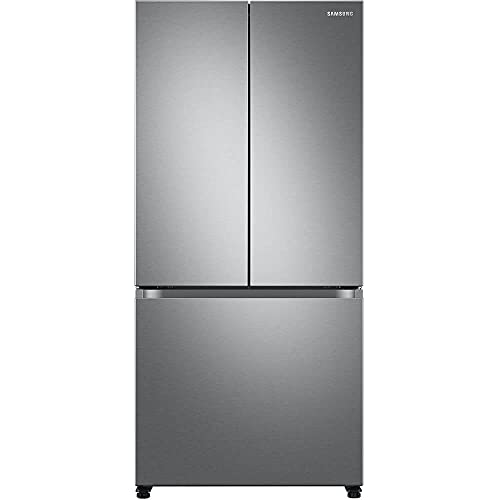
French-door: the best all-around family layout
French-door refrigerators combine two narrow upper doors with a bottom freezer. Opening one upper door uses less clearance than opening a full-width door, while the wide refrigerator compartment accommodates platters, pizza boxes, and meal-prep containers. The trade-off is a more complex design: hinges, drawers, ice makers, water valves, and electronic controls can increase repair costs.
Many French-door models measure 30–36 inches wide, 68–70 inches high, and 30–34 inches deep before handles. Counter-depth versions reduce cabinet projection but usually sacrifice several cubic feet of storage and cost more. Standard-depth models commonly sell for $1,200–$3,500; premium built-in-style units can cost substantially more.
Side-by-side: convenient vertical access, narrower shelves
Side-by-side refrigerators give the freezer and refrigerator equal vertical access, making them useful for people who dislike bending. They also work well where door-swing clearance is limited. Their narrow compartments, however, can make wide trays and tall bottles difficult to store. Ice and water dispensers are common, but they occupy interior door space and may reduce usable freezer capacity.
A side-by-side model usually provides 20–25 cubic feet and costs about $900–$2,500. It is a sensible choice for a narrow walkway, but less suitable if you regularly store sheet pans or large party platters.
Compact and under-counter refrigerators
Compact refrigerators are useful for a studio, office, guest room, or beverage station, but their capacity is limited and their small freezer compartments are often poor at long-term frozen-food storage. A 3.1–4.5-cubic-foot unit generally needs at least 2 inches of ventilation space around the sides and back, unless the manufacturer specifies a tighter installation.
Capacity: compare usable storage, not just cubic feet
Advertised capacity includes spaces that may be occupied by shelves, drawers, evaporator housings, and ice makers. As a practical planning rule, allow about 4–6 cubic feet per adult and add 2–4 cubic feet for each child, depending on shopping frequency and cooking habits. A couple who shops several times a week may be comfortable with 16–20 cubic feet; a family of four that batch-cooks may prefer 22–25 cubic feet.
Measure the items you actually store. If you use large casserole dishes, look for at least 14–16 inches of clear shelf width. If you keep gallon containers in the door, verify that the door bin is tall enough and that the shelf can be repositioned. French-door models often offer excellent width but less uninterrupted vertical space than a simple top-freezer.
Energy use, noise, and ice features
Energy efficiency
Look for the blue Energy Star label and compare the yellow EnergyGuide label’s estimated annual electricity use. Modern full-size refrigerators commonly use about 350–700 kilowatt-hours per year, depending on size, configuration, dispenser equipment, ambient temperature, and ice production. A larger, dispenser-equipped model is not automatically inefficient, but extra cooling compartments and frequent door openings can raise consumption.
For lower operating cost, choose the smallest capacity that fits your routine, avoid placing the refrigerator beside a range or in direct sun, and leave the ventilation clear. Set the refrigerator near 37°F and the freezer near 0°F rather than choosing colder settings without a food-safety reason.
Noise
Refrigerator noise is usually described in decibels, although manufacturers do not always publish comparable measurements. Models in the low- to mid-40-decibel range are generally better suited to open-plan kitchens than louder units. Even a quiet refrigerator can produce brief compressor starts, fan sounds, water-valve clicks, ice drops, and defrost noises.
If the kitchen is next to a bedroom or living area, prioritize a published low-noise specification, avoid models with unnecessary specialty compartments, and use a level floor. An uneven refrigerator can transmit vibration through cabinets and flooring.
Ice makers and water dispensers
An internal ice maker preserves door storage and gives the exterior a cleaner appearance, but it may produce ice more slowly. Through-the-door ice and water are convenient for families and reduce door opening, yet the mechanism occupies freezer space and adds filters, tubing, seals, and service points. An automatic ice maker is worthwhile if you regularly entertain; otherwise, a simple ice tray or interior bin may be more reliable and easier to clean.
Installation clearances that prevent expensive mistakes
| Measurement | Useful planning allowance | Why it matters |
|---|---|---|
| Side clearance | 0–1/2 inch per side, only if the manual permits it | Door swing, hinge movement, ventilation, and leveling |
| Top clearance | 1–2 inches commonly required | Air circulation and removing the appliance for service |
| Rear clearance | 1–2 inches commonly required; verify the specification | Power cord, water connection, heat release, and condenser airflow |
| Front working space | 36 inches minimum; 42–48 inches is more comfortable | Opening drawers and standing beside an open door |
| Delivery doorway | At least 2 inches wider than the appliance package’s narrowest dimension | Protects walls, trim, and the refrigerator during delivery |
Do not measure only the cabinet opening. Record the width between walls, the height beneath cabinets, the depth to the front of the countertop, and the path from the entrance to the kitchen. Check baseboards, island corners, stair turns, elevator doors, and the refrigerator’s hinge side. A 36-inch refrigerator may require more than 36 inches of room to open its doors fully, especially beside a wall.
Counter-depth does not mean flush. Handles and doors can still project several inches beyond the countertop. Also confirm whether the doors can be removed for delivery and whether the water line needs a shutoff valve behind the appliance. Keep the refrigerator level after installation; poor leveling can prevent doors from sealing and can make drawers slide open.
Construction and durability realities
Stainless-steel doors resist many stains but can show fingerprints and dents. Fingerprint-resistant finishes are easier to maintain but may not match older appliances. Plastic interior liners are standard and easy to clean, while glass shelves contain spills better than wire shelves but are heavier and can break if installed while cold or struck by a heavy container.
The parts most likely to create inconvenience over time are door gaskets, ice makers, water filters, drawer rollers, and electronic controls. Simpler top-freezer models generally have fewer failure points. When moving a refrigerator, keep it upright whenever possible, protect the doors, and allow it to stand according to the manufacturer’s instructions before reconnecting power if it was transported on its side.
How to choose the best home refrigerator in five steps
-
Measure the opening, delivery route, door swing, and required ventilation clearances.
-
Choose the layout based on your daily behavior: fresh-food access favors French-door or bottom-freezer; frozen-food access favors top-freezer or side-by-side.
-
Estimate capacity from household size and shopping habits, then inspect shelf width, drawer depth, and door-bin height.
-
Compare EnergyGuide consumption, published noise information, and the long-term cost of filters and ice-maker parts.
-
Select only the features you will use. A basic, well-sized refrigerator can outperform a larger feature-heavy model in operating cost, reliability, and usable space.
For most households, a 30–36-inch French-door refrigerator is the strongest overall choice. A 28–30-inch top-freezer is the better value for a small kitchen or rental, while a counter-depth bottom-freezer or French-door model is the better fit when appearance, access, and walkway space matter most.