Key takeaways
- Broad brand compatibility confirmed across four major fan manufacturers
- UL Listed, so it meets safety standards for residential electrical components
- No included hardware beyond the switch itself — you reuse the original screws
What's inside
Every year, homeowners in heating and cooling climates face the same question: is your ceiling fan actually pushing air where you need it? In summer, a downward breeze cools your skin by up to eight degrees without touching the thermostat. In winter, an upward draw pulls trapped heat off the ceiling and redistributes it across the room, cutting heating costs on a home where most of your warm air is literally stuck above your head. The problem is that reversing direction is not always straightforward — some fans handle it through a simple slide switch on the motor housing, others require a remote, and still others ship with no reversible motor at all.
That gap is what separates a worthwhile purchase from a frustrating one. The best options in this space make the seasonal flip a one-hand, two-second operation that anyone can do without a ladder or a manual. The worst options bury the mechanism, require a screwdriver, or simply cannot reverse at all. Below we compare eight products that address ceiling fan direction summer/winter switching — from dedicated slide switches that retrofit onto existing motors to complete fan-and-light units with built-in reversible functionality — ranked by how cleanly they solve the problem at each price point.
As an Amazon Associate we earn from qualifying purchases at no extra cost to you. Product prices and availability are accurate as of the date shown and are subject to change.



Quick Picks
| Product | Best for | Price |
|---|---|---|
| HQRP 6-Pin Slide Reverse Switch | Hunter and Hampton Bay retrofits | $9.99 |
| ZE-209-22 Slide Reverse Switch | SL13B replacement on a budget | $9.99 |
| LEDIARY 20″ Fan Light | Small rooms with low ceilings | $45.99 |
| 42-inch Silent Walnut Fan | Mid-range bedrooms and offices | $129 |
| WZZIW 17.7″ Socket Fan Light | Garages and kitchens with E26 sockets | $39.99 |
| ZE-209-22 6-Wire DPDT Switch | DIY wiring projects | $15.95 |
| Phylluz 52″ Flush Mount | Large bedrooms on a mid budget | $70.99 |
| Crazypai 52″ Modern Fan | Whole-room airflow with remote control | $59.99 |
How We Picked
We evaluated each product on three criteria that matter most for seasonal direction switching: how accessible the reverse mechanism is for an average homeowner (a visible slide switch beats a recessed pull chain every time), whether the fan or switch is confirmed compatible with common motor housings rather than just claiming broad support, and the long-term reliability indicated by owner feedback on repeated use. Price and aesthetic features like light kits were secondary considerations used to differentiate between otherwise comparable options.
The 8 Best Ceiling Fan Direction Summer/Winter in 2026
HQRP 6-Pin Slide Reverse Switch
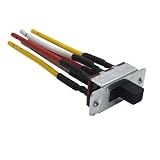
This is the part most Hunter, Hampton Bay, Harbor Breeze, and Westinghouse fans actually use to reverse blade direction, and buying it directly is often cheaper than a service call. The 6-pin slide format means you pull two screws on the motor housing, swap the old unit, and you are back in business in under ten minutes.
- Broad brand compatibility confirmed across four major fan manufacturers
- UL Listed, so it meets safety standards for residential electrical components
- No included hardware beyond the switch itself — you reuse the original screws
Skip this if your fan uses a pull-chain reverse or a remote-controlled motor, because the 6-pin form factor will not fit those housings.
6-Pin Slide Reverse Switch ZE-209-22 Replaces SL13B
Functionally identical to the HQRP option above but marketed as a direct SL13B replacement, this switch suits anyone whose existing part is labeled that way. If your fan’s original switch has failed mid-season, matching the part number eliminates guesswork.
- Exact SL13B cross-reference removes compatibility uncertainty
- Priced the same as alternatives despite the part-number specificity
- Does not state UL certification in its listing
Skip this if you cannot confirm your current switch is an SL13B, since a wrong pin count or housing shape means a dead purchase.
LEDIARY 20″ Ceiling Fan with Light and Remote
The remote included with this low-profile unit handles direction reversal as a one-button operation, which solves the ceiling fan direction summer/winter problem for anyone who hates ladders. At 20 inches it is sized for rooms under 100 square feet — a reading nook, a walk-in closet, a small bathroom.
- Remote-controlled reverse means no physical access to the motor housing
- Integrated LED light eliminates a separate fixture purchase
- 20-inch diameter limits it to very small spaces
Skip this for any room wider than 10 by 10 feet, where the blade sweep cannot move enough air to matter.
42-inch Silent Ceiling Fan with 3CCT Walnut Finish
This sits at the upper end of the budget for a mid-size fan, and the price reflects a silent DC motor that reverses via the included remote without the hum that plagues cheaper units. The 3-color-temperature light (warm, neutral, cool) covers mood and task lighting in one fixture, and the walnut finish blends into traditional or transitional rooms.
- Silent operation makes it viable for bedrooms and home offices
- 3CCT lighting reduces the need for layered light sources
- At $129 it is the most expensive fan on this list
Skip this if you need a switch-reversible mechanism for a large open room — a 42-inch sweep will feel underpowered in spaces above 200 square feet.
WZZIW 17.7″ Socket Fan Light with Reversible Motor
This screws directly into any E26 or E27 socket, making it the fastest install on the list — no mounting bracket, no wiring, no electrician. The reversible motor handles seasonal direction changes, and the 3000-lumen output with 3000K to 6500K dimming covers everything from a garage workbench to a kitchen island. The 17.7-inch body suits small-to-mid rooms without overwhelming the ceiling.
- Socket-mount installation takes under five minutes
- Remote-controlled dimming, color temperature, and direction reversal
- Socket-mount fans vibrate more than hard-wired units on higher speeds
Skip this if you already have a wired fan in the room and only need direction reversal — buy a slide switch instead.
ZE-209-22 6-Wire DPDT Slide Switch
This is the component for DIY builders and hobbyists wiring their own fan or HVAC project. The double-pole double-throw configuration with three-position on-off-on lets you define forward, off, and reverse in any wiring layout you design. At 3A on 250V or 6A on 125V it handles the power draw of most residential fan motors with margin.
- DPDT three-position logic gives total wiring flexibility
- UL Listed for residential electrical safety compliance
- Not a drop-in replacement — requires knowledge of fan motor wiring to install correctly
Skip this if you just need to fix a broken fan switch and do not want to learn what a DPDT configuration means.
Phylluz 52″ Black Flush Mount Ceiling Fan with Light
A 52-inch flush mount at $70.99 undercuts most full-size competitors by a wide margin, and the integrated light kit means one purchase covers both function. Direction reversal on units in this class typically relies on a pull chain on the motor housing — accessible but requiring a ladder or a steady reach.
- 52-inch sweep handles rooms up to 225 square feet
- Flush mount profile keeps it low to the ceiling in rooms under 9 feet
- Direction switching requires reaching the motor, not a remote button
Skip this if you want hands-off seasonal flipping or if your ceiling height is 8 feet or below, where a flush mount fan can feel oppressive.
Crazypai 52″ Modern Ceiling Fan with Light
The lowest-priced full-size fan on this list, the Crazypai 52-inch handles direction reversal via a handheld remote that groups it with its light dimming and speed controls. For renters or anyone who wants seasonal adjustment without touching the fixture, the remote logic is the main draw.
- Remote-controlled reversal, speed, and light in one unit under $60
- 52-inch sweep for rooms in the 180 to 225 square foot range
- Modern styling may clash with traditional or farmhouse interiors
Skip this if you need silent operation or a high CRI light source for color-accurate task work.
Buying Guide
Switch Type Determines Your Entire Experience
The mechanism you use to flip from summer to winter mode dictates whether the task is a two-second remote button press, a ten-minute ladder trip to a slide switch, or a full rewire. If your existing fan has a pull-chain reverse and you use it twice a year, a dedicated slide switch replacement is the fastest fix. If you are buying a new fan, prioritize remote-controlled direction over anything that requires physical access to the motor housing.
Blade Sweep Must Match Room Area
Direction reversal only matters if the fan can actually move air across the full room. Under 75 square feet, a 17 to 20 inch unit is sufficient. Between 75 and 150 square feet, 42 inches is the standard range. Above 200 square feet, you need 52 inches or larger, and two smaller fans may outperform one large one on circulation. Check the manufacturer’s stated maximum coverage rather than guessing from the room’s floor plan.
UL Listing and Amperage Rating Are Non-Negotiable on Replacement Switches
Slide reverse switches sit between your live wiring and the motor coils. An unlisted switch with the wrong amperage rating is a fire risk that will not announce itself until it fails under load. The ZE-209-22 ratings of 3A at 250V or 6A at 125V cover virtually every residential ceiling fan motor. Match or exceed your fan’s original spec and confirm UL listing before installing.
Our Verdict
The top pick is the 42-inch Silent Walnut Fan for anyone who wants the whole problem solved in one purchase — remote-driven reversal, a light that covers three color temperatures, and a motor quiet enough for a bedroom. The budget pick is the HQRP 6-Pin Slide Reverse Switch, because at $9.99 it restores seasonal airflow control to a fan you already own without any upgrade. If you rent or have a standard E26 ceiling socket and zero interest in wiring, the WZZIW Socket Fan Light wins outright on installation speed and functional coverage.
FAQ
How do I know which direction my fan should spin?
Stand directly under the running fan and watch the blades from below. If you feel a distinct breeze on your skin, it is in summer mode (counterclockwise from below). If the air feels still and slightly warm overhead, it is in winter mode (clockwise from below, pulling air upward). Flip it seasonally and your energy efficiency shifts accordingly.
Can I reverse direction without a dedicated switch?
Most modern fans ship with either a slide switch on the motor housing or a remote button labeled with a curved arrow. Older fans may use a pull chain adjacent to the housing. If none of these exist, a retrofit 6-pin DPDT slide switch wired to the motor terminals can add the function, though this assumes the motor itself supports reverse operation.
Do socket-mount fans lose efficiency compared to wired models?
Slightly. The single socket mount concentrates vibration on one point, so high speeds feel less stable and the total blade sweep is limited by the compact housing. Below 40 inches, they move less air than a hard-wired unit of the same sweep, but the difference is negligible in rooms under 120 square feet.
How often should I reverse my fan in a year?
Twice: once in late autumn when you begin heating, and once in late spring when you begin cooling. There is no benefit to frequent flipping beyond those seasonal transitions. The ceiling fan direction summer/winter cycle is purely about aligning airflow with what your HVAC system is already doing.